Apple has updated its Beats Studio Buds wireless earbuds to patch a high-severity vulnerability that could be exploited by nearby hackers to eavesdrop on users.
The vulnerability, CVE-2025-20701, allowed improper authentication in the firmware running on the Bluetooth-related chips, enabling people within signal range to impersonate devices that had previously been paired with the earbuds. The researchers demonstrated this in a series of end-to-end attacks that allowed them to eavesdrop on conversations or sounds within earshot of the phone microphone.
Apple joins the patch party
“Impact: An attacker within Bluetooth range may be able to listen through the microphone of a device which is not yet paired and actively seeking pair requests,” Apple said in a Tuesday security advisory. The fix is contained in Beats Firmware Update 1B211, which is delivered automatically while headphones are paired with and within Bluetooth range of a user’s iPhone, iPad, or Mac. Users can check their firmware version by going to Settings on their device, navigating to Bluetooth, and tapping the info button next to the headphones.
Connecting AI to sensitive data forces enterprises to face a hard question: Where are the privacy gaps that could expose us to legal, financial and reputational harm?
Today at the AWS Summit in New York City, Swami Sivasubramanian, AWS VP of Agentic AI, provided the day’s keynote.
Here’s our roundup of the biggest announcements from the event:
New in agents customers create We’re introducing new capabilities on Amazon Bedrock AgentCore: connecting AI agents to organizational, web, and paid knowledge, helping teams find and fix what’s going wrong in production, and enforcing controls that scale as agents grow more capable.
Together, these capabilities help you build more capable agents faster, govern those agents with controls that scale, and improve them continuously. To learn more, read our blog post covering all the new features.
Introducing Amazon Bedrock Managed Knowledge Base for faster, more accurate enterprise AI applications – You can build enterprise RAG pipelines with the managed Knowledge Base on Bedrock. It provides native data connectors, Smart Parsing for automatic multi-format data preparation, and an Agentic Retriever for complex multi-step queries, all integrated with AgentCore Gateway so developers can focus on business outcomes rather than infrastructure management.
AWS WAF adds AI traffic monetization capability to help content owners charge AI bots for content access – You can use a new Bot Control capability that enables content providers and publishers price, meter, and collect payment from AI bots and agents accessing their content and APIs. AWS WAF now lets you set a price for that access, accept payment through third-party providers, and grant scoped access directly at the edge.
Amazon Bedrock AgentCore harness in now generally available – You can do building and running production-grade AI agents in minutes, without coding orchestration loops, by defining your agent’s model, tools, skills, and instructions in configuration, with Bedrock AgentCore harness.
Coming soon: AWS Context – This is a new service that automatically maps the relationships across your existing data into a knowledge graph and provides agentic search so AI agents in the organization can access governed data relationships, business rules, and domain knowledge at runtime.
New in agents for securing
Introducing AWS Continuum: Security at machine speed – AWS Continuum for code vulnerabilities, available in a gated preview, takes findings from across your environment, prioritizes by business impact, proves which are exploitable, and drives a fix through your own process.
AWS Security Agent (now part of AWS Continuum) adds threat modeling, Kiro power and Claude Code plugin, and more – You can generate the new threat modeling (preview) to understand the full context of your application and identify threats with recommended mitigations using the STRIDE framework. You can also use pull request code scanning with remediation across major Git platforms, and IDE integrations via Kiro power, Claude Code plugin, and MCP, letting developers run security reviews and fix issues without context switching.
New in agents for building
Introducing Kiro for iOS – Kiro introduces a native iOS app, available in a gated preview, built for real engineering work that gives developers a new surface to kick off, monitor, steer, and interact with their Kiro sessions directly from their phone. That means you can now start sessions, check back when they’re done, review diffs, and approve changes all while staying connected to your work with no laptop running.
Proactively reduce tech debt autonomously with AWS Transform – continuous modernization – You can use continuous analysis (preview) to automatically scan your code repositories against configurable baselines and generates findings in hours, not weeks. Once you’ve identified and prioritized findings, you can configure autonomous remediations that generate pull requests for affected repositories automatically.
New in agents for works
With the launch of Amazon Quick’s new autonomous agents, you can create agents that work in the background with specific expertise, tone, and access to tools. You can create a finance agent to process orders as they come in, or a sales agent monitoring interactions across your CRM, emails, and Slacks to proactively draft follow-ups, flag risks, or recommend next steps.
We are also releasing a new activity feed that is tailored to how you work. It consolidates email, messaging, calendar, and tasks into a single prioritized view, learns which messages you always answer fast, which threads you skip, and what topics drive your week.
In addition to the keynote announcements, we have other important launches this week:
Amazon S3 annotations: attach rich, queryable context directly to your objects – Amazon S3 now lets you attach up to 1 GB of rich, mutable, and queryable context directly to your objects using annotations, purpose-built for AI agents and autonomous workflows that need to discover, understand, and act on data at scale without maintaining separate metadata systems.
Amazon ECS announces faster service auto scaling – Amazon ECS service auto scaling now detects and responds to load changes faster with support for high resolution (20-second) metrics and metric publishing optimizations. In AWS benchmarking tests, time to trigger scale-out improved from 363 seconds to 86 seconds (76% faster, 4.2x), and total time to scale and provision new tasks improved from 386 seconds to 109 seconds (72% faster, 3.5x).
Amazon EC2 G7 instances accelerated by NVIDIA RTX PRO 4500 Blackwell Server Edition GPUs – AWS is the first major cloud provider to support NVIDIA RTX PRO 4500 Blackwell Server Edition GPUs. G7 instances are accelerated by these GPUs with custom sixth-generation Intel Xeon Scalable processors, delivering up to 4.6x AI inference performance and up to 2.1x graphics performance compared to G6 instances.
Celebrating the first anniversary of the Agent-to-Agent (A2A) protocol, this blog post highlights how the framework enables autonomous AI agents to securely collaborate and hand off tasks without the rigidity of traditional APIs. By delegating complex workflows to specialized peer agents, A2A prevents context pollution, ensures data privacy, and simplifies application design through modularity. To demonstrate this ecosystem in action, the post spotlights FoldRun—an agentic interface for life sciences that orchestrates complex protein structure predictions—alongside diverse A2A use cases spanning commerce, data streaming, DevOps, and telecommunications.
A businessman with ties to Chinese military contractors was among the overseas investors who acquired stakes in SpaceX while it was still a private company. An entity linked to the Qatari royal family also took a stake.
The new details come from a private investor list obtained by ProPublica that sheds light on a particularly delicate issue for Elon Musk’s rocket company: which people in countries like China bought into the company, and how. SpaceX built its business off sensitive US government work like making spy satellites for the Pentagon. While there is no ban on Chinese investment in US military contractors, such investment is heavily regulated.
In a sign of its sensitivity to the concerns, SpaceX barred investors from China and Hong Kong from buying shares in its initial public offering last week due to “regulatory and compliance risks,” Bloomberg reported. The US government alleges that China has a strategy of using investments in sensitive industries for espionage and to get access to cutting-edge technology.
The biggest news to emerge from the AI world this week was undoubtedly that Elon Musk’s SpaceX had agreed to acquire AI coding startup Cursor in an all-stock deal valued at $60 billion.
But on the very same day, at an invite-only developer conference hosted by Cursor in San Francisco, Tomas Reimers took to the stage to unveil a fledgling project that could prove just as consequential for the developer tools industry.
Reimers, it’s worth noting, is co-founder of Graphite, a code-review startup that Cursor revealed it was acquiring back in December (a deal that apparently closed in January). At the time, some commentators noted the deal’s implications for GitHub — among them was Gergely Orosz.
Orosz, author of The Pragmatic Engineer newsletter and an investor in Graphite, who wrote on LinkedIn: “I’m telling you: GitHub’s biggest competitor could soon be Cursor. Graphite — in my view — is the best AI code review + stacked diffs + PR workflow product out there. GitHub is already playing catch-up to Cursor/Graphite.”
Put simply, Graphite had already built workflow tools that GitHub was scrambling to replicate — and with Cursor’s resources behind it, the gap was only going to widen. And now with the might of SpaceX, a $2.5 trillion company, behind it, things could be about to get very interesting.
The Origin origin story
On stage in San Francisco ahead of Origin’s unveiling, Reimers pointed to Graphite’s customer base — which includes Shopify, Snowflake, Notion, and Figma — as evidence of a problem already well underway before Origin existed.
“When we were acquired by Cursor, we accelerated our most ambitious project — to rebuild that tooling from scratch.”
“Over the past few years, we noticed the trend as these companies adopt AI tooling,” Reimers said. “The tools that they relied on started to become unreliable. That’s because over the past few years, AI tooling has totally changed our industry. It’s enabled every developer to be a 10 to 100x developer, but that change has required fundamentally different tooling. That’s why, when we were acquired by Cursor, we accelerated our most ambitious project — to rebuild that tooling from scratch.”
Amid all the hullaballoo of SpaceX hitting the public markets, becoming one of the world’s most valuable companies overnight, and doling out a cool $60 billion for a four-year-old startup, it’s easy to appreciate why Origin might have slipped under the radar. But the infrastructure problem it’s setting out to solve is real.
It’s easy to appreciate why Origin might have slipped under the radar. But the infrastructure problem it’s setting out to solve is real.
GitHub, the world’s dominant code hosting platform by some distance, is having a rough time of it. As The New Stackreported in June, the platform has logged hundreds of incidents over the past 12 months, struggling to keep pace with the volume of code that AI agents are generating. The company says it’s now processing about 1.4 billion commits per month — up from 1 billion across all of 2025 — with agents alone generating more than 17 million pull requests per month.
The irony isn’t lost on anyone: GitHub helped kickstart the AI coding era with the launch of Copilot in 2021, and it’s now buckling under the weight of it. And for some, the cracks are already showing in their day-to-day habits.
“Agents are quickly killing the will for doing open source.”
“Agents are quickly killing the will for doing open source,” Douglas says. “I’d love to see what GitHub’s [monthly active user] numbers look like today, because I am sure there are a number of folks choosing to do code reviews elsewhere — or exclusively collaborating with agents to get the work to the last mile — which is at an all-time high.”
Douglas, for what it’s worth, counts himself among them, saying he now does much of his review and PR work directly in AI coding tools.
“As a GitHub power user, I find myself using it less, and relying more on Claude and Codex for review and PR interactions,” he says.
A post-GitHub world?
Origin remains in waitlist-only mode ahead of a planned fall launch, and those present at Compile reported enough detail to sketch its ambitions. Developer advocate and independent commentator Shawn Wang Yuexian, known as swyx, described it as a “long-awaited Git competitor, scalable for agent workloads, extensible with API and MCP, and with built-in merge conflict and CI failure agent resolution.”
Whatever Origin looks like in its launch guise, it’s clear the appetite for an alternative to the status quo is growing. The software development world has changed considerably since GitHub popularized the pull request model back in 2008 — a feature that Douglas calls its “best ever.” But the pull request was designed for a world where humans deliberately wrote and reviewed code, one change at a time. That world is receding fast.
“Right now, the velocity of projects being created is overwhelming GitHub, and engineers are not looking at the code.”
“Right now, the velocity of projects being created is overwhelming GitHub, and engineers are not looking at the code,” Douglas says. “So if the goal is to put it in the cloud so agents are managing the code, I think that is absolutely an opportunity for disruption.”
So, as AI agents push code at a rate no human reviewer can keep up with, the pull request risks becoming a formality — a box to tick rather than a meaningful quality gate. Which raises a deeper question about how the industry should measure the value of software work at all.
For Douglas, the answer lies in a different unit entirely. Commits and lines of code — the traditional proxies for developer output — tell you little in a world where an agent can generate thousands of lines in seconds. Tokens, by contrast, map directly to compute cost and, therefore, to the real effort and value generated. It’s a reframing that suits Cursor rather well.
“Tokens are a better metric than commits.”
“Tokens are a better metric than commits,” Douglas says. “They align to a dollar spent that correlates to the effort of work. Previously, we pretended lines of code were the metric, and that was proven incorrect. But tokens plus agent sessions equals customer value — and Cursor is positioned well to own a deeper part of the collaboration stack.”
Cursor, though, isn’t alone in that conviction, and a slew of tangential efforts to rebuild that infrastructure for the agentic era are emerging.
At its Transcend conference in London on June 10, GitLab announced a private beta of what it calls Next Generation Source Code Management — known internally as Project Switch. Unveiled on stage by GitLab chief product and marketing officer Manav Khurana, the new backend keeps the Git protocol intact but redesigns the underlying architecture entirely, allowing agents to query repositories server-side rather than cloning them in full.
GitLab says it delivers up to 50 times faster task execution per agent, with up to 3 times fewer tokens consumed. And notably, Anthropic is a design partner on the project.
“The most popular Git platforms in the world are buckling under the load, not just because of your teams cloning, branching, and merging code, but also dozens, in some cases hundreds, of agents working simultaneously and putting a lot of pressure on those systems,” Khurana said.
The day after GitLab’s Transcend announcement, Zed co-founder Nathan Sobo published details of DeltaDB, a project the company had first teased the previous fall. A more radical proposition than either Origin or Project Switch, DeltaDB replaces Git’s commit-based model entirely with a continuous stream of fine-grained deltas — every operation an agent performs, linked directly to the conversation that produced it. Sobo confirmed that a beta version is just weeks away.
HashiCorp co-founder Mitchell Hashimoto, meanwhile, has seen this coming. Back in December, he wrote on X: “The AI companies are on track to become GitHub faster than GitHub is becoming an AI company.”
The AI companies are on track to become GitHub faster than GitHub is becoming an AI company. I'm sure there's a lot of sycophants within GH/MS showing off PowerBI dashboards to argue against this for their own personal gain, but wake the fuck up.
Hashimoto, as it happens, is an investor in another agent-native code hosting startup called East River Source Control (ERSC), which is building a Git-compatible platform designed to land thousands of commits per second.
The model is the moat
For Douglas, the convergence of competing efforts to rebuild version control from the ground up isn’t hugely surprising. In the past year, he points out, a similar dynamic played out with developer sandboxes — the environments where code gets written and tested — as companies like Docker, Cloudflare, and Vercel moved into that space because that’s where developers were spending their time.
The same gravitational pull is now acting on version control. The way developers work has changed fundamentally — where once they wrote code directly inside their editors, many now spend their time directing AI agents that do the writing for them. The IDE is no longer primarily a place to type; it’s increasingly a place to watch, review, and steer.
“I think all the folks who are part of the story have a shot, and we need to rethink our infrastructure to prepare for this.”
“Now, IDEs are suffering from the fact that developers have evolved to foundational model harnesses writing code, and they need to position themselves as the tool you open to watch agents write the code,” Douglas says. “I think all the folks who are part of the story have a shot, and we need to rethink our infrastructure to prepare for this.”
Underpinning all of this, though, is a commercial reality. Cursor has been building toward this position for some time, having launched its own first-party coding model, Composer, in 2025 and iterating on Composer 2.5 in May, giving it cheaper, in-house inference rather than relying entirely on costly API calls to Anthropic and OpenAI. Composer 2.5 costs a fraction of Claude Opus at equivalent tasks — as much as a tenfold difference on output tokens. Owning the model, in other words, is what makes owning the rest of the stack viable.
Introducing Composer 2.5, our most powerful model yet.
It's more intelligent, better at sustained work on long-running tasks, and more reliable at following complex instructions.
“It’s clear you can’t just insert an OpenAI key and expect hyper-growth or longevity in this market anymore,” Douglas says. “Instead, you need to own the model to win.”
Whether SpaceX’s firepower accelerates that ambition or complicates it remains to be seen. But the companies placing bets on the next era of software development aren’t waiting for GitHub to catch up.
Last 4 days before regular tickets sell out at AI Engineer World’s Fair - this is the single biggest gathering of AI Engineers, Founders, Leaders, and Researchers in the world. Attendees get >$5000 worth of sponsor credits and talk tracks are looking FANTASTIC. Join us!
The AI scaling debate always focuses on the question of “how do we get more GPUs?” but the better question may be: how do we make the most of ones we already have.
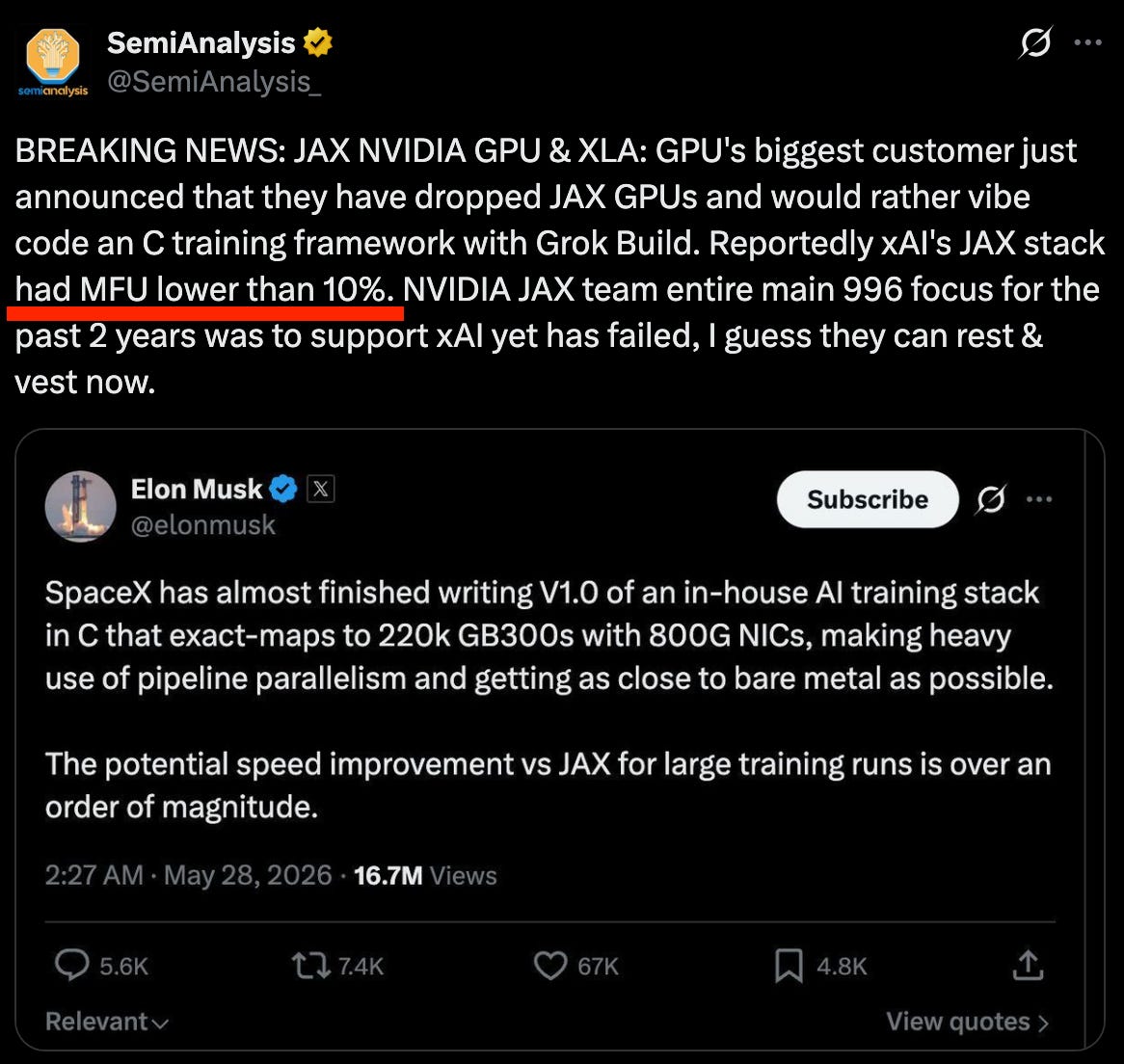
The fact that a frontier lab like xAI could be running at sub-10% MFU (Model FLOPs Utilization) is just a hint at what the real problem may be.
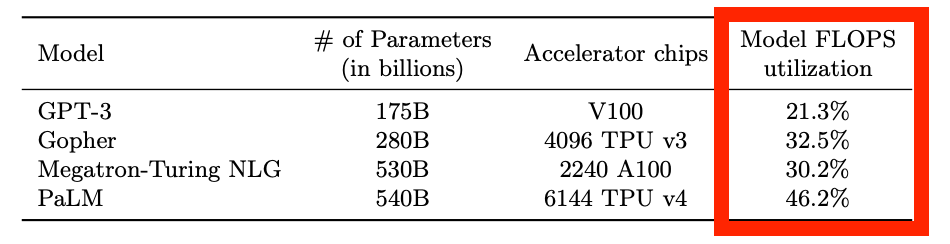
For context, older frontier-scale training runs were already much higher than 10%. GPT-3 was around 21% MFU. Gopher was around 32%. Megatron-Turing NLG was around 30%. PaLM reached around 46%. And our guest Anjney says best-in-class MFU today is closer to 60–70%.
It’s not necessarily that xAI is uniquely incompetent (it’s clear they have talented folks) but rather the priorities may be flipped in the GPU arms race.
While GPU access is a bottleneck, simply increasing CapEx won’t automatically translate to better models as frontier AI is increasingly a systems problem: scheduling, utilization, networking, kernels, frameworks, data pipelines, parallelism, cluster reliability, and the thousand small decisions that determine whether your theoretical FLOPs become real training progress.
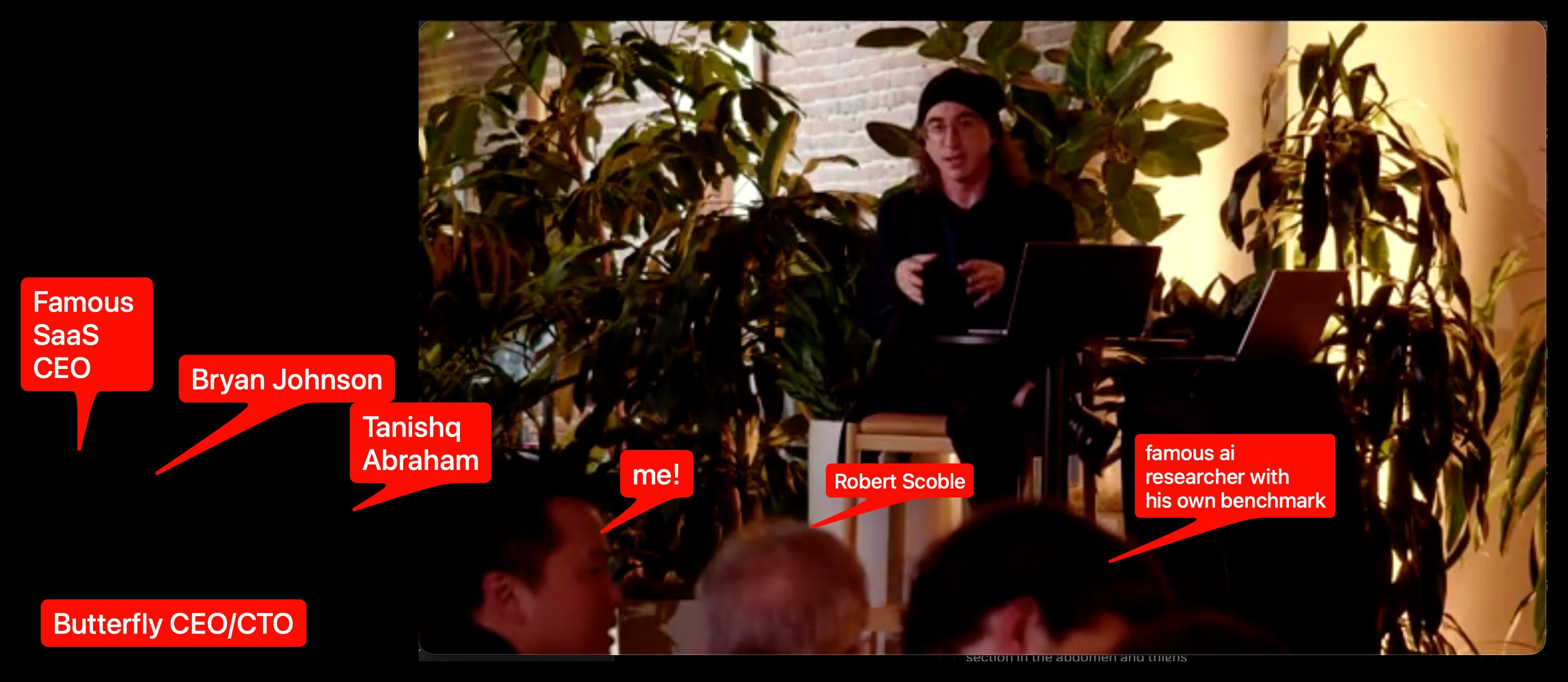
From building Discord’s developer platform and backing frontier AI companies like Anthropic, Mistral, Black Forest Labs, and Periodic Labs to now building AMP’s independent compute grid, Anjney Midha has spent years close to the real bottlenecks of AI scaling. In this episode, Anjney joins swyx at Periodic Labs to unpack why the AI race is not just about buying more GPUs, why 95% utilization would have been considered an outage at Google, and why the next era of AI infrastructure has to be more aligned, more efficient, and more responsible.
We go deep on AMP’s vision for a compute grid that makes FLOPs flow like megawatts, the difference between full-stack AI labs and horizontal pooling, why AI data centers need community buy-in, and how compute markets could evolve into something closer to an independent system operator. Anjney also explains why DeepMind’s unpublished research points to a market failure, why end-of-life prediction remains one of the most important AI applications he has thought about for fourteen years, and why “output maxing” may become a new discipline for frontier systems.
We also discuss Anthropic’s culture, why “luck favors the prepared mind” in coding models, how Claude cracked coding, why too much capital too early can make AI labs fragile, what Periodic Labs is trying to do with science and superconductors, why great researchers can become great CEOs, and why Silicon Valley is both deeply missionary and deeply mercenary.
We discuss:
Why 95% utilization was considered an outage at Google
Why AI infrastructure waste compounds at frontier-lab scale
Why “move fast and break things” does not work for AI data centers
How data center backlash, power grids, and community incentives shape AI scaling
AMP’s vision for making FLOPs flow like megawatts
Why compute needs an independent system operator
How interruptible demand and dynamic prioritization worked inside Google
Why DeepMind research hoarding creates negative externalities
AMP’s 1.2GW base-load ambition and the need for 6GW of spike capacity
Why end-of-life prediction could become one of AI’s most important healthcare applications
Frontier Systems, output maxing, and full-stack alignment
Why APIs and abstraction layers become lossy as organizations scale
Superconductors, standards, and the dream of lossless systems
SF Compute, open protocols, and the future of compute marketplaces
Why non-NVIDIA chips can still benefit from NVIDIA’s reference architecture
Trust boundaries and why chip startups need visibility into future model architectures
Why VCs often underestimate researchers as CEOs
Scientists as star athletes of the mind
Why great CEOs need to be confrontational up and down the stack
Why leading the frontier matters more than “winning”
How Anthropic cracked coding
Why culture is fragile, not a permanent moat
Why hardship was a feature, not a bug, for Anthropic
Why Anthropic’s P0 was coding from day one
Periodic Labs, physics as the constraint, and technical reality
Silicon Valley mercenaries, missionary teams, and what happens after a breakthrough
00:03:17 Responsible Infrastructure and Data Center Backlash
00:06:07 AMP Grid: Making FLOPs Flow Like Megawatts
00:12:41 Foundry, Frontier Labs, and Research Hoarding
00:14:42 Gigawatt-Scale Compute and End-of-Life Prediction
00:24:08 Frontier Systems, Output Maxing, and Alignment
00:27:38 Compute Markets, SF Compute, and Non-NVIDIA Chips
00:32:57 Trust Boundaries, Co-Design, and Researcher CEOs
00:38:17 AI Coachella and First-Principles Thinking
00:42:43 Leading vs Winning in Frontier AI
00:45:54 How Anthropic Cracked Coding
00:48:25 Culture, Hardship, and Anthropic’s P0
00:54:03 Periodic Labs, Physics, and Silicon Valley Mercenaries
00:56:26 Rishi Valley, Singapore, and Money as a Measure
00:58:47 Closing Thoughts
Transcript
Introduction: Anjney Midha, AMP, and Compute Waste
Swyx [00:00:00]: We’re in Periodic Labs with Anjney Midha, CEO, founder of AMP. Welcome.
Compute Utilization: Node Allocation, MFU, and Alignment
Anjney [00:00:09]: Thanks for having me. At Google, there are two types of utilization usually, right? That you’re measuring in these clusters. One is node allocation, and then the other’s MFU. Node utilization is usually like what percentage of cards in the data center are just, used, and that, if it’s not at, 95%-
Swyx [00:00:29]: There is no excuse
Anjney [00:00:29]: There’s no excuse, right? I think 95% at Google, which is where my co-founder, Seb, came from, he built the Borg, PBorg/GQM scheduler at Google, and there I think 95% was considered an outage, so 96% node utilization is, should be standard. And most single-tenant clusters are not running at that. So that’s one. And then MFU should be, I would say the best in class today is somewhere between 60 and 70%. I think this is a leadership question, right? Fundamentally it’s an alignment question, which is are the people who are funding the cluster and then deploying the cluster actually aligned? And sometimes theoretically they are, but in practice the number of people in the chain, the supply chain between, the capital and all the way to whoever’s managing the cluster and then whoever’s measuring what the output is, are just so many, degrees of separation away that, the, The Have you ever heard the radian metaphor, which is at the beginning of an arc, if you have two arcs that are two lines that are just off by a few degrees, that-
Swyx [00:01:33]: It spreads out
Anjney [00:01:34]: It spreads out, right? Or at scale. And I think what’s happening is a lot of cluster implementations and infrastructure, a lot of frontier labs and other teams, that’s what’s happening, is they’re, they initialize the plan, which is kind of like North Star with a team that wants to do good, but then they’re, required to scale so fast instead of iteratively that the wastage just compounds really fast at scale. And so I think we know the answer, which is just do iterative bring ups. If you spend time with people who’ve been in the semiconductor industry or the DSN industry for a long time, this is not new, and I don’t think AI should be an excuse. Sure. Something What is new? Okay. We have a lot of new capabilities, but that doesn’t mean just abandon common sense. Common sense should always be in fashion. ? AI scaling doesn’t change the in fact, if anything, AI scaling should be putting a premium on the value of common sense and infrastructure because the margin of error now is so much lower and the costs of wastage are so much higher. And the cost of wastage, by the way, is not just economic. I’m, obviously I’m, I’m an investor, or I’m an investor by background. Over the last few years now we’re running an AI infrastructure business called, AMP. And I think that it’s okay to say this time is different on the capabilities front. We are genuinely getting capabilities at, of the, of a kind we haven’t had before. That doesn’t give you an excuse to say this time is different for everything, especially infrastructure. So look, I love the hacker mindset and the hustler mindset. Now, that’s great for the startup mindset, but you remember this moment where Zuck went from saying, “Move fast, break things” to, move-
Responsible Infrastructure and Data Center Backlash
Swyx [00:03:10]: Fast and stable infrastructure
Anjney [00:03:11]: Move fast with stable infrastructure. I think now we need to move fast with, responsible infrastructure. People are going to ask where the impact is. There was a really In our class yesterday, Scott Nolan, who’s the founder of General Matter, came by at Stanford to speak about energy bottlenecks. And he had a phenomenal idea. He said, “if you look at the marginal unit economics of compute per hour,” he goes, “let’s call it, $4 an hour. If you’re having to bring up a new data center in a new community, why not just say we’re going to charge 4.50 an hour, and that marginal impact or that marginal increase, we just literally take that and give it to the local community as cash?” I can tell you as a customer of that compute, I would love that. I’d be happy to pay an additional 50 cents per hour at scale.
Swyx [00:03:57]: Wow. Yeah.
Anjney [00:03:58]: Because if that means the public benefit is so clear to the communities that the data centers are coming up in, I’m going to feel like that compute is much more reliable. Up to 20% of all data centers this year in the US, my understanding is are at risk.
Swyx [00:04:13]: Of community backlash?
Anjney [00:04:14]: Correct. Of not getting the community support they need to get brought up.
Swyx [00:04:19]: Wow. That’s a huge number.
Anjney [00:04:20]: Yeah. Now, we, I think we should dig into what that number is. I think it’s a little bit of overstated. These things can get over-reported, but it-
Swyx [00:04:27]: They don’t just care about jobs. They care about all the other stuff around it, right? They care about power grid, they care about environments-
Anjney [00:04:33]: Power grid, permitting, and so on. And imagine I think if you said there’s a new AI deal. If we’re bringing up a data center in your community, we’re actually going to reduce the cost of your electricity bill. Okay, now we’re talking. Right? The community’s going, “Okay. Now this is a deal. I feel like a partner in this.” Right now that’s not happening. There will be audits, there will be investigations, and when the, when the regulators come, I don’t know when it’s going to be, the folks who are moving fast and breaking things in the name of AI progress better be prepared. That’s certainly not how we’re procuring compute. Or we’re, we’re trying as much as we can to work with partners who have long-term track records. Many of whom, by the way, are not, AI providers. I think this whole idea of neoclouds being somehow this new category is a lot of marketing speak. There are really good, reliable, trusted data center providers in America who’ve been around 20 plus years. I love those folks. They know how to Sure. Are they sponsoring happy hours at NeurIPS? No. Are they legibly listed in Build? No. Are they hanging out in my, in, situational awareness parties? No. But they’re adults. I trust them.
Swyx [00:05:44]: They can run LAN. They can run power.
Anjney [00:05:45]: They can run LAN, power, and shell. They have credit histories. We sit down, we have a conversations. Many of them live in Silicon Valley. They’ve, they’ve had to deal with the boom and bust cycles of the internet, and I love those folks. They are stable infrastructure partners and thinkers. And I think there’s a lot of short-term thinking going on in the compute layer, and it’s going to catch up to us. It’s not going to be good.
AMP Grid: Making FLOPs Flow Like Megawatts
Swyx [00:06:07]: You talk about aligning incentives, and, I would think that aligning incentives means you have the full stack in one company, which is xAI and OpenAI, right? So you as a standalone infrastructure layer, why are you somehow more aligned to your portfolio companies than people who just own the whole thing?
Anjney [00:06:28]: In systems design, right, there’s, there’s two regimes of, architecture, right? You have integration, and then you have pooling and utilization, right? So the Or rather, the way to increase utilization often is you can do systems integration where you collapse a lot of process into one node, or you can pull out a process from a node and share that amongst various That resource amongst several different nodes. And so we see the AMP grid, which is, the, what, the system we’re building here, which is basically a compute grid. We’re trying to do for compute what the electric grid-
Swyx [00:07:02]: Power
Anjney [00:07:02]: Yeah, what the power grid did for electricity. It-- this is a pooling and utilization layer across clouds, And so we’re actually the opposite of a full stack integration like approach.
Swyx [00:07:12]: Super horizontal.
Anjney [00:07:13]: Where it’s much more horizontal and it’s, it’s multi-cloud, it’s multi-silicon. The goal is to try to make FLOPs flow like megawatts, and that is very hard to do today for many reasons. There’s stranded pools of compute all over the place and there’s no fungibility. And so right now we do it at the level of scheduling, and we often do it at the economic layer. But as we start to announce what we’re working on, it’s extraordinary like how many folks are coming out of the woodworks and saying, “Hey, I’m actually working on a way to make compute fungible at this part of the stack and that part of the stack.” And as a grid, we’d like all of these folks to participate on the grid. There’s, people often ask me, “Andra, are you a new cloud?” And I go, “No, actually neoclouds are suppliers.” sometimes they’ll ask, “Are you a venture capital firm?” I go, “No, actually they are, they are demand like sort of off-takers of the grid.” We see ourselves as what’s called an independent system operator. So if you study the history of the electric grid, once it became legible to a lot of factories and industrial sort of participants that, hey, actually it turns out pooling is a good idea. We should pool our generators instead of all having a generator running at half capacity in our backyard. There was a need for an independent entity who could coordinate all these parties. Transmission line, power generation, facilities, transmission lines, factories, and that neutral coordination mechanism is very critical. In order-- If you study like the history of grids, the most enduring ones were those that never owned their own assets. They were ones that had, or often started with long-term anchors who are uncorrelated sources of demand, a steel factory, a shoe mill or whatever in a particular town who weren’t competitive, where the steel factory want to spike up at night, the shoe mill wanted to spike up during the day. So then you pool and you share, right? So each of you is guaranteed some base load, but then you kind of schedule your spikes to drive a peak utilization across the town. The gold standard, so to speak, historically, has been these utility companies like PJM Interconnect in the northeast of America, where they, over many years became this what’s called an ISO, an independent system operator of the grid. So that’s how we see ourselves. Economically, that’s what we are. From a technical perspective, we started at the scheduling layer because Seb and Mihai, who, run engineering here, built that at-
Swyx [00:09:28]: Did your scheduling
Anjney [00:09:28]: They did that at Google. And, -
Swyx [00:09:32]: And you have infra shops from Discord as well.
Anjney [00:09:35]: I have some.
Swyx [00:09:35]: I don’t know, I don’t know if Discord is like the primary identity, but what-whatever, I’m just kind of-
Anjney [00:09:39]: No, D-Discord was-
Swyx [00:09:40]: Choosing a well-known name.
Anjney [00:09:42]: Well, I So I was running the developer platform there. The internal infrastructure I was not responsible for. That was actually a guy by the name of Mark Smith, who was extraordinary. And yes, Discord did pool So Discord is actually a counter example. I had the chance to learn a lot about fully, full stack infra there because-
Swyx [00:09:56]: It’s the same thing, yeah
Anjney [00:09:57]: It’s the, it’s the other architecture which is, Discord built its own WebRTC vo-voice and video infra. So like Discord did not use-
Swyx [00:10:08]: For the calls, yeah.
Anjney [00:10:09]: Yeah, did not For communication, Discord did not use third party infra. It was all built in-house. And then the way you maximize utilization was you pool demand from the world’s 200 million plus monthly active gamers, right? And so that’s, that’s how those stacks were constructed. Again, in systems design, the two concepts that keep coming up over and over again are abstraction and composition, right? And-
Swyx [00:10:31]: Bundling and unbundling
Anjney [00:10:33]: Bundling and unbundling, abstraction, composition, like verticalization and-
Swyx [00:10:36]: Horizontal
Anjney [00:10:36]: Horizontalization. So in that sense, AMP is an independent system operator of the grid. We pool demand, we pool supply from a number of partners we trust At about 1.3 gigawatt scale over four years. And then we pool demand from some of the world’s best, research labs and so on. We’re sitting at one, periodic labs who need extraordinary long-term demand. And the idea is that, each of them is guaranteed base load on the grid, but they can spike up and down flexibly on, for compute, with much shorter timelines as needed. That was roughly the design of the program I came up with at a16z called Oxygen. The same-- That was the same design of the GQM, BorgX, Borg GQM implementation at Google that Mihai and Seb had built. Which was that how do you allow, teams inside of Google, on the internal infrastructure to be guaranteed capacity, for their base workloads? But when they need to spike up on research, how could they ensure that was sufficiently there? And of course, the big innovation that was not discovered, but kind of implemented in the space, this infra space maybe three, four years ago at Google was the idea of interruptible demand, right? Where you just queue up a bunch of jobs and through this like sort of credit system, there can be a bidding mechanism.
Swyx [00:11:53]: Like priorities.
Anjney [00:11:54]: It’s a dynamic prioritization Basically. And jobs can get interrupted based on somebody else who’s saying, “what? I have 10 tokens, 10 credits I want to spend on this job.” Another like team lead, research lead is “Genie 3 or whatever is only worth five, credits, and NanoBanana2 is worth 10 credits,” and so the NanoBanana job gets priority. That’s a, that’s a made up example.
Swyx [00:12:15]: It’s very real. Brain Marketplace was real. And, we’ve, we’ve covered this on the pod with David Luan, who was-
Anjney [00:12:20]: Oh, great. Okay
Swyx [00:12:20]: Was there. And the criticism is that, well, actually sometimes you need central command to go all in on a thing. And actually sometimes capitalism via credits doesn’t work. Not, this is not a criticism of AMP. I’m just saying, this is a thing that has been tried, internally within Google, and it led to Google missing GPT.
Foundry, Frontier Labs, and Research Hoarding
Anjney [00:12:41]: Like, we structured ourself essentially very similarly to Google. We are structured as a holdings company. So, Alphabet holdings is Alphabet holdings, and then they’ve got these subsidiaries called Google and-
Swyx [00:12:51]: Other bets
Anjney [00:12:52]: Other bets and so on. We’ve got, AMP holdings, and we’ve got our infrastructure business, and then we’ve got a capital business called Foundry that incubates new frontier AI labs or invests in them as venture capital, like Periodic. We put a few hundred million dollars into Anthropic from our fund earlier this year. So wherever we feel like teams are making progress, especially researchers and so on who’ve pushed the frontier inside of existing labs like DeepMind, I find, there comes a point where they feel misaligned with the dictatorship of Alphabet holdings. And at that point, sometimes the dictatorship doesn’t want them anymore. And they’re “Thank you. You’ve done your job here. You’ve kind of helped us through the zero to one phase, and for whatever reason, we’re going to deprioritize your amazing, omni model or whatever it is, and instead we’re going to prioritize coding.” And, I think that’s a tragedy, but I get it. They’re Sergey and team are running their own business there. But that doesn’t mean we the rest of us should sit around waiting for that progress to get unlocked for the rest of the world and humanity. If you think about how much extraordinary research has happened inside of DeepMind over the last 10 years, I, Demis and Sergey and those guys did such a great job. But at the end of the day, so much of that has never seen the light of day?
Swyx [00:14:00]: Or they’re like papers only, but they never actually shipped it to production or-
Anjney [00:14:03]: What’s worse is the paper is actually not even being published anymore ‘cause there’s a six-month embargo inside of DeepMind, right? We’ve heard about this where a paper comes out, and then I think there’s a six-month embargo window where if anybody on the business team says, “This could be interesting” It’s embargoed for life.
Swyx [00:14:18]: Exactly. So the stuff that gets published is the stuff that’s not good enough.
Anjney [00:14:21]: There’s an adverse selection problem, basically. Yeah. At this point-
Swyx [00:14:25]: It’s, it’s a common complaint at NeurIPS, by the way, that’s “Well, why would I look at the papers that are the trash of GDM?”
Anjney [00:14:31]: Again, I think it’s a tragedy. I get it. They’re running their business, but the rest of the I think there’s negative externalities of research being hoarded, and so that’there’s a market failure. And somebody needs to unlock that research, and we can’t do it on our own. We only have 1.2 gigawatts of compute. That’s nothing. That’s about $40 billion of cloud spend. We’re going to need a lot-
Gigawatt-Scale Compute and End-of-Life Prediction
Swyx [00:14:51]: By the way, is that’s a new number. I haven’t, haven’t come across that gigawatt number. That’s huge.
Anjney [00:14:56]: Yeah. And to be clear, we haven’t secured all of it. That’s how much demand we have started to secure. I think publicly we haven’t actually confirmed how much we have for this year. In order-
Swyx [00:15:04]: Where do you want to get to?
Anjney [00:15:06]: I think the steady state would be that we have a base load pool Of 1.2 gigawatts at all times Of base load capacity. For spike capacity, right now my estimate is we need roughly six gigawatts over the next four years for all our teams to feel like they were able to keep moving the frontier, whatever they’re working on, whether it’s, like superconductor discovery over here. There’s a new investment we’re working on right now, which is in the end of life prediction space in healthcare. It’s extraordinary how much you can, you can give this was actually my graduate school work. I went to grad school for bioinformatics at Stanford Med. And I know we-
Swyx [00:15:40]: Econ, MCS, bio.
Anjney [00:15:41]: So my-- I was this really weird cat where, I was never satisfied with my major options. So at one point I was an econ major, then I was a CS major, then I was a MCS major called mathematical computational science, and they decided they were going to end that major. So I took all that coursework, and I applied it to grad school, my graduate degree in bioinformatics, which was the master’s program, and then I thought I was going to do a PhD. I never ended up doing it. I dropped out and went to work at Kleiner. But I was lucky enough to apprentice with this professor at, Stanford Med. His name is Nigam Shah, and he was working on end of life prediction. Stanford is one of the only research facilities in America that has a longitudinal patient data set that’s larger at scale. I think it’s at least 12 million patient lives. The only larger data set is at the VA, the Veterans Affairs, of America. And to do research, like do any deep learning and so on that data set, it was called the STRIDE data set at that time, you had to be a Stanford Med School affiliate, which is why I went and enrolled in the bioinformatics department. End of deep learning was early. Nigam Shah had the visibility-- the vision to see that, you could do end of life prediction to help palliative care. In America, the, over 30% of all Medicare, Medicaid spend, at least at that time, was spent on end of life care. And what’s we grew up in Asia, so we all-- Yeah, at least I won’t speak for you, but I have A very different relationship with death than I find folks who grew up in America do. In America, spiritually and culturally, especially in Western societies where Christianity, the Christian tradition sort of frames death as this terminal point, there’s often a judgment day and so on. The way we view death is with a finality. In Indian culture, in Hindu culture, death is one-
Swyx [00:17:35]: Also, he’s Buddhist as well.
Anjney [00:17:36]: You’re Buddhist, yeah. So it’s one, it’s one step in a journey of many lives, right? And so, I grew up in this city called Chennai in the south of India, and when people die, you dance on the street. There’s like a procession where your body is carried to be cremated and your family, like celebrates and there’s drums and so on. It’s this huge thing. And, It’s because the idea is that you’re going to be reincarnated. You’ve been liberated from the responsibilities of this life, and now you’re onto your next. It’s a new It’s like going off to a new college or whatever, right? And so it was so alien to me when I got here as an undergrad- That the medical system works backwards from that assumption that we have to view death as this terminal thing and delay it, postpone it’s a bad thing. And so at the time, clinical decision support in the United States was this very primitive field. Even to this day, physicians in the United States often will tell you when you have a terminal disease, this is your, we’ve diagnosed you, which is great. Our ability to diagnose you is extraordinary. You have somewhere between six months to six years to live. What do you do with that information? The error bars are so high that then you In times of uncertainty, we default to culture, and when the culture is let’s-- this is a bad thing, I’ve got to prolong my life, then you start doing things like And just to, just sort of from a systems perspective, what’s going on there is Physicians often feel like they need to provide such high error bars because there’s always some uncertainty in end of life diagnosis, and if you provide the wrong Diagnosis or recommendation to your patient, you can be sued for medical malpractice. And then your license can be taken away. It can be catastrophic for your career. In contrast, if in countries where that’s not the case, what you often observe is that patients, physicians are quite prescriptive with their recommendation. They say, “Hey, this is your condition. The literature says that you probably have this much time on Earth left. My expert opinion is that you are an outlier or whatever.” And they try to be more prescriptive, and that empowers a patient, right? ‘Cause then a patient can say, “I trust my doctor. They said on average, I have six months to live, but if I do these things, I may have a shot because of my particular predispositions or my genetic history or whatever.” And that empowers you to go about your life in a actually more scientific way than leaning on religion, culture, spirituality, and so on. In contrast, here, because of that medical malpractice sort of thing looming over your head, a physician never gives you a clear recommendation. So instead you say, “Okay, Doc, well, let’s try it all.” And then you start a whole regime of drugs and therapies, and then you often spend weeks and weeks in the hospital, and that deteriorates your quality of life. And when that deteriorates your quality of life, you instead of spending your last few days doing the things you love with your family, you’re spending it on a hospital bed. And that ends up being thirty percent of Medicare and Medicaid. So it’s worse for the patients. The doctors feel terrible. The American taxpayer is paying a huge amount of money. And so this is why Nigam Shah, who was this professor at Stanford, said, “Anjney, if there’s “ I kind of sat down with him. I was this young, I’d, I was twenty-one, and I was “I want to work on a big problem.” He’s “The big problem is end of life care.” And so we tried to do deep learning to say, to-- So we started trying to run deep learning on these tried patient data sets to say, “Could you have an AI system make a recommendation that is orders of magnitude more precise about how much time you have left once you’ve been diagnosed with a terminal condition than a human?” And then if we can get that precision to be high enough, then you can empower the patient. And it turns out the tech works. Like it’s-- Once you get the data set, like RL works. Honestly, even regression models work. You don’t need to get that fancy. At the time, we were just trying, doing like very simple neural nets.
Swyx [00:21:54]: Simple solutions, yeah.
Anjney [00:21:54]: Today, what we can do with RL is extraordinary. The problem remains then and now is regulatory, because you actually can’t shift the burden of the wrong clinical diagnoses from the physician to the AI system. And so at that time, I got quite disillusioned ten years ago for, twelve years ago where, ‘cause I felt I just didn’t have the resources to influence regulation. Today, I’m very lucky. I’m in a different place. I’ve, I’m a lot older, and so I’ve been spending a lot of time on my next incubation, which is how can we unlock the, patient empowerment by training AI models to do end of life prediction much, with much more precision and ac-
Swyx [00:22:37]: Oh, wow. You’re still focused on this the whole time.
Anjney [00:22:40]: The-- I haven’t been able to get, this out of my mind a single day for the last fourteen years. This is the hill I want, I would like to die on. There’s two, I would say. What? I actually, I’d prefer not to die.
Swyx [00:22:51]: Yeah, exactly.
Anjney [00:22:52]: But I think two bipartisan issues, I think two issues that should be bipartisan in America are how do we empower patients to make the right clinical decisions at the end of their life, such that we’re reducing the taxpayer burden with science? It’s just good old science, and AI can help here. And the second is, net positive data centers, ‘cause I think that’s the biggest critical bottleneck on training and good enough AI models to help people at the end of their life. So there’s sort of two sides of the, of the same scaling bottleneck curve, but those two, we formed AMP as a public benefit corporation. My wife and I, who you’ve met, you’ve met Viv. Her passion is education. Her family is a long line of educators and so on, and, of physicists. And so this class is my attempt to stop being the black sheep of the family and be a, an educator. But if I’m not educating, the thing I would be doing is working, on these two problems, whether on the political spectrum or as a researcher back at, in some lab. And my hope is if anyone’s listening to this podcast, if they’re passionate about either of those two topics, I’d love to hear from them. We’ll, we’ll we can share the contact in the show notes, but, we’re looking for people to join both of those missions on the, on the political side as well as on the medical side, on the research side.
Frontier Systems, Output Maxing, and Alignment
Swyx [00:24:08]: You said, this is a discipline that you want to form. You call it’s called variously called Frontier System. It’s variously called One Person Frontier Lab. What is the ideal name or shape of this? Like the, what is the mission?
Anjney [00:24:24]: Of the class?
Swyx [00:24:26]: Of the discipline that you’re, exploring, right? I The class is called Frontier Systems. But like for me, maybe one phrase is you’re, you’re just anti-waste, right? Which is wasting GPUs, wasting in human and Medicare. But is there, is there a broader theme that I’m, that maybe you can encapsulate more succinctly?
Anjney [00:24:45]: Yeah. The, from an engineering perspective, it’s very simple. It’s output maxing. It’s the, it’s the department of output maxing.
Swyx [00:24:51]: Making the most of what we have.
Anjney [00:24:52]: Exactly. I’m a huge believer in optimal outcomes. I think both in America and other countries, we are losing our appreciation for nuance, and this is the thing of And AI is the same case, right? Oh, the bitter lesson holds. Okay, fine. But that doesn’t mean you just like throw 500 GB300, 500,000 GB300s at your suboptimal model scaling and you waste a bunch of compute. It also doesn’t mean that, the most optimal is to have like 50 different architectures where there isn’t enough standardization. One of the reasons Anthropic has had extraordinary sort of velocity is ‘cause they picked the transform architecture and said, “This is simple. Let’s double down on it,” right? And now luckily there’s enough investment going to the space that we can afford other architectures, but at the time, investment was just too fragmented into other architectures, so that arguably unlocked scaling. So I think there’s a philosophy. I think we all owe it to ourselves to do output maxing with a new capability called AI on a global level. I think if I was starting a new department at Stanford, depending on how fuzzy or technical I wanted to be, I’d probably call it the Department of Alignment. Like-
Swyx [00:25:59]: It’s an overloaded term
Anjney [00:26:01]: But it is, But alignment really Is a hard problem. And I think when you unlock it, full stack alignment is super hard in any organization and in any system. Like in a, in a venture capital firm, if you can have full stack alignment between your limited partners and your, the founders who are creating the value and ultimately the public that owns the IPO stock, that is a gift that keeps giving. And when you study the history of these systems, when they start off, they usually start out small scale where the feedback loop is actually so tight that there’s alignment. And then the more you try to scale, the more division of labor happens, the more specialization happens, and at each step you add abstractions. And wherever there’s an API interface, there’s like loss. There’s communication loss. And so I think a really cool thing would be for us to figure out is there a way for us to have our cake and eat it too as an engineering discipline? Is there a way to actually scale up and scale out Without losing any alignment, without lossy transmission?
Swyx [00:27:01]: You mean standards?
Anjney [00:27:02]: So standards is one way. The other way is you just have net new capabilities. So like what we’re trying to do here is discover new superconductors. A room temperature superconductor would be a lossless transmission mechanism for energy. We would have flying cars. We are right within a few years of having a new room temperature superconductor. So I think those are the two. You either have to standardize On protocols or API specs that allow lossless communication, or you can come up with a whole new capability that unlocks so much abundance, the standardization doesn’t matter ‘cause you just unlock net new capacity. This, the, so this is what I spend my days thinking about these days.
Compute Markets, SF Compute, and Non-NVIDIA Chips
Swyx [00:27:38]: No, I think every infra person at, who wants scale and wants to output max does eventually end up thinking about this. We don’t have time to go into it, but we have done an episode with SF Compute-
Anjney [00:27:50]: Oh, cool
Swyx [00:27:50]: That is trying to standardize The futures contract for compute. I don’t, I don’t know how that’s going by the way, but like at some point this will be public.
Anjney [00:27:57]: Oh, I think Evan is awesome and SF Compute is the kind of effort that I hope we can accelerate because what often happens is these exchanges are very hard to get, they, it’s hard to bootstrap them, right? Because they often require-- There’s many inefficiencies between parties. There’s trust boundary inefficiencies in infrastructure because you don’t trust, one part of the stack doesn’t trust another part of the stack to give them visibility. There’s capital markets inefficiencies, there’s operational efficiencies. So if you can inject like a single shock to the system of a ton of compute demand or supply, then you can accelerate, these new flywheels. And so my hope is one day, or soon, if SF Compute needs extra like has excess capacity, they just hook it up to the grid and they get flooded with demand from us. And on the other side, if they have a ton of demand but they don’t have supply, they just again hook up to the grid and it’s a two-way protocol where they can just hook up to our capacity. And I don’t think we’re too far from that. Today our working implementation of it is mostly through a group of labs, universities, and a few sort of trusted parties who are, who all feel like they’re in alignment to borrow an over sort of used word. But our hope is to just have it be an open protocol that anyone can hook up to on-
Swyx [00:29:20]: Hook up for demand or hook up for supply? In primarily demand, it sounds like. Like you-
Anjney [00:29:25]: No, both
Swyx [00:29:26]: You would want to offer demand.
Anjney [00:29:27]: Both. Yeah. Unfortunately, what’s happened in the last six weeks is, we thought we’d have a bunch of excess capacity by the end of this year. It’s all gone.
Swyx [00:29:37]: It’s exploding.
Anjney [00:29:38]: It, yeah. It’s all gone. And so I have, my text messages are full of friends, we know many of these people, these are founders who’ve raised billions of dollars in San Francisco going, “Oh, any chance you have like 50 nodes in the next few weeks?”
Swyx [00:29:51]: What is the scope for, non-Nvidia, right? You have Lisa Su coming and, Rainer Pope as well. And so There is a lot of demand for, more performance Alternative architectures and all that. At the same time, this hurts your standardization.
Anjney [00:30:11]: I don’t think so. So actually Rainer’s a great example, right? Rainer is a CEO and founder of, MatX. I actually had him by for office hours in the class earlier today, and there was an insight he brought up that I hadn’t considered before, which is when they decided to pick the standard For their data center, they picked the NVIDIA reference architecture. So the MatX chips Just plug in to any site that has an NVIDIA bring up planned. And, the-
Swyx [00:30:42]: It’s just software then. It’s, it’s not the-
Anjney [00:30:44]: A-
Swyx [00:30:44]: Hardware.
Anjney [00:30:46]: Well, from an input and IO perspective It’s the same footprint as an NVIDIA rack.
Swyx [00:30:52]: That makes sense.
Anjney [00:30:53]: Where they have done, innovated a bunch from what I can tell is on systems co-design. Which is where a lot of the gains are to be had. And so he picked He was “Anjney, we, there’s just so much work to do when you’re building a new chip company.”
Swyx [00:31:08]: Can’t fight every front.
Anjney [00:31:08]: You just can’t fight on every front. So my question to him was, “Well, you’re working on this new chip. Their tape-out is next year. What, who are you going to partner with to host the chips?” And he said, “Whoever will host them. That’s just not, that’s not my focus.” And I said, “But how did you “ you decided back to our earlier systems design question, he decided that, he didn’t want to be a full, fully integrated chip provider. The bottleneck they’re focused on is the logic die, and they, he feels they can crank out a ton of performance gains through co-design there. But then that means you delegate, to our question earlier, it, you he’s the data center provider is a different part of the stack, and so then he’s dependent on that part of the ecosystem to host his chips to get the performance gains to the customer. So now you have another abstraction, and you might have loss. So I asked him, “How do you prevent loss?” And back to your point, he said, “I just picked the NVIDIA standard ‘cause I didn’t want to Like I wanted to piggyback off of an existing protocol.” And that, what’s great about NVIDIA is that reference architecture is known.
Swyx [00:32:15]: Open.
Anjney [00:32:15]: It’s open. They’ve published it. So Jensen’s actually enabled someone like Rainer to build a chip company like MatX, and I don’t see them as competitive. The compute demand is so high. Like, I don’t I think NVIDIA’s not able to meet the demands of production, so we just need more chips. And I think it’s very smart what MatX has done, which is say, “We’re just going to we’re not going to innovate on the data center design ‘cause actually, thank you, Jensen, you’ve done all the hard work. Where we can innovate is somewhere else.” And I think that’s, that’s very healthy. I think that’s how we unblock new bottlenecks. And my view is these, the, chip teams like MatX, who have arrived at the insight that co-design is the way, The primary bottleneck for them is trust boundary. To do co-design well, you need visibility into the next model generation as soon as possible ‘cause it takes two years to tape out. So if by the time I bring my chip to market, your model architecture’s changed, I’m host. Now, when he was inside Google, he was sitting next to the Gemini team. He was on Palm or whatever.
Trust Boundaries, Co-Design, and Researcher CEOs
Swyx [00:33:19]: His co-founder was the, was one, was one of the Palm guys, I think.
Anjney [00:33:23]: Yes. Yes, exactly. So when you’re inside the trust boundary of Google, then your systems co-design loop is super tight. When you leave as a founder, one of the biggest risks you take is now you’re outside the trust boundary. And so what I love doing is helping chip teams who can help us unlock more capacity for the independent ecosystem access to trust. Because when I If I’ve been, involved with a lab from day one, and I was lucky enough to work with Anthropic, and then I’m on the board of Mistral and helped Black Forest Labs get started. I think at this point I’m on six or seven different teams.
Swyx [00:33:57]: Only six? I feel like my mental number was going to be 13, but yeah, it’s-
Anjney [00:34:02]: No, I go deep with one at a time.
Swyx [00:34:04]: You’re founding CEO of Arena.
Anjney [00:34:07]: Nah, that was an, that was an-
Swyx [00:34:08]: Administrative CEO
Anjney [00:34:09]: It was an administrative five-month gig where Whalen and Anastasios were graduating from their PhDs, and they didn’t need a product team. So I helped recruit the head of engineering product and design. But Anastasios has always been the CEO of that company. I played a pinch-hitting I’m an intern. I was CEO intern For five months. -
Swyx [00:34:33]: I interviewed him, and he’s he’s very well-spoken. I think he’s a debate, former debate, champion. But also very quantitative and mathematical, which is-
Anjney [00:34:41]: He-
Swyx [00:34:41]: Such a unicorn.
Anjney [00:34:43]: See, what’s amazing about him? If you look at his output, he’s an output maxer. By the time he was graduating from his PhD, which he only graduated last year, he had published more work with a citation count than, people twice his age. But at the same time, he’d already started a project called LLM Arena that was being used by millions of people As a side project. And time and time again, what I’ve realized is venture capitalists suck at seeing human beings as, dynamic agents where-
Swyx [00:35:14]: They want to put you in a box
Anjney [00:35:15]: They want to put you in a box.
Swyx [00:35:15]: This is your thing.
Anjney [00:35:16]: So the first time I got introduced to Anastasios, somebody had told me “Oh, he’s amazing, but he’s a researcher.” I was “what? What do you mean he’s a researcher?” That’s what-
Swyx [00:35:28]: Like he’s not a CEO, not a founder.
Anjney [00:35:29]: Not a CEO, exactly. I was “Are you crazy? Do you Have you met Dario?” Dario’s a scientist. He’s gone from zero to, what will soon be a trillion-dollar company in four years. Being a CEO, nominally speaking, is not that hard. Being a good CEO is hard. Being a great CEO actually requires a level of performance that scientists who have already published at the top of their field have accomplished. It is super hard to be a competitive scientist. To publish in academia over the last 20, 30 years, to make it to the top of your discipline at a place like Berkeley, you are a star athlete. Like, you are an athlete of the mind, and you perform at the highest levels. And to get there, whether you’re, Anastasios or Whalen at Berkeley, or you are Robin, who-
Swyx [00:36:23]: BFL, yeah
Anjney [00:36:24]: With Black Forest, who created Stable Diffusion, or if you’re, like Guillaume at Meta, who created Llama before he started Mistral. The amount of human leadership you have to demonstrate to get the resources, like get the trust of the organization, publish it, put it up. I would just fund researchers all day Right? If who have contributed already to the field. If they’ve, if they’ve put SOTA out there, they’re, they’re star athletes already. If they haven’t done SOTA Look, they can still be good CEOs, but then I find the failure mode is that they just don’t want to be CEOs, they primarily want to publish, and that’s okay, too. One of the things we do with the AMP Grid is we donate excess compute. We have two nonprofits, like university labs. We carved out like a couple thousand H100s. But I do think there’s extraordinary research being done on university campuses. My father-in-law’s a physicist. He’s a professor. Extraordinary work in physics, and we need that. But if you want to be a CEO, what you need to be willing To do is be super confrontational, outside of science. Like within the scientific community, some of the best researchers are very confrontational about their convictions, right? This architecture is right. To be a great CEO, you basically have to be willing to be confrontational up and down the stack.
Swyx [00:37:41]: To your own team.
Anjney [00:37:42]: To your own team-
Swyx [00:37:43]: To customers
Anjney [00:37:43]: Hiring, recruiting customers. Well, I would say, Yeah, pretty much to everyone Everybody. Of course-
Swyx [00:37:50]: I see, I feel a little bit of that in my own work, but yeah, I can’t imagine the stakes that Dario has had to go through. It’s, it’s pretty insane.
Anjney [00:37:56]: No, I don’t think the stakes are that different From how you’re feeling it, right? Stakes are personal scaling vectors, right? The stakes that seem so low to you, like having this podcast where you can talk to somebody and just have a you’re an extraordinary communicator, right? Like already in this conversation, you’ve pulled more out of me than most people, and I’ve been on 12 podcasts in the last two weeks.
AI Coachella and First-Principles Thinking
Swyx [00:38:17]: I think I, we’ve just seen each other enough that there’s some base trust.
Anjney [00:38:20]: There’s base trust.
Swyx [00:38:20]: And I think, and I know that you, that I’ve done my homework and like I know that trust is a big deal for you, so.
Anjney [00:38:27]: I think trust is about consistency, and you and I have seen each other In the community for years, right? Like, I remember the first time we met was at NeurIPS in New Orleans. I don’t know if you remember that, luncheon.
Swyx [00:38:38]: Oh my God.
Anjney [00:38:39]: Reiko had set up this Reiko’s amazing, and he set up this luncheon and-
Swyx [00:38:43]: Yeah, I was “Who’s this Discord guy?” I’m “Okay.” But-
Anjney [00:38:45]: No, you weren’t-
Swyx [00:38:46]: You were just “You made some investments.”
Anjney [00:38:47]: You were much less polite. You were “Who’s this VC?” You’re like-
Swyx [00:38:51]: No, I Was I? Oh my God.
Anjney [00:38:53]: It was-
Swyx [00:38:53]: I’m so sorry
Anjney [00:38:53]: It was visible on your face.
Swyx [00:38:54]: I’m so sorry. But you weren’t, you weren’t The introduction was bad. I was I didn’t know who you were.
Anjney [00:39:00]: The, see, this is the thing about context, right? Like, but then I think I heard your accent. And I was “Are you-”
Swyx [00:39:06]: Singapore, yeah
Anjney [00:39:06]: “Are you Singaporean?” And you’re “Yeah.” And I said, “I went to high school, JC, in Singapore.” And then the ice broke. But This is the there are in the scientific community, sometimes the stakes are very high for people who haven’t had the emotional, what is called EQ Coaching and mentorship, right? Which is like to have scientific impact, you often need to be a extraordinary emotional, like emotionally in tune person with the folks you’re trying to influence. And so what comes so naturally to you is actually a super high stakes thing to other people. And so I wouldn’t assume that Dario’s more stressed out than you. These things are you’d be surprised how similar and small sometimes the problems are to you That some of the world’s biggest, leaders are facing. And that’s what I’ve learned from this class. The guest speakers are Sam, Satya, Jensen.
Swyx [00:40:01]: AI Coachella.
Anjney [00:40:02]: Yeah. It’s AI Coachella, right? So we got to get all the headliners, and they’re I’m very lucky that some of these people have either mentored me over the years or I’ve done business with them. And when you, take the performative stuff out and any assumptions you may have about these people that you read in the press or on Twitter, We’re all just humans. We’re all trying to get along. And what’s so special about this moment is AI is forcing, like scaling, the bitter lesson is forcing a lot of people to revise their assumptions for how the world works and go back to first principles or go and educate themselves. So the kind of people I was, I won’t name who this person is, but I was at an event last week in Texas and, ran to somebody who said, “Anjney, I came across the class. What do you think about real time action prediction models?” And I was, don’t know how happy it made me feel when they asked me that question. I know they’ve done the work. They’ve challenged themselves. I’m, they didn’t ask me, “What do you think of world models?” They said, “What do you think of n-”
Swyx [00:41:04]: Real time action prediction
Anjney [00:41:05]: “action, real time action prediction models?” World models, don’t get me wrong, are cool and everything, but you and I both know that is a layer of abstraction that is sometimes not usefully precise enough. Right? Ours-
Swyx [00:41:16]: There’s like four different kinds of world models.
Anjney [00:41:17]: Yes, exactly.
Swyx [00:41:18]: We’ve done the part with general intuition, by the way, which is very focused on, -
Anjney [00:41:22]: Oh, cool. Yes. I love Pim. Pim is great. And this is what I love about people who’ve done that level of work. They realize they’re not in competition with people who the rest of the world thinks they’re in competition with.
Swyx [00:41:34]: Because they’re not in the category, they’re in the specific thing they’re trying to do.
Anjney [00:41:37]: They’re focused on their mission, and they have a systems understanding of the bottleneck they’re trying to solve. And when somebody else says, “I’m working on real time, action prediction models too,” Pim goes, “Oh, I love that person. I want, I can learn from them.” But the minute they’re “Oh, that person’s a world model person,” it’s “like which type of world model person?” But mostly they’re just trying to figure out if it’s a waste of their time, because we don’t have enough time. So, Pim, for example, is super, loves this other company I work with we’ve talked about called Black Forest Labs. And he’s mentioned to me multiple times that he’s so, He thinks what Flux is doing is really cool. Andy Blattman came by and spoke in the class. And what I find over and over again is for people who do the work, who can be usefully precise enough about like what is actually going on in the world of frontier research, The sense of camaraderie is still well and alive, but it gets lost sometimes when you have to like abstract The technical complexities in, business terms And then the VCs are “How are you different from that world model?” I’m going to say Where do I even start to explain this stuff? And then the misalignment creeps in.
Leading vs. Winning in Frontier AI
Swyx [00:42:43]: This is good. Yeah, I think, people listening get a sense of, what it is like to operate at a real level, like yourself, rather than at, the journalist level, where you have to sort of put everyone in, a rough category and create a narrative of competition, and who’s winning today, who’s behind.
Anjney [00:42:58]: It-- this idea of winning is so Weird to me.
Swyx [00:43:03]: You do want to win. You want you want competitiveness.
Anjney [00:43:06]: No, I think you want to lead.
Swyx [00:43:07]: You want SOTA.
Anjney [00:43:07]: No, I think you want to lead. Yes, so you want to push the frontier. You want to push the SOTA. You want to do something that hasn’t been done before. You want to capture value, but you don’t want to capture so much value that, people think you’re unaligned with your mission or trying to do what’s best for the world. You want to capture enough value that you can keep innovating, right? And I think that people want to lead, they don’t really This idea of winning and losing, again, I love Jensen. He’s a, he’s a leader. The mindset that he talked about on Dwarkesh’s podcast, right? He’s “I didn’t wake up with a loser mindset.” I think that was awesome, right? Because he’s, he’s an engineer. Dwarkesh has done the work. So there’s at least-- even though the, to me, it was very obvious they’re talking about the same thing, they just passed each other. They just had to basically, Jensen has this, five-layer cake abstraction of how the industry works. And Dwarkesh had, I think from that podcast, had more of, a pre-training, mid-training, post-training systems loop concept.
Swyx [00:44:04]: It’s just a factor of who he talks to, right? Again, it’s very clear.
Anjney [00:44:06]: It’s the systems It’s the abstraction, the mental models, the It’s the whole-- Dude, so much of the problem in the world is reasoning by analogy. And then the assumptions that are held invisibly.
Swyx [00:44:19]: Yeah, I’ve, I’ve said, this is actually the best time in human history for first principles thinkers. Because everything you think will happen is actually now coming true.
Anjney [00:44:28]: Correct. And the venture capital community is, notorious for this, where people look-- In times of uncertainty, they, cling to axioms that ended up being true from the previous era, and they kind of like proclaim them with confidence as if they’re truths, but they’re not. And it’s very important to see the distinction between a heuristic and an axiom. An axiom can be proven-
Swyx [00:44:55]: Like from internal consistency point of view
Anjney [00:44:56]: With internal consistency. A heuristic is a way you kind of a shortcut. And my God, the number of people I have had to put up with over the last few years who proclaim-- use heuristics As axioms to judge people, to judge which companies are going to succeed or the number of people who are “Oh, yeah, Anthropic, they’re just training models right now,” but this one continue.
Swyx [00:45:22]: Because that’s a B2B SaaS?
Anjney [00:45:23]: Yeah, the, like Which over the fullness of time, if you squint at it, maybe. But the way you arrive there is so important that you can-- you just, you can dismiss people. Here’s what happened, right? What happened is Anthropic basically achieved takeoff in October of last year. That training run-
Swyx [00:45:41]: Whatever, three seven?
Anjney [00:45:42]: I forget the numbers now, but whatever that checkpoint was-
Swyx [00:45:45]: We saw the cognition.
Anjney [00:45:46]: Yeah. Right? You probably-- The, to those of us in the community, especially once post-training was done and it was released in December-
Swyx [00:45:52]: Yeah. Can I sneak a sneaky question in there? I don’t know if you have a perspective, maybe you don’t, I just The number one question is how did Anthropic crack coding, right? Because Claude One, Claude Two, okay, like it was part of it, but it wasn’t a big deal. And the leading hypothesis, it’s a lucky dice roll that was then compounded, right? Like it was like Mildly better, but then they saw it and they were “Okay, let’s really invest.”
How Anthropic Cracked Coding
Anjney [00:46:17]: I had this very annoying teacher. I went to this boarding school called Rishi Valley in India, which is like this, bird preserve. It’s like three hundred and fifty acres of bird preserve in rural India, and there was no technology for seven years. There was this teacher, I won’t name them, but they would have this-- I hated it every time he said this to me. He was “Luck fa-favors the prepared mind,” which is like a common saying, but the way he delivered it, always grated me, ‘cause he was always I was always one of those kids who got, a good grade without trying very hard. ‘Cause like high middle school is not that hard if you, if you’re generally, paying attention and so on. And there was this one time where I-- But then I would get an eighty percent grade, and he would keep pushing me to say “The reason you didn’t get the ninety-five plus percent is because you’re not that lucky.” And I would say, “What do you mean?” ‘Cause I would think that I deserved that grade, and I would sometimes argue with him. And he’d say, “You didn’t have a prepared mind. If you want to get lucky again “ There was basically one time where I got like ninety-five or ninety-six on this, on this subject, and I, now that I felt entitled. I was “Okay, I’m going to keep doing this,” and I didn’t. And then he was “Luck favors a prepared mind. You got lucky last time, but you got to stay prepared.” And I didn’t understand what he meant. Now, as I’m older, I’m okay, these adults actually knew a thing or two. Anthropic has been the most prepared company for four years. And so then when the right, context data comes in, the right developers start sending in, the right context diffs, Sure, you could say you got lucky, but if you ask me, they’re pr-pretty damn prepared with paranoia for like four years. And you have to remember, it was so hard for them to get going early on that they had to do so much more with so much less that you just have to be prepared to be so efficient.
Swyx [00:48:06]: Yes. There’s numbers on their burn compared to OpenAI. I’ve, I’ve written about it, but they are so much more efficient in their, in their tech stack.
Anjney [00:48:14]: It’s not even It’s not funny.
Swyx [00:48:14]: Not even close.
Anjney [00:48:15]: Yeah. But it’s so clear, right? Like how to output max for the world. They have been prepared, and you could call that luck, but Luck favors the prepared mind.
Culture, Hardship, and Anthropic’s P0
Swyx [00:48:25]: This is one of those things that I was going over some of your old lectures and, you were data, people think it’s a moat and actually it’s culture and actually it’s team Actually. And I, it’s-- there’s different levels of moats, and this is the ultimate one that determines everything else. Which you can then compound
Anjney [00:48:43]: You’re saying culture is the ultimate moat? Yeah. But the thing about culture is it’s very fragile. So moats, I don’t think they’re-- there’s very few moats I found that are actually moats. They’re-- It’s, it’s a nice concept, but in reality, you have to replenish your culture. Ben Horowitz was, the speaker in CS153 on Tuesday, and I asked him this question about the culture bottleneck in teams because, there are several AI teams-
Swyx [00:49:09]: His book, Hard Things About Hard Things
Anjney [00:49:11]: Hard Thing About Hard Things. But more concretely, there are so many AI labs today that have all the cash they need, they have all the compute they need, and they’re still not able to ship anything SOTA. And then you start seeing people leave and so on, and my diagnosis, it’s, is it’s the culture. And so I asked him, Ben, they’re-- He’s been one of the most aggressive investors in AI labs. He goes back to this thing which resonates in my mind a lot. It-- When I used to work at a16z, I would, book a conference room, and right outside the conference room, which is closest to the toilet ‘cause it was the fastest way for me to go use the bathroom between Zoom meetings-
Swyx [00:49:45]: Oh my God, I’ll put maxing my toilet optimization. Okay, never mind.
Anjney [00:49:48]: It was not healthy in hindsight, but maybe this is TMI. But anyway, outside that conference on the wall was this quote that was printed that said, “Culture is not a set of beliefs, it’s a set of actions.” And it’s by Bushido, is this, Japanese philosopher. And if you stop taking the actions that demonstrate the mission alignment to what you’ve said to your team and to your-- the world matters to you, then your culture starts to fray. So it’s not actually a moat, I would say. It’s a very brittle, fragile thing that requires daily tending to like a garden. But if you figure out the system to keep that garden tended, which I think ultimately comes down to knowing yourself ‘cause you most naturally, if you’re authentic and so on, you’ll naturally make trade-offs that seem effortless to you, but that reinforce your culture. And then That becomes this very hard thing for other people to catch up to. And at Anthropic, from day one, there was this mission like-- missionary like zeal and belief that, hey, these capabilities will scale. These systems are stochastic, not deterministic. There will be error bars, and until we crack interpretability, there’s risk. And at some point, people will go-- stop using Claude just for coding. They’ll use it in some mission-critical context where there’s-- it’ll throw off a bug, and then people are going to come blame them, and they want to be on the right side of history where they said, “Yes, this is a powerful technology. We think it’s going to change the world, And we want to be very measured and scientific about the fact that, ‘Hey, guys, these are stats models, statistical models.’ That’s how statistics works.” ultimately, when you’re training neural nets, it is just a statistical system. And I think that Belief that safety is important and that it might seem toy-like in the early days, and sometimes, you could say, “Anjney, they totally over-exaggerated the risk,” like two years ago when they said, “Let’s not launch Claude One,” or whatever. Well, okay, maybe in hindsight, but hindsight is twenty/twenty. And at the time, they didn’t know how that model would be used, and to them it felt existential if somebody came and said, “You weren’t responsible. It-- This wrote a bug.” The liability associated with that is massive. So how do you prevent against that? Well, day in, day out, you say safety. And when you start deviating from that, you have the team hold you accountable, you have the world hold you accountable, and I think that becomes a moat over time. At some point, that moat will get challenged and so on, and then it become fragile. I hope it endures because that’s the beauty of having founders run the show, ‘cause they can make really hard trade-offs to do mission alignment. The hardest part is in the earliest days when you don’t have a group of people who are going through difficulty, stress, crisis together, then your culture doesn’t get defined sharply enough, and that’s what I’m worried about right now, is there’s so much money going to these labs. There’s no hardship. There’s no-
Swyx [00:52:50]: To anyone who knows
Anjney [00:52:51]: There’s no to anyone who knows. And that, in hindsight, was a feature, not a bug for Anthropic. The number of people who said no, the number of people who said, “Sorry, we’re all doing investors in OpenAI,” that is competitive difference. It forces you to really understand, what is the hill you want to die on at the expense of everything else. What’s the P zero? And there, P zero from day one was coding. The reason, the mechanism system there was if we crack coding, Then we will crack AGI. Our mission is AGI. We want to get there safely. If we focus on coding, it’s such a generally powerful capability that it can accelerate all kinds of work on a computer. And if we can accelerate all kinds of work on a computer, we can get to AGI. As a result, they’ve had to say no to so much other stuff. Here, superconductivity is the mission. Coding is not the mission, so we use Claude. We’ll use Claude. We don’t care about that. The mission defines everything, and I think teams who can raise too much money too fast, too early, who don’t have to define what the P zero is, because that’s the only thing when you have scarce resources you got to You got to invest in, Those cultures end up being the most fragile and brittle, and they almost don’t even make it to take off.
Periodic Labs, Physics, and Silicon Valley Mercenaries
Swyx [00:54:03]: So let’s apply this to Periodic since we’re here. What is the constraint or the hardship that they were forcing themselves to go through?
Anjney [00:54:09]: Dude, h-here? Are you crazy? No. Well, the-- Yeah, okay, so on a technical level, it’s physics. It’s literally reality.
Swyx [00:54:17]: But is there, is there, is there another one that’s, the company building-
Anjney [00:54:20]: Y-yeah. W-when-- Liam was a co-creator of ChatGPT, and Doge was skip level from Demis at DeepMind. Had created, Genome, so one of, one of the most important tools to come out of DeepMind. At the time, I was a visiting scientist at the Stanford Physics Department, and we had started benchmarking- frontier models on physics and science capabilities, they were not very good. They were good at, doing things like summarization of papers. But if you said, “Hey, could you, analyze the scientific data coming out of a condensed matter physics lab?” I was, I was in the condensed matter physics group at Stanford. It was terrible. So it was not popular 12 months ago. Periodic and I wouldn’t go into details, but there were people who said, As recently as a few months ago, who said they wanted to join the company. And they, for whatever reason, took a job elsewhere. They kind of reneged on their commitments. They took a job elsewhere that offered more money. Then we had a technical breakthrough. Create a SOTA system and, like It was-
Swyx [00:55:30]: I’m excited-
Anjney [00:55:30]: Yeah. When you see-
Swyx [00:55:31]: To cover it. We’ll, we’ll be doing a separate pod On Periodic.
Anjney [00:55:33]: And then they wanted to come back, and I said, “No.”
Swyx [00:55:36]: Yeah, of course.
Anjney [00:55:36]: “No way. You If you come here, you-”
Swyx [00:55:38]: You had your shot.
Anjney [00:55:39]: “You had your shot.”
Swyx [00:55:40]: ‘Cause it’s actually about culture.
Anjney [00:55:41]: Of course.
Swyx [00:55:42]: And first principles, yeah.
Anjney [00:55:43]: And look, I believe in second chances and so on, but time will need to heal. Some of those wounds were they will leave deep For them, will leave deep scars, but because I started my company at 24, 25, I had I went through the whole cycle of betrayal and drama. And so you realize, Silicon Valley is both a very missionary place, it’s also a very mercenary place. Sometimes people lose their minds With when they, when big money gets involved, which is, in the grand scheme of things, quite small money. Like, We you’re taking it-
Swyx [00:56:17]: Life changing to me, maybe less to you, but a lot of people have not been taught-
Anjney [00:56:21]: Like, I was-
Swyx [00:56:21]: How to deal with money. And yeah, we didn’t come up from, that privilege of a background, right?
Rishi Valley, Singapore, and Money as a Measure
Anjney [00:56:26]: I’m a street dog, man. I, look, I grew up in Rishi Valley. We didn’t have, like This was enforced brutalism. Jiddu Krishnamurti started the school, was “you will sleep on a hard slab of stone.” my mattress was this thin. ? And when you grew up in Singapore, when I got to Singapore, I used to sleep I was, part of the scholarship program, but, which was amazing. I’m very grateful to the Singaporean government. But I was at St. Andrew’s JC, and our dorm, which was by, Boon Keng-
Swyx [00:56:57]: -huh
Anjney [00:56:57]: MRT, was-
Swyx [00:56:58]: Which is not a prestigious neighborhood.
Anjney [00:57:00]: Well, it was a, it was a transition dorm. Because they were building this beautiful, residential campus on site At SAJC in Potong Pasir. But the We were the last, I think the second last batch to be in the transition site, which was some old, I think, I think it was, an immigrant labor-
Swyx [00:57:20]: That’s where we keep the people who work on the factories and stuff.
Anjney [00:57:23]: Right. So I lived in a For my 11th and 12th grade, I slept in a bedroom the size of this. Like, literally from there to here. Right? There were, bunk beds. And so, one bunk bed here, one bunk bed there, one on top, one on top, one more here, and then here was where our, we kept our toiletries and clothes and stuff. And when one guy would climb onto his bed there, this one would shake.
Swyx [00:57:52]: Oh, my God.
Anjney [00:57:53]: And one of my roommates who was from, And it was amazing. I loved every minute of it. My roommates were a guy who was a top ranked Dota player from PRC, from China. Didn’t speak a English. Loved him. Amazing guy.
Swyx [00:58:09]: All the Singapore scholars are fantastic, and honestly, we should treat you guys better ‘cause of what you go on to do. But-
Anjney [00:58:15]: Look-
Swyx [00:58:15]: Cool to know.
Anjney [00:58:16]: No, it what I’m saying is I don’t need much to be happy in life? When you’ve lived through that, money is a way, I think sometimes we measure ourselves, but when it’s, when it Stops becoming, to borrow Goodhart’s law, when it stops becoming just a byproduct and more of a measure, it stops having meaning.
Swyx [00:58:38]: You use it to do more meaningful things.
Anjney [00:58:40]: Correct.
Swyx [00:58:40]: It’s resources to pursue a mission. I’ve kept you longer than I am supposed to, but we should continue this in-
Closing: Chicken Rice and What Comes Next
Anjney [00:58:47]: Any time, man
Swyx [00:58:48]: A part two.
Anjney [00:58:48]: Where to find me.
Swyx [00:58:49]: I really enjoyed this. Yeah. You’re, you’re so inspirational and, yeah, there’s more I want to dig into about how you’ve, set everything up, every single one of your investments, how AMP is going, but we don’t, we’re running out of time for that. But thank you so much for joining us.
Anjney [00:59:01]: It was great to see you, man. Let’s get chicken rice sometime.
Swyx [00:59:04]: Yes. I’m Actually, tomorrow. I’ll send you a, I’ll send you details. I’m hosting a birthday party.
Anjney [00:59:09]: And I don’t get an invite?
Swyx [00:59:10]: And it has to be a Singaporean birthday party, yes. Yeah, you’re getting invited right now.
Learn how GPT-5.5 Instant improves ChatGPT’s health and wellness responses with stronger reasoning, better context, clearer communication, and physician-informed evaluations.
AI chatbots are smarter, faster and more versatile than ever. See how top platforms like OpenAI's ChatGPT, Anthropic's Claude and Microsoft's Copilot stack up in this hands-on comparison.
Inference is now the dominant force in enterprise AI — and with it has come an inconvenient reality: Data is almost always transported to compute. Every inference call moves sensitive enterprise information out of the systems where it lives and into external environments optimized for GPU throughput rather than data governance. This creates friction that compounds at scale: rising costs, expanding security exposure, and a growing tangle of data copies that drift out of sync with operational reality.
What enterprises actually want is different: to keep data and IP intact within the database rather than creating multiple copies and managing the resulting inconsistencies.
Research across more than 2,050 senior executives from major enterprises worldwide suggests that 95% of organizations intend to become their own AI and data platforms within the next 780 working days. Yet only 13% have successfully reached that goal. The organizations that have succeeded are achieving almost five times the return on investment of those still struggling to operationalize AI.
What separates the leaders from the followers is not model quality. It is infrastructure strategy.
The most successful organizations have adopted a sovereign-by-design approach. More than 75% are operating across multiple clouds and on-premises environments rather than relying on a single hyperscale provider. They are building AI around their own business, regulatory, and operational requirements rather than adapting those requirements to fit a cloud vendor’s architecture.
As AI moves from experimentation into production, CIOs are discovering that training models is relatively easy. Running them efficiently, securely and compliantly across thousands of operational workloads is where the real challenge begins.
The shift from training to inference
Training is a discrete event. Inference is an ongoing business process.
A model may be trained once, but it could be called millions of times each day. Every fraud assessment, insurance claim review, customer service interaction, medical recommendation, sanctions check, or predictive maintenance event relies on inference occurring against live operational data.
“What separates the leaders from the followers is not model quality. It is infrastructure strategy.”
This distinction fundamentally changes enterprise infrastructure requirements.
Training workloads prioritize compute density and GPU availability. Inference workloads prioritize latency, governance, reliability and cost control. They must operate where business data resides and where compliance requirements can be enforced.
For heavily regulated industries such as financial services, healthcare, telecommunications, energy and the public sector, inference cannot simply occur in whichever region offers the lowest compute cost. Data sovereignty requirements, audit obligations and security mandates often dictate exactly where workloads must execute.
The challenge therefore becomes much larger than AI itself. Organizations need an operating model capable of bringing together compute, data and governance without sacrificing flexibility.
Why neoclouds are emerging as a critical layer to cross the chasm to production
This is where neoclouds have become increasingly important.
Unlike traditional hyperscalers, neoclouds are purpose-built around AI infrastructure. Their focus is not delivering hundreds of generic cloud services but rather optimizing for GPU access, AI performance, and flexible consumption models.
For many enterprises, neoclouds offer a compelling answer to the growing demand for specialized AI compute. They provide access to the latest accelerator technologies while enabling organizations to scale workloads without the complexity often associated with large cloud environments.
“The future of AI architecture therefore depends on bringing models closer to data rather than moving data closer to models.”
However, neoclouds solve only one part of the enterprise AI equation.
AI does not create value in isolation. Models require context. They need access to customer records, transaction histories, operational workflows, policy documents, supply chain information and enterprise knowledge. Moving these assets into separate AI environments creates duplication, latency and governance challenges.
The future of AI architecture therefore depends on bringing models closer to data rather than moving data closer to models.
Why Postgres has become the enterprise AI foundation
As organizations look for a common platform that supports both operational and AI workloads, Postgres has emerged as a natural foundation.
Postgres already serves as the operational backbone for many of the world’s most important applications. It combines transactional reliability, extensibility, and scalability with the openness that enterprises increasingly demand. 70%+ of AI-related application development is happening on Postgres.
What makes Postgres particularly relevant in the AI era is its ability to become more than a database. It can serve as a governed memory layer for AI systems, integrating operational data, application context, permissions, observability, and retrieval capabilities into a single architecture.
This dramatically reduces complexity.
Instead of maintaining separate infrastructures for transactional systems, vector stores, AI memory layers, and governance frameworks, organizations can consolidate around a trusted operational platform that already supports their mission-critical workloads.
For CIOs seeking to balance innovation with control, this architectural simplification represents a significant strategic advantage.
Why sovereignty matters more than ever
Sovereignty has become one of the defining themes of enterprise technology.
For banks, sovereignty means maintaining control over financial data and regulatory obligations. For healthcare organizations, it means protecting patient information while enabling innovation. For governments, it means ensuring national and citizen data remains under appropriate jurisdictional control.
The rise of AI has amplified these concerns.
Organizations increasingly need assurance that models, data, policies and operational controls can remain within designated environments while still benefiting from advances in AI technology.
This requirement is driving demand for sovereign AI architectures capable of operating across clouds, private infrastructure and on-premises environments.
The challenge is creating consistency across these environments without introducing operational complexity.
EDB Postgres AI: connecting sovereign data and sovereign AI
EDB Postgres AI addresses this challenge by bringing together operational Postgres, AI capabilities and hybrid infrastructure management into a unified platform.
Rather than forcing enterprises to choose between innovation and control, EDB Postgres AI enables organizations to deploy AI where their data already resides. Through capabilities spanning operational databases, analytics, agentic AI workloads and hybrid management, organizations can create a consistent operating model across sovereign environments.
This approach is particularly relevant for regulated industries where moving sensitive information into external AI services may introduce compliance, security or governance concerns.
By enabling inference close to operational data, organizations reduce data movement, improve performance, and strengthen their compliance posture. At the same time, they maintain the flexibility required to leverage emerging AI technologies and modern infrastructure models.
“By enabling inference close to operational data, organizations reduce data movement, improve performance, and strengthen their compliance posture.”
The result is a platform that aligns with the realities of enterprise AI rather than the assumptions of consumer AI.
“The reality is that the new AI at scale world needs a new infrastructure. That isn’t just the compute; it’s the governance, heuristic data access and level of observational and orchestration control that are absolute, governed, agile and work for humans and agents.” Nancy Hensley, CPO, EDB
The new enterprise AI stack
The emerging enterprise AI architecture is increasingly built around complementary rather than competing technologies.
Infrastructure layer
Primary role
Strategic value
Neoclouds
Specialized AI compute and GPU infrastructure
Access to cutting-edge AI acceleration and flexible scaling
Public Hyperscalers
Broad cloud services and global reach
Ecosystem breadth and service diversity
Postgres
Operational data foundation
Trusted, governed and scalable enterprise data platform
EDB Postgres AI
Sovereign AI and hybrid management layer
Enables AI, analytics and operational workloads to run consistently across sovereign environments
Ensures AI aligns with regulatory and business requirements
Together, these layers create an architecture capable of supporting the complete AI lifecycle—from experimentation and model training through production inference and continuous optimization.
The CIO imperative
The organizations realizing the greatest value from AI are no longer asking how to train better models. They are asking how to operationalize AI across the enterprise while maintaining control over cost, governance, and risk.
Their answer is increasingly consistent.
They are adopting multi-cloud and hybrid strategies rather than relying on a single cloud. They are prioritizing sovereign architectures rather than centralized data movement. They are building around open operational foundations rather than proprietary lock-in. Most importantly, they are recognizing that AI success depends on bringing intelligence to data, not data to intelligence.
Neoclouds provide the compute layer required for modern AI. Postgres provides the operational foundation required for trusted enterprise systems. EDB Postgres AI connects these worlds through a sovereign architecture designed for the realities of regulated industries.
As AI transitions from experimentation to operational necessity, the winning enterprises will be those that can make inference secure, governed, low-latency, and economically sustainable at scale.
In the next era of enterprise AI, the greatest business value will not come from model selection or raw GPU access. It will come from infrastructure strategy built around data — keeping intelligence close to where data already lives, governed, trusted, and ready to act.
For most of its 30-year history, Postgres has been viewed as a transactional database. Organizations trust it with customer records, financial transactions, and countless other operational workloads. Its reputation was built on reliability, strong transactional guarantees, and a vibrant open-source community that has spent decades refining the database without compromising its foundations.
However, some of the most important innovations in the Postgres ecosystem today have little to do with storing data. They have to do with reducing the need to move it around.
“Some of the most important innovations in the Postgres ecosystem today have little to do with storing data. They have to do with reducing the need to move it around.”
Database innovation has historically focused on performance, scalability, and reliability. Increasingly, the harder problem is interoperability: how operational data can be shared across analytical systems, AI applications, and downstream services without creating yet another pipeline or copy.
Why Postgres keeps showing up
The reality of modern software architecture is that data rarely stays in one place. Information created in operational systems quickly finds its way into warehouses, search platforms, machine learning environments, and AI applications. Every new system solves a legitimate business problem, but it also creates another destination for data and often another copy to maintain.
The costs of this approach extend beyond infrastructure spending alone. Every additional copy introduces latency, creates another potential source of inconsistency, and increases the operational burden of keeping systems synchronized. Many organizations now spend as much effort moving data as they do storing it.
“Many organizations now spend as much effort moving data as they do storing it.”
For many businesses, Postgres serves as the system of record for customer interactions, transactions, application state, and other business-critical information. As organizations expand their analytical, machine learning, and AI capabilities, they are not looking to create another source of truth; rather, they’re looking for better ways to work with the one they already trust.
That shift is changing how Postgres fits into modern architecture. Historically, Postgres was viewed primarily as the place where operational data originated before being copied into downstream systems. Increasingly, organizations want those systems to work more seamlessly with operational data while reducing the pipelines, copies, and synchronization processes required to support them.
Technologies such as logical replication, change data capture, and foreign data wrappers have helped Postgres participate more directly in larger data ecosystems. As a result, organizations are no longer asking only whether Postgres can store their data. They’re instead asking how easily it can connect to everything around it.
That shift, from evaluating databases primarily on storage and performance to evaluating them on interoperability, may be one of the most important changes happening in the Postgres ecosystem today.
AI is exposing old problems
The recent focus on AI has brought renewed attention to data movement. AI didn’t create the problem. If anything, it exposed a limitation that has been quietly growing for years. For decades, organizations built architectures around the idea that data would move between systems through pipelines and periodic synchronization. That model worked because most analytical workloads could tolerate some degree of delay.
AI is changing those expectations. Many AI applications depend on access to current operational context. The challenge is not that organizations lack data. In many cases, they already have it. The challenge is that the data is spread across multiple systems, each with its own copy, latency profile, and synchronization process.
“AI is forcing organizations to confront a broader question: How many copies of the same data are actually necessary? The answer increasingly appears to be fewer than most architectures maintain today.”
As a result, AI is forcing organizations to confront a broader question: How many copies of the same data are actually necessary? The answer increasingly appears to be fewer than most architectures maintain today. As expectations around freshness rise, reducing unnecessary data movement becomes just as important as accelerating it. The underlying challenge is not new. AI has simply made it harder to ignore.
What’s next
The database industry spent decades solving storage. Databases became more reliable, storage became cheaper, and infrastructure became dramatically easier to operate. The next challenge is not where data lives, but how easily it can be shared across systems without introducing additional pipelines, copies, and synchronization overhead. Increasingly, the goal is not simply moving data faster. It is reducing unnecessary movement altogether.
Postgres has a habit of outlasting predictions about its replacement. For years, members of the community have joked that every year is “the year of Postgres.” The joke works because it keeps turning out to be true.
Three decades after its creation, Postgres continues to adapt to new workloads, new architectural patterns, and new ways of building applications.
That longevity is not an accident. Enterprises continue to rely on Postgres because it provides a stable and trusted foundation for operational data. While that foundation is unlikely to change, the scope of what organizations expect Postgres to do will continue to expand.
As new workloads continue to emerge, much of the innovation will come through extensions that expand Postgres’s capabilities without sacrificing the stability that made it successful. In that sense, the future of Postgres may not be about reinventing the database itself, but continuously expanding what can be built on top of it.
It’s a tough choice whether or not the buzzy Midjourney Medical launch today counts as AINews. Yes, Midjourney is one of the most significant and unique AI labs in the world. No, as David Holz was quick to point out, there’s not even any AI immediately present in the Scanner or Spa. But yes, ultrasound CT imaging obviously needs heavy AI assistance, and unlocks massive new applications downstream as BioHub’s CryoEMs did for ESM. And no, as Hacker News is quick to point out, there are a lot of unsolved questions as to how ready or useful this scanner really is.
Midjourney announced a medical imaging project, calling it the Midjourney Scanner.
The device is described as a full-body ultrasonic CT / full-body ultrasound system.
David Holz framed it as the “first new whole-body medical imaging modality in 50 years.”
The scanner uses ultrasound rather than MRI, X-ray, or CT radiation.
The system involves:
8,960 transducers per chip/system
40 systems arranged in a ring
358,000 ultrasonic elements total
A 70 cm diameter ring
Waves traveling through water at about 1,481 m/s
Data capture around 17 GB/s
Around 40 GB of data per body slice
Reconstruction using 21 servers
Claimed 2 PFLOPS compute
Claimed 806 TB raw data
Lift movement at 4 cm/s
Goal of several hundred slices in 60 seconds
Claimed resolution of internal tissue details down to about 0.5 mm
Current imagery shown included:
Real body slices
Comparisons with MRI, especially thigh/muscle boundary imagery
Ultrasonic phantom images
Segmentations of organs and biological structures
The current system is Gen 1 / prototype, not the finished consumer product.
Midjourney says it is not yet using AI for the shown images.
The team size working on the device is about nine people.
About a dozen people have been scanned so far.
Current scans can take around 20 minutes, because the system is still bottlenecked by bandwidth, algorithms, DSP, and prototype data-transfer infrastructure.
Midjourney also announced the Midjourney Spa:
First location: around Union Square, San Francisco
About 25,000 sq ft
Four floors
Hot tubs, saunas, cold plunges, gym, and other spa amenities
Around 9–10 scanners
Lease signed and designs underway
Designed by architects associated with major spa projects such as Blue Lagoon
Target opening: end of 2027
Midjourney says it is self-funded, has no investors, and can fund the first spa itself.
The company says it has started discussions with the FDA.
Initial regulatory/commercial path is likely around body composition, because that is considered easier.
Jobs and more info are expected at midjourney.com/medical.
Projections / Goals / Claims About the Future
Midjourney’s stated long-term goal is a fleet of 50,000 scanners.
Claimed goal: enable up to 1 billion scans per month, enough to bring full-body imaging to everyone.
Holz suggested that fewer than a dozen such machines, operating at full speed, could perform more full-body scans than all MRI machines on Earth combined.
The company expects:
Gen 2 scanner by the end of 2026
Gen 3 scanner with custom silicon later
Future systems to become much more advanced through custom chips, AI, physics simulations, and better compute infrastructure
Holz projected that the scanner could eventually support:
Frequent personal health tracking
Daily/weekly/monthly body scans
Preventive medicine
Detection of “weird” changes in the body
Body composition tracking
Doctor-facing review
AI-assisted first-pass analysis
Potentially thousands of diagnoses
Eventually, some therapeutic uses
He speculated that preventive imaging could reduce healthcare costs substantially, possibly by catching disease earlier.
He suggested the scanner could become hundreds or thousands of times cheaper than MRI on a per-scan basis, because the machine is cheaper and faster.
He said the marginal cost of a scan could be effectively zero, though the actual business model will involve spa/facility economics.
Possible pricing models mentioned:
Spa memberships
Walk-in scans
Scan-only pricing
Spa-only pricing
Some broader pricing matrix
The first spa is intended as a learning lab for usage patterns:
Do people want full spa + scan?
Gym + scan?
Quick scan and leave?
Daily, weekly, monthly, or annual scanning?
Holz estimated scaling to thousands of spas could require around $20B in upfront capex.
He speculated the facilities might pay themselves back quickly, even mentioning six months, but explicitly caveated uncertainty.
Therapeutic uses were described as long-term, not day-one:
Tendon/muscle healing
Focused ultrasound
Potential incisionless procedures
Possibly cancer tissue destruction at a distance, but explicitly not near-term.
Opinions / Vision / Framing
Holz framed Midjourney as a community-supported research lab, not a normal VC-backed startup.
He repeatedly emphasized that Midjourney’s image-generation revenue gives it freedom to fund ambitious R&D.
The scanner was presented as part of a broader mission around positive human futures, not just creativity tools.
He described the desired experience as:
“As powerful as an MRI”
“As casual as a trip to the spa”
He does not want scanning to feel like a doctor’s office.
He wants the spa to be desirable even without the scanner.
He personally wants frequent health feedback so everyday diet/exercise choices become measurably visible.
He sees the scanner as a possible new pillar of AI-enabled healthcare: AI needs fast, rich, cheap bodily data.
He argued that the future is not only about AI models but about new infrastructure that lets AI reason over the physical body.
He sees ultrasound as the right modality because it can be fast, safe, dense, and data-rich.
He appears especially excited about longitudinal, high-frequency, sub-millimeter differential tracking: not just “one scan,” but changes over time.
He positioned this as “day one of MRI” for full-body ultrasonic CT: early images may look rough, but the modality could improve dramatically.
Reasons / Rationale
Why ultrasound instead of MRI?
MRI is hard to make both fast and high-quality.
MRI scans are unpleasant: tubes, long sessions, loud sounds.
Ultrasound can push more energy through the body safely.
Ultrasound has no ionizing radiation.
Ultrasound can be repeated often.
Ultrasound is already widely used medically, making some regulatory paths easier.
Why water immersion?
Sound travels through water much faster and more effectively than through air.
Water coupling enables whole-body ultrasound propagation.
The design requires the user to get wet, hence the spa concept.
Why vertical up/down scanner design?
Optimized for throughput.
Easier than having users lie in and climb out of tubs.
“Down and up” scanning supports faster repeated use.
Why build a spa first?
To learn real-world operations.
To test throughput.
To understand consumer behavior and willingness to use scans.
To refine pricing/business model.
To gather data.
To create a replicable template before scaling globally.
Why Midjourney can attempt this?
Existing image business generates revenue.
No investors means fewer constraints.
Midjourney already has compute infrastructure.
The company has skills across AI, imaging, sensors, visualization, and systems engineering.
Holz has prior hardware experience from Leap Motion.
Why not launch as pure medical device immediately?
FDA/regulatory path is complex.
Some use cases are easier than others.
Body composition is an easier initial wedge.
Diagnostic and therapeutic claims require staged approval.
Why cloud processing?
Raw scanner data is enormous.
On-site compute can handle streaming/compression.
Midjourney’s large server clusters can process heavy reconstruction workloads.
They expect to use secure/private cloud workflows.
Criticisms / Risks / Open Questions
Regulatory ambiguity
Holz repeatedly avoided precise FDA claims.
He said body composition is on a good path, but diagnostics are not yet cleared.
The path from body composition to “thousands of diagnoses” is extremely uncertain.
Insurance billing, CPT codes, clinical adoption, and FDA classification remain open.
Medical validity not yet proven
The transcript presents impressive engineering claims, but not clinical validation.
No sensitivity/specificity numbers were given.
No disease-detection benchmarks were presented.
No peer-reviewed evidence was mentioned in the transcript.
“Can see weird things” is not yet the same as clinically actionable diagnosis.
Comparison to MRI is partly apples-to-oranges
Ultrasound and MRI measure different physical properties.
Holz acknowledged MRI is still better in some ways.
Current ultrasound images are not yet broadly better than MRI.
The thigh comparison may show areas where USCT is better, but it is explicitly described as both “fair and unfair.”
Cost claims are speculative
“Effectively zero” marginal scan cost excludes facility, staffing, regulatory, radiologist/doctor review, liability, cleaning, membership ops, and real estate.
Six-month payback was explicitly speculative.
$20B capex to scale is a huge financing and execution challenge.
Throughput claims depend on future systems
Current scans take around 20 minutes.
The 60-second / high-throughput target depends on improvements in bandwidth, algorithms, DSP, and hardware.
Gen 1 is prototype-grade, not industrial-grade.
Data/privacy concerns
Scans generate very sensitive full-body health data.
Data likely goes to Midjourney cloud clusters after compression.
Holz said it would be secure/private, but details were not provided.
Health data governance, consent, storage, access, deletion, and medical liability were not deeply addressed.
False positives / overdiagnosis
Frequent full-body scanning could identify many ambiguous abnormalities.
This may create anxiety, unnecessary followups, incidentalomas, and downstream costs.
Holz acknowledged “flagging weird things” is not casual and could have downsides.
Clinical workflow still unclear
Who reads the scans?
What does the user get back?
What goes to doctors?
What is legally considered diagnosis vs wellness/body composition?
How are urgent findings handled?
Spa-medical hybrid creates operational complexity
Medical device + wet spa + high-throughput consumer facility is a weird stack.
Cleaning, infection control, accessibility, privacy, emergency protocols, staffing, and medical oversight are all nontrivial.
Therapeutics are much further out
Focused ultrasound surgery/cancer destruction was mentioned as technically possible but not near-term.
Holz explicitly said imaging is the low-hanging fruit and therapeutics are scary/regulatory-heavy.
Brand coherence risk
Midjourney is known for image generation; scanner/spa/medical infra is a major category jump.
Holz acknowledged the company may be “confusing for the next six months” as it announces more projects.
The “so what”
Near-term reality: Midjourney has built a real prototype full-body ultrasound CT scanner and is opening a San Francisco spa-like facility as the first deployment/testbed.
Medium-term bet: frequent, cheap, pleasant body imaging becomes a new consumer-health behavior.
Long-term moonshot: Midjourney wants to build global medical imaging infrastructure, potentially making full-body scans routine and AI-analyzable.
Main skepticism: the engineering demo is exciting, but the clinical/regulatory/economic case is still mostly unproven. The gap between “cool full-body images” and “safe, reimbursable, diagnostic healthcare product” is the whole ballgame.
Midjourney unveiled a medical imaging/scanning system and then published a technical dive on it, triggering a mix of fascination, skepticism, and broader discussion about AI labs moving into hardware/medical devices.
Midjourney’s official account posted “A technical dive inside our new ‘Midjourney Scanner’” in the main announcement tweet, which appears to be the core launch artifact for the project @midjourney.
The launch was preceded or paralleled by discussion of a scanner whose tradeoffs were summarized as: radiation-free, magnet-free, fast, and low-cost, but requiring the person to sit in a water immersion tank and currently having coarser resolution than CT/MRI@iScienceLuvr.
A demo appears to have been available in person: one attendee said, “I put my hand in the @midjourney demo scanner tonight”, framing it as a tangible prototype rather than a purely conceptual announcement @saranormous.
The announcement generated strong enthusiasm from supporters who viewed it as evidence of unusually ambitious product direction from Midjourney, including comments like “this is so amazing” and “let inventors like @DavidSHolz invent”@saranormous.
Others interpreted the launch competitively against more incremental AI hardware efforts; one reaction contrasted it with “boring lapel camera” bets and argued other AI labs should “slap yourself” if Midjourney is building this kind of thing @matvelloso.
There was also lightweight technical commentary from people interested in imaging methods, including speculation about detector/emitter arrangements and real-time variants @johnowhitaker, plus teasing that some users seemed unusually prepared for the launch topic @johnowhitaker.
Facts vs opinions
Factual claims explicitly present in the tweet set
Midjourney published a technical dive into a product called the “Midjourney Scanner”@midjourney.
A person physically tried a demo scanner with their hand @saranormous.
Interpretations/opinions/speculation
Strongly positive reactions framed the scanner as visionary or “the future” @saranormous.
Some observers took the launch as evidence that Midjourney is pursuing a more ambitious hardware roadmap than competing AI labs @matvelloso.
One humorous reply escalated the idea into “next up is full cargo transport by midjourney,” clearly not a factual claim @yacinelearning.
Independent technical commentary suggested possible future design directions, such as distributed scattered detectors and emitters or real-time systems, but these were not presented as features of Midjourney’s current scanner @johnowhitaker.
Technical details and inferred modality
The tweet corpus contains only a limited number of hard specs, but they are enough to outline the project’s positioning.
No ionizing radiation: “Radiation-free” implies the system is not using X-rays/CT-style ionizing modalities @iScienceLuvr.
No magnets: “Magnet-free” differentiates it from MRI, which relies on strong magnetic fields @iScienceLuvr.
Water immersion tank: This is a major clue about the physical sensing setup. Water coupling is common in some acoustic and wave-propagation imaging systems because it improves transmission and coupling between emitters, tissue, and detectors @iScienceLuvr.
Resolution below CT/MRI: The system is not being claimed, in these tweets, to outperform incumbent clinical imaging on resolution; in fact, an explicit limitation is that resolution is coarser than CT/MRI@iScienceLuvr.
Speed/cost positioning: It is framed as fast and low-cost, suggesting the value proposition is likely accessibility, throughput, or portability rather than top-end image fidelity @iScienceLuvr.
There is also technically informed reaction about the likely sensing challenges:
John Whitaker notes that systems based on light, ultrasound, electric current, etc. have a harder inverse problem than X-rays because signals do not travel in straight lines in the same way, making reconstruction more complex @johnowhitaker.
He also suggests a future version with many scattered detectors and emitters rather than mechanically moving components, indicating that at least some readers infer the current system may involve motion/scanning geometry rather than fully parallelized capture @johnowhitaker.
Taken together, the public discussion points toward a non-CT, non-MRI modality with wave-based reconstruction and meaningful algorithmic/inverse-problem content, though the tweets here do not provide definitive modality labeling or performance tables beyond the stated tradeoffs.
Different perspectives
Supportive / optimistic
The most enthusiastic camp sees this as exactly the kind of high-upside, weird, non-consensus invention AI founders should pursue, not just incremental chatbot/UI products. That tone is clear in “let inventors like @DavidSHolz invent” @saranormous.
In-person demo reactions emphasized the visceral novelty of interacting with a real scanner, not just reading a paper or watching a video @saranormous.
Some interpreted the move as a sign that Midjourney may be thinking beyond image generation and toward full-stack applied invention, possibly combining hardware, sensing, and AI reconstruction.
Neutral / technical-curious
The most grounded reaction in the set is the concise pros/cons summary: radiation-free, magnet-free, fast, low-cost versus water immersion and lower resolution than CT/MRI@iScienceLuvr.
Technically curious observers liked the strangeness of the modality while immediately identifying the physical and systems tradeoffs:
Non-straight-line propagation compared with X-rays
Need for better real-time capture arrangements
Questions about detector/emitter topology @johnowhitaker
Opposing / skeptical / cautionary
Direct hostile criticism is limited in this tweet set, but skepticism is implicit in several points:
Clinical utility skepticism: saying it has coarser resolution than CT/MRI is a substantive caveat, especially in medicine where image quality can directly affect diagnostic value @iScienceLuvr.
Practicality skepticism: requiring a water immersion tank is a serious ergonomic and deployment constraint for routine clinical or consumer use @iScienceLuvr.
Modality skepticism: technical comments about non-straight-line propagation hint at the usual challenge for alternative imaging systems: the physics and inverse reconstruction are hard, and the pretty demo may not automatically translate into robust, clinically reliable imaging @johnowhitaker.
Competitive framing
One notable perspective was less about the scanner itself and more about what it says strategically: if Midjourney is attempting hardware-medical invention, then AI companies pursuing narrower wearable-camera concepts look conservative by comparison @matvelloso.
Context: why this matters
Midjourney is primarily known as an image-generation company. That makes a medical/scanner reveal noteworthy for several reasons:
It suggests a willingness to move from generative media software into real-world sensing and hardware.
Medical imaging is a domain where inverse problems, signal processing, reconstruction, and increasingly ML-based interpretation all matter; it is not an obvious adjacency, but it is a technically deep one.
The scanner appears to be positioned not as “better than MRI/CT on all axes,” but as a potential entrant in the classic disruption lane: worse on a premium metric, better on cost/accessibility/operational burden.
If the system is genuinely fast and low-cost, the most plausible implications are in:
screening or triage,
settings where CT/MRI access is limited,
repeat imaging where avoiding radiation matters,
specialized anatomical use-cases where immersion-based setups are acceptable.
The launch also fits a broader 2025 pattern where AI-adjacent companies increasingly try to define themselves not just as model vendors, but as builders of new interfaces to the physical world. In that framing, Midjourney Medical is less about a single scanner and more about whether frontier AI-era startups can productize difficult sensing systems, not just generate content.
Implications and open questions
Regulatory path: nothing in these tweets addresses approvals, validation studies, or whether this is research-only versus intended for clinical deployment. For medical relevance, those questions are central.
Reconstruction stack: the phrase “technical dive” implies the company has discussed internals, but the tweet set here does not expose the actual algorithmic details. The likely crux is reconstruction quality under a constrained sensing setup.
Use-case specificity: lower resolution than CT/MRI does not necessarily doom the system; many imaging tools win by being good enough for a narrow workflow. But no specific target indication appears in these tweets.
Form factor challenge: a water immersion tank is acceptable for some scanning contexts and a major barrier for others. Whether this is a prototype artifact or a fundamental requirement matters.
Throughput and cost realism: “fast” and “low-cost” are meaningful only relative to benchmarks—scan time, hardware cost, consumables, operator burden, and downstream interpretation overhead. Those numbers are not provided in the tweets here.
AI’s role: the most interesting technical question may be whether Midjourney’s contribution is primarily in hardware design, inverse-problem reconstruction, learned denoising/super-resolution, automated interpretation, or an integrated stack spanning all of these. The social reaction suggests people are projecting a lot onto the project because Midjourney’s brand is associated with learned visual systems rather than classical medical devices
AI research, agents, and open models
A notable research meta-point: Chinese open-source literature over the last year was highlighted as unusually high-ROI to follow, with the claim that the “alpha is insanely huge” @himanshustwts.
PapersWithCode’s top trending paper was VibeThinker-3B, described as a 3B parameter model exploring verifiable reasoning in small LMs and allegedly landing in the performance tier of DeepSeek V3.2, GLM-5, and Gemini 3 Pro@NielsRogge.
A computer-use paper, PreAct, was praised for compiling successful agent runs into a guarded replayable state machine, eliminating per-step LM calls on repeats and yielding 8.5x to 13x faster replay @dair_ai.
Another RL/agent paper proposed LLM-as-Environment-Engineer, where the policy uses its own failures to redesign the next training environment; the associated benchmark is MAPF-FrozenLake@dair_ai.
Omar Sar0 argued coding agents need verifiers and robust guardrails, not blind autonomous loops, reinforcing a trend toward constrained agentic execution @omarsar0.
David Khourshid’s coding-agent take was more operational: AI-generated code still has to be read, and not reading it simply defers the debugging burden @DavidKPiano.
On RL theory, John Schulman said PPO’s resurgence in the LLM era comes from effects not anticipated in the original paper, including the importance-ratio objective correcting biases from numeric error, async training, and forward-pass noise, while clipping alters entropy via a mechanism only later understood; he cites DAPO@johnschulman2.
Relatedly, Chris Wolfe said recent post-GRPO analysis papers (e.g. DAPO, Dr. GRPO, GSPO, TIS) are exactly the kind of objective-analysis work he hopes to see for PPO in reasoning/agent contexts @cwolferesearch.
John Carmack posted a detailed critique of Temporal Differences for visual representation learning, summarizing the method: train a frame encoder and a “motion encoder” on RGB frame differences so latent(frame1) + delta ≈ latent(frame2), with a 0.25 second stride; he questioned the DINO EMA anti-collapse choice and the soundness of the delta construction @ID_AA_Carmack.
AI infrastructure, inference, and product rollouts
Xenova released a demo and kernels from the now-shut-down Fable 5 effort, claiming it had pushed Gemma 4 to 255 tok/s on WebGPU; the framing is that agentic kernel optimization could materially improve browser/on-device inference @xenovacom.
Kling’s own account amplified the Fal rollout as a creator-facing quality/speed improvement @Kling_ai.
GitHub Copilot’s Auto mode now uses a custom routing model to choose among models based on reasoning depth, code complexity, debugging difficulty, and tool orchestration needs; a blog post and a linked research paper were shared @pierceboggan, @pierceboggan.
Kimi Code Web appears to be back online, per a brief ecosystem note @bigeagle_xd.
Grok image generation projects were mentioned via grok.com/imagine, but with no substantive technical detail @chaitu.
Talent, labs, and competitive dynamics
The biggest personnel story outside Midjourney: Noam Shazeer announced he is joining OpenAI, leaving Google after saying it was a difficult decision and praising his former team @NoamShazeer.
Sam Altman celebrated the move, saying Noam was one of the people he had most wanted to work with since OpenAI’s beginning @sama, then joked about OpenAI being SOTA “in noams” @sama.
Commentary emphasized Shazeer’s significance as co-author of Transformer, T5, and Switch Transformer and pioneer of sparse MoE systems, with some calling it the most important AI talent move of the year @scaling01.
Aidan Clark signaled excitement about working with Noam and linked it to a sense that RSI is getting closer @aidan_clark.
A broader industry reading from replies:
DeepMind/Brain merger may have indirectly benefited Anthropic/OpenAI @arohan
Anthropic got Karpathy while OpenAI got Noam @TheTuringPost
speculation that the move says as much about Google disappointment as OpenAI pull @teortaxesTex
There was also chatter about relative power/valuation: Liam Fedus posted “Breaking: OpenAI overtakes Anthropic’s valuation” @LiamFedus.
More opinionated geopolitical/competitive takes argued that various actors have incentives to prevent Anthropic from maintaining too large a lead, though these were clearly speculative rather than factual reporting @teortaxesTex, @teortaxesTex.
Adoption, usage, and model quality discourse
Blanche Minerva offered a practical quality complaint: ChatGPT and Claude can disagree on something as concrete as the overlap in citations between two papers, underscoring persistent reliability issues in applied knowledge tasks @BlancheMinerva.
Several posts focused on GLM and Chinese model progress:
follow-up saying the latest generation reached something like Opus-level expectations beyond prior assumptions @teortaxesTex
speculation that future frontier capability gains may hinge more on RL recipes than pure pretraining scale @teortaxesTex, @teortaxesTex
There was also a cluster of highly speculative posts about “Claude” identity/persona salience appearing in outputs, framed as memetic or steganographic behavior rather than established fact @teortaxesTex, @teortaxesTex, @teortaxesTex.
Broader tech and society
A Tacit Labs join announcement framed biology as the next place where AI should uncover genuinely new knowledge rather than just recombine existing understanding @maxisawesome538.
There was a joke about the White House demanding a solution to the halting problem, a reminder that AI-policy discourse still often compresses deep CS impossibilities into simple-sounding asks @the_engi_nerd.
In autonomy, one post noted the apparent lack of fresh AV startup activity despite Waymo/Tesla making the category seem increasingly feasible @gabriberton.
Miscellaneous opinion posts on learning, coding, and contribution included:
you can contribute to AI without deep formal math background @gabriberton
a token-understanding/generation interview question about whether a model can understand a token it cannot generate @gabriberton
a joke that a Slack alternative could be built with “half a day of vibe coding” @gabriberton
AI Reddit Recap
/r/LocalLlama + /r/localLLM Recap
1. GLM-5.2 Open-Weights Frontier Benchmarks
GLM-5.2 is the first open-weights model to cross 80% on Terminal-Bench and beats every other open model available (Activity: 1569): The image is a technical benchmark bar chart for Terminal-Bench 2.1 showing GLM-5.2 scoring 81.0, making it the first open-weights model in the chart to clear the dashed 80% threshold, though closed models Claude Opus 4.8 (85.0) and GPT-5.5 (84.0) remain ahead overall (image). The post frames this as GLM-5.2 beating other open models and even Gemini 3.1 Pro, but a commenter notes Terminal-Bench 2.1 is an “easier” revision of Terminal-Bench 2 with relaxed timeouts/rules, so cross-version score comparisons may be inflated. Comments debate whether “open weights” meaningfully implies “local” usability: one user argues “if you can download it, it’s a local model,” while another says it is still impossible to run locally for 99% of users due to hardware requirements.
A commenter argues that Terminal-Bench 2.1 is not directly comparable to Terminal-Bench 2, claiming 2.1 is an easier revision with changed timeouts, relaxed problem rules, and broader harness compatibility. They note that models generally should not score lower on 2.1 than 2, and suggest the more meaningful signal will be initial Terminal-Bench 3 scores before labs start optimizing against the benchmark.
There is a technical deployment debate around whether GLM-5.2 should be considered a “local model.” One side argues that “if you can download it, it’s a local model” because unlike Claude or ChatGPT the weights can be run by users, while another points out that the model is effectively impossible to run locally for 99% of users due to hardware/performance constraints such as very low tokens-per-second on consumer systems.
You know the meeting. The board wants an AI agent strategy by end of quarter. Someone on the leadership team has read a McKinsey report. You’ve been voluntold to build the platform. The slide deck says “AI-native.” The acceptance criteria are vague. Somebody mentions LangGraph, and somebody else says, “We’ll just wrap it ourselves.”
You ask what “done” looks like. Nobody in the room can answer.
The cost of building this is almost always estimated before anyone has a clear picture of what “this” actually is. And that’s the problem I want to work through here, because the scope of the work being casually assigned to internal platform teams right now is genuinely larger than the people assigning it understand.
Build versus buy, flipped in a year
This particular pendulum has swung before. App servers in the late 1990s. Content management systems in the 2000s. Container orchestration in the 2010s. The pattern rhymes every time: When a category is new, the components look deceptively simple. Early adopters build their own. The market catches up. Within 18 months, building becomes the expensive path. Within 36 months, the teams that built internally are rewriting on top of the category winner that emerged while they weren’t looking.
What’s different about the current moment is the speed. Menlo Ventures’ 2025 State of Generative AI in the Enterprise report shows the build-versus-buy split inverted in a single year. In 2024, 47% of enterprise AI solutions were built internally. By late 2025, that number had collapsed to 24%. The market made the decision in 12 months, which is unusual.
I’ve lived through enough of these transitions to recognize the shape. What I want to do in this piece is explain why I think the scope of “agent platform” is systematically underestimated right now, and what platform engineers should be asking before they commit to building one.
Most “agent platforms” aren’t
A lot of the projects labeled “agent platform” right now are actually workflow systems with an LLM in the loop. That’s a meaningful distinction. As Anthropic pointed out in its “Building Effective Agents” guidance, workflows are systems where LLMs and tools are orchestrated through predefined code paths. Agents are systems where LLMs dynamically direct their own processes and tool usage.
Most of what enterprises are shipping today sits on the workflow side. That’s fine. Workflows have bounded requirements, tractable testing, and predictable failure modes. If your team is building a workflow system, you might reasonably build it yourselves.
The trap is that teams start building for workflows, then get asked to support agents, and discover the jump isn’t incremental. Agents need memory that survives across sessions. They need evaluation that handles nondeterminism. They need governance that tracks actions, not just outputs. They need orchestration that recovers from failure modes a workflow engine never sees.
Here’s the thesis I want to put on the table: The decision to build an agent platform almost always underestimates the long tail. Memory, governance, eval, and orchestration aren’t features you add to a workflow engine. They’re separate product bets, each with its own maturity curve, its own vendor landscape, and its own team of specialists who’ve been working on it full-time for 18 months while you’ve been doing something else.
Let me walk through them.
Memory
The assumption inside most build proposals is that memory is a database problem. You’ll pick a vector store, shove conversation history into it, and retrieve relevant chunks when the agent needs context. Done.
Production memory is three separate systems: episodic, semantic, and procedural, each with different retention and retrieval policies. It’s temporal reasoning that tracks when facts were valid, not just what they were. It’s deduplication, multitenant isolation, and explicit source-of-truth governance.
The signal that this is a separate product category, not a feature: Mem0 raised $24 million across seed and Series A. Letta (formerly MemGPT) raised $10M from Felicis. Zep exists as an independent company with a temporal knowledge graph engine. Mem0’s State of AI Agent Memory 2026 report maps 21 frameworks across three hosting models with measurable benchmark gaps between them. On LongMemEval, Zep scores 15 points higher than Mem0 on temporal queries, which tells you these aren’t interchangeable tools that happen to serve the same market.
This is the component that platform teams underestimate hardest. Memory sounds like a database problem. It isn’t.
Governance
The assumption is that governance is RBAC plus audit logging. Your agents are services. Services get role-based access controls. You log the tool calls. Compliance is happy.
Agent governance is something different. It spans action authorization, not just data authorization. It requires decision-chain auditability, where you can reconstruct why the agent did what it did, not just what it did. It needs behavioral drift detection, tiered autonomy, and compliance mapped to agent actions rather than data accesses.
Grant Thornton’s 2026 AI Impact Survey of 950 business executives found that 78% lack strong confidence they could pass an independent AI governance audit within 90 days. Meanwhile, enterprises are moving to increase agent autonomy faster than their governance frameworks can keep up. Traditional AI governance wasn’t designed for action-level authorization, which is where most agent-specific risk accumulates.
And there’s a hard deadline attached to this. The EU AI Act becomes fully enforceable for high-risk systems in August 2026. Credit scoring, hiring decisions, healthcare support, and critical infrastructure all fall in scope. If your internal platform doesn’t handle conformity assessments, human oversight mechanisms, complete audit trails, and ongoing monitoring, that’s not a v2 feature. That’s a legal exposure.
OWASP now documents “excessive agency” as a top vulnerability class for LLM applications. Cornell researchers have demonstrated indirect prompt injection attacks that manipulate agents through content they ingest. These are agent-specific attack surfaces, and traditional security tooling doesn’t see them.
RBAC was designed for humans with predictable intent. Agents don’t have predictable intent.
Eval
The assumption is that evaluation means writing test cases and measuring accuracy. You built software before. You know how to test things.
Agent evaluation is qualitatively different from traditional software testing or even LLM evaluation, McKinsey’s QuantumBlack team noted: For LLMs, you evaluate the response to a prompt. For a single agent, you evaluate the full trajectory, including tool calls, state transitions, and intermediate decisions. For multi-agent systems, you evaluate system dynamics, including coordination patterns and collective invariants.
This matters because agent behavior is nondeterministic by design. The same input produces different valid execution paths. “Did the agent succeed?” is no longer a yes-or-no question, because the agent might reach the right answer through a trajectory you didn’t anticipate, or reach the wrong answer through a trajectory that looks reasonable until the last step.
The tooling ecosystem reflects this. Google Vertex AI has standardizedtrajectory_exact_match, trajectory_precision, and trajectory_recall as production metrics. These didn’t exist 18 months ago. LangSmith, Braintrust, Arize, Galileo, Maxim, and others are building full evaluation platforms around trajectory-based analysis, LLM-as-judge scoring with statistical validation, and regression testing against production failures.
Here’s the signal that the category is real: LangChain’s 2026 State of AI Agents report found that 57% of organizations now have agents in production, and 32% cite quality as the top deployment barrier. Gartner projects that 60% of software engineering teams will adopt AI evaluation and observability platforms by 2028, up from 18% in 2025. When a category jumps from 18% to 60% adoption in three years, that’s not a “we can build this in a sprint” situation.
You can’t tell whether your evaluation is working without another evaluation. Judge drift, calibration against human experts, internal consistency across independent runs. . .your eval system needs its own eval system, which is exactly the kind of recursion that eats platform teams alive.
Orchestration
The orchestration layer hasn’t converged. LangGraph uses directed graphs with conditional edges. CrewAI uses role-based crews. OpenAI’s Agents SDK uses explicit handoffs. AutoGen uses conversational GroupChat. Google ADK uses hierarchical agent trees. Claude’s Agent SDK uses tool-use chains with subagents. Microsoft’s Agent Framework is its own thing. Each represents a different bet on state management, communication pattern, and coordination model. None of them are interchangeable. Migration between them isn’t a config change—it’s rewriting most of your agent logic.
Underneath them, the protocol layer is still being invented. The Model Context Protocol is becoming the standard for tool integration, and agent-to-agent (A2A) protocols are emerging for cross-framework coordination. Both are moving targets, and building on a moving protocol is a cost that internal platform teams rarely price in.
If you built your own orchestration layer in 2024, you’re rewriting it in 2026. The teams that picked a framework spent those two years shipping.
The honest case for building
I want to engage the strongest version of the build argument, because there are real reasons to build, and pretending otherwise makes this piece less useful than it should be.
Proprietary data genuinely is a durable competitive moat. Mastercard built a foundation model on its transaction network. Plaid built one on its financial institution coverage. As Morgan Stanley’s analysis from last year made clear, decades of verified historical data with consistent identifiers is both technically challenging and prohibitively expensive for outside players to recreate. If your organization has data like that, you should absolutely build on it.
Regulated industries have legitimate reasons to want control over the full stack. Off-the-shelf AI tools don’t always cleanly map to frameworks like HIPAA, GxP, 21 CFR Part 11, SOX, FFIEC, and PCI DSS, and the cost of a failed audit is measured in business units shut down, not in sprints.
Vendor lock-in at the AI layer is subtler and more dangerous than in traditional software. If your agentic workflows are built on a vendor’s proprietary orchestration layer, switching costs compound rapidly across memory, eval, and integrations simultaneously.
But here’s the distinction that matters: Those are arguments for building agents on top of platform components, not arguments for building the platform components themselves. You can own the data, the domain logic, the evaluation criteria, the governance policies, and the specific behaviors your business needs without owning the memory layer, the orchestration engine, or the trace collection infrastructure underneath them.
Build the things that are specific to your business. Buy the things that are specific to the technology category. That’s the heuristic.
Five questions before you commit
If you’re the platform engineer being pulled into this decision, here are the questions worth asking before anyone signs up for the scope.
Are you building an agent platform or a workflow system? They’re not the same scope, and conflating them is where most of the cost overruns originate. A workflow system is a reasonable thing to build. An agent platform is four product categories you haven’t staffed for.
Can you articulate what “done” looks like for each of the four components? Memory, governance, eval, orchestration. In under three sentences each. If you can’t, you don’t have requirements. You have a vibe. And vibes don’t ship.
What happens to your platform when you need to swap the underlying model? Menlo’s December 2025 data shows Anthropic went from 12% of enterprise LLM spend in 2023 to 40% in 2025, while OpenAI fell from 50% to 27%. Enterprises didn’t plan those switches. The capability gaps forced them. If your internal platform hardcoded assumptions about context windows, tool-calling formats, or reasoning styles from one vendor, swapping models isn’t an API key change. It’s simultaneous rewrites across memory, eval, and orchestration.
What happens when the techniques themselves change? Eighteen months ago the default pattern was RAG with flat vector retrieval. Now it’s just-in-time context strategies, agent-managed memory tiers, and trajectory-based evaluation. Anthropic’s own follow-up to “Building Effective Agents” explicitly acknowledges the field has moved since they wrote the original. If your platform baked in the 2024 patterns, the 2026 patterns are a refactor, not a config change. Vendor platforms absorb those shifts as releases. Internal platforms absorb them as sprints.
What happens when the platform team leaves? This is the tale as old as COBOL, custom ESBs in 2008, or hand-rolled container orchestration in 2015. A small team builds something clever, it works, they move on, and five years later you’re paying premium rates to contractors who can still read the code. Agent platforms are a particularly bad candidate for this pattern because the talent pool is both small and mobile. Here’s the uncomfortable version of the question: Who on your team, today, could rebuild the memory layer if the person who wrote it left tomorrow?
What this looks like in 2 years
Gartner’s prediction that over 40% of agentic AI projects will be canceled by 2027 isn’t really about the AI. It’s about projects that got scoped before anyone understood the shape of the work. Most of the canceled projects will be internal builds, because internal builds are where the scope estimation error accumulates. Deloitte’s data on two- to four-year AI ROI horizons is the warning shot. If your timeline to value is already long, every month you spend rebuilding a component that exists as a product is a month you don’t have.
The teams that built their platforms around OpenAI in 2023 weren’t wrong. They made a reasonable bet on the market leader at the time. But they spent 2025 porting to a landscape where Anthropic had tripled share and Google had gone from 7% to 21%. The teams that picked model-agnostic platforms spent 2025 shipping. The only durable bet in this space is the one that assumes the bet will change.
The best platform engineering decision you can make this quarter might be to not build the platform.
Greshake et al., “Not What You’ve Signed Up For: Compromising Real-World LLM-Integrated Applications with Indirect Prompt Injection,” arXiv 2302.12173, February 2023, https://arxiv.org/abs/2302.12173.
Machine learning applications in the era of GenAI and AI agents are increasing the efficiency and accuracy of everything from decision-making to maintenance to service delivery.

 Login
Login