❌

Normal view

Runtime instances: persistent compute for production AI agents on Amazon Bedrock AgentCore

When you move AI agents from prototype to production, the infrastructure challenges multiply. Your agents need to persist state across multi-step workflows that run for hours or days. They need to coordinate with other agents, share context, and sometimes access GPUs for specialized tasks. Amazon Bedrock AgentCore runtime microVMs provide a fully managed environment for invocations that can run for up to 8 hours and support stateful workflows through managed session storage. Some workloads also benefit from dedicated, larger-capacity environments — for example, when agents need to run continuously for multiple days, access GPUs or the underlying OS, or run multiple collaborating agents on the same host.

Today, I’m happy to announce runtime instances, a new complementary compute option in Amazon Bedrock AgentCore Runtime that gives your agents persistent, managed infrastructure purpose-built for complex agent workloads.

What you get
Runtime instances provides AWS-managed EC2 infrastructure where you deploy multiple agents in a single runtime, each with their own dependencies and artifact types. Your agents can collaborate on the same host within shared sessions that persist for up to 14 days. The service supports GPU acceleration for compute-intensive tasks, session stop/restart to save costs during idle periods, and containerized deployments for teams that want to ship independently. For knowledge that needs to survive beyond a session, runtime instances pairs naturally with Amazon Elastic Block Store (Amazon EBS) and AgentCore Memory, which gives your agents long-term recall across sessions and environments.

Before today, if you wanted to keep your agents running for days or they needed GPU access, or multi-agent coordination, you had to build and manage that infrastructure yourself. You provisioned EC2 instances, configured networking, set up session management, handled scaling, and stitched together monitoring. Runtime instances handles all of that for you while integrating with the same AgentCore APIs, identity controls, and observability you already use with AgentCore Runtime microVMs.

A few things that should make agent developers smile: your agents can call each other as tools within a shared session, iterating autonomously until the job is done. You bring any framework (CrewAI, LangGraph, LlamaIndex, Strands) and any model. Packaging is minimal, a @app.entrypoint decorator and a zip file or container image. And if your workflow spans days, hibernate Monday night and resume Wednesday morning with everything intact.

Runtime microVMs and runtime instances are complementary compute options that you can use independently or together through the same AgentCore runtime APIs. A lightweight orchestrator agent on runtime microVM can coordinate and dispatch work to specialized worker agents running on instances. The orchestrator handles API calls, task routing, and result aggregation using runtime microVM’s fast scaling, while workers on Instances perform compute-intensive tasks like code compilation, security scanning, or GUI automation that require persistent state and direct OS access.

Let me show you how it works
I built two agents for this demo: a code writer agent that generates Python code from natural language descriptions, and a code reviewer agent that analyzes the generated code for bugs, security issues, and style improvements. Both agents share the same file system, so the reviewer can read whatever the writer produces without any data transfer or API calls between them.

Here is the code writer (simplified, no error handling):

writer = Agent(
    model="us.anthropic.claude-sonnet-4-5-20250929-v1:0",
    system_prompt=(
        "You are a senior Python engineer. "
        "Given a task, return ONLY a single Python code block — no prose."
    ),
)

@app.entrypoint
def handler(event, context):
    task = event.get("task") or event.get("prompt")
    session_id = getattr(context, "session_id", None) or event.get("session_id")
    session_dir = SHARED_DIR / session_id
    session_dir.mkdir(parents=True, exist_ok=True)

    code = str(writer(task))
    (session_dir / "code.py").write_text(code)

    return {"agent": "writer", "wrote": str(session_dir / "code.py"), "code": code}

Here is the code reviewer agent (simplified, no error handling):

reviewer = Agent(
    model="us.anthropic.claude-sonnet-4-5-20250929-v1:0",
    system_prompt=(
        "You are a strict Python code reviewer. "
        "Given code, return 3 bullet points: bugs, style, suggestions."
    ),
)

@app.entrypoint
def handler(event, context):
    session_id = getattr(context, "session_id", None) or event.get("session_id")
    code_path = SHARED_DIR / session_id / "code.py"
    code = code_path.read_text()
    review = str(reviewer(f"Review this code:\n\n{code}"))

    return {"agent": "reviewer", "read": str(code_path), "review": review}

Each agent is a Python application using Strands Agents with an @app.entrypoint decorator and a model of its choice. I package each one as a zip file. For this demo, I use the AWS Management Console. You can also use the AgentCore CLI, the AWS Command Line Interface (AWS CLI) or infrastructure as code.

Step 1: Create a capacity provider.

A capacity provider defines the EC2 infrastructure your agents run on. In the AgentCore console, I select Runtime in the left navigation, then select the Capacity providers tab and Create capacity provider.

ACI Create Capcity Provider 1

I give it a Name, select Linux (64-bit ARM) as the Operating system, and choose c7g.2xlarge as the Allowed instance types. This gives me 8 vCPUs and 16 GiB of memory, enough for both agents to run comfortably side by side.

Further down, I configure the VPC, subnets, and security groups for network access. Under Storage configuration, I keep the default gp3 volume. Under Service access, I select Create a new service role and let the console create the infrastructure role that manages EC2 instances on my behalf.

I select Create capacity provider and wait a few seconds. The status moves to Active.

ACI Create Capacity Provider 2

ACI Create Capacity Provider 3

Note the capacity provider configuration summary: operating system, instance type, subnets, security group, instance profile, and infrastructure role. Once created, only the description can be edited, so verify your settings before you proceed.

ACI Create Capcity Provider 2

Step 2: Create a runtime and deploy the first agent.

Back on the Runtime page, I select Create runtime. I give it a Name, select Instances as the Compute type, and choose the Capacity provider I created in the previous step.

ACI Create Runtime 1

Under Agent source, I select S3 Source, then Upload to S3. I choose my agent zip file (ACIDemoWriter.zip), set the Language runtime to Python 3.13, and specify agent.py as the Agent entry point. This is the file that contains my @app.entrypoint decorated function. Under Permissions, I select Create default role to let the console provision the IAM role my agent needs.

ACI Create Runtime 2

I select Create runtime and wait for the status to become Ready.

I repeat the same process for my code reviewer agent. I create a second runtime, select the same capacity provider, upload my reviewer agent zip file, and wait for it to become Ready. Both agents now share the same underlying EC2 infrastructure.

AgentCore Runtime Instances - Agent ReadyThe console shows me a View invocation code section with ready-to-use Python, TypeScript, and JavaScript snippets to invoke my agent programmatically. But for this demo, I use the built-in test feature. I select Test on the writer agent’s page.

AgentCore Runtime Instances - Show invocation codeStep 3: Invoke agents and observe collaboration.

The Runtime playground opens. At the top, I see three fields: Runtime agent, Endpoint, and Session ID. The console generates a session ID automatically. I take note of it because I will reuse it with the reviewer agent.

In the Input field, I type a JSON payload asking the writer agent to generate code:

{"prompt": "write a fibonacci suite"}

I select Run. After a few seconds, the Output panel shows the agent’s response. The writer agent generated a Python module with two implementations of a Fibonacci sequence (a list-based function and a generator) and wrote it to /tmp/agentcore-session/ca5ec24d-07f5-4eeb-add1-5ba416bf9eb2/code.py. Notice the session ID in the file path. That directory is the shared file system for this session.

AgentCore Runtime Instances - Invoke code writer agent

Step 4: Invoke the reviewer agent in the same session.

Now I switch the Runtime agent dropdown to ACIDemoReviewer. The important part: I paste the same session ID (ca5ec24d-07f5-4eeb-add1-5ba416bf9eb2) in the Session ID field. This is what connects the two agents.

I type a simple prompt:

{"prompt": "review the code"}

I select Run. The reviewer agent reads the file the writer produced from the shared session directory and returns a detailed code review. It finds no critical bugs but suggests adding type hints, input validation, and simplifying the edge case handling.

AgentCore Runtime Instances - Invoke code reviewer agentThe two agents never exchanged messages or called each other’s APIs. They collaborated through the shared file system that runtime instances provide within a session. You can extend this pattern to any number of agents: a test agent that runs the code, a documentation agent that generates README files, a security agent that scans for vulnerabilities, all sharing the same working directory.

Key details
Here are a few things to know as you get started:

  • Supported OS: Linux (ARM64 and x86_64) at launch.
  • Session persistence: Sessions persist for up to 14 days.
  • Runtimes: Python 3.11-14 with native code support. Container images also supported.
  • GPU: Support for GPU-accelerated instance types.
  • Integration: Uses the same AgentCore APIs, identity, observability, and policy controls as AgentCore Runtime.
  • Pricing: Standard EC2 pricing plus a management fee for AgentCore orchestration.
  • Regions: US East (Ohio, N. Virginia), US West (Oregon), Asia Pacific (Mumbai, Singapore, Sydney, Tokyo), and Europe (Frankfurt, Ireland)

To get started, visit the runtime instance in Amazon Bedrock AgentCore documentation and create your first capacity provider.

— seb

AWS Weekly Roundup: BYOM for Amazon RDS for SQL Server, AWS IoT Device SDK for Swift, and more (June 8, 2026)

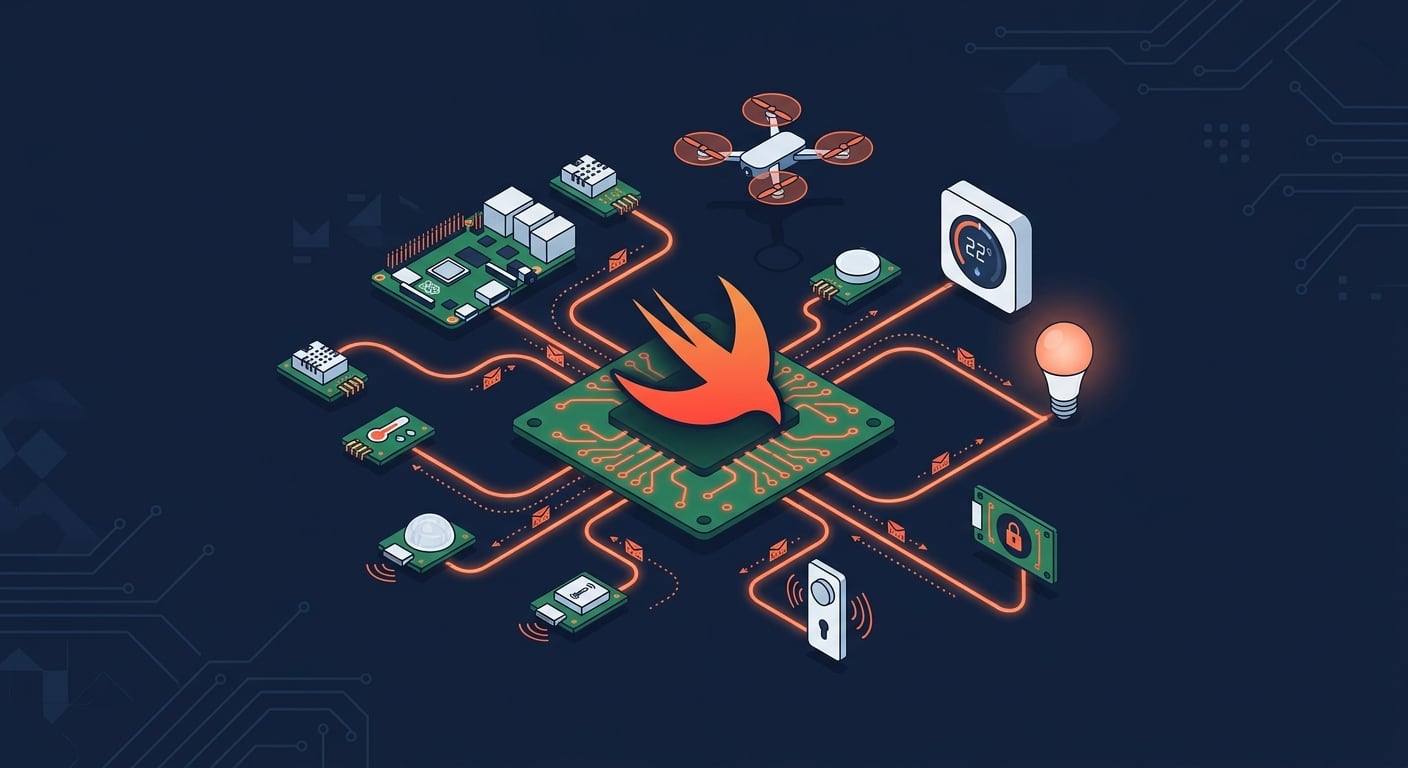
This week, the AWS IoT Device SDK for Swift reached general availability. As a member of the Swift Server Workgroup (SSWG), this one caught my attention. The SDK brings production-ready MQTT 5 connectivity, Device Shadow, Jobs, and fleet provisioning to Swift developers on macOS, iOS, tvOS, and Linux.

Swift on IoT and Edge devices, an AI generated illustration

I’m curious to see what you will build with it. Swift on the server has matured over the past few years, and now it reaches IoT devices too. This connects to a broader trend of running Swift at the edge. WendyOS, for example, is an open-source operating system for physical AI that offers first-class Swift support for deploying apps to NVIDIA Jetson and Raspberry Pi hardware. Between server-side Swift, IoT, and edge computing, the language is showing up in places that would have surprised most people a few years ago.

Now, let’s get into this week’s AWS news.

Headlines
Amazon RDS for SQL Server supports Bring Your Own Media – Customers who migrate SQL Server applications from on-premises environments can now reuse their existing Microsoft SQL Server licenses, including Software Assurance, through Microsoft’s License Mobility program on Amazon RDS. BYOM is integrated with AWS License Manager for tracking license usage and compliance. Read more.

Amazon Cognito now supports multi-Region replication – You can now synchronize user and machine identity data, including credentials, user pool configurations, and federation setups, to a secondary user pool in a standby Region in near real-time. In the event of a disruption in the primary Region, signed-in users continue accessing their applications without re-authenticating, and registered users can sign in with their existing credentials. Multi-Region replication is available as an add-on for user pools in Essentials or Plus feature tiers across 16 Regions. Read more.

GPT-5.5, GPT-5.4, and Codex from OpenAI are now generally available on Amazon Bedrock – You can now use GPT-5.5 and GPT-5.4 in production workloads on Amazon Bedrock and build with Codex for AI-powered software development, with the same security, governance, and operational controls you already use across AWS. GPT-5.5 is the most capable model from OpenAI, excelling at agentic coding, data analysis, and multi-step autonomous tasks. Codex is available through the Codex App, the Codex CLI, and IDE integrations with Visual Studio Code, JetBrains, and Xcode. Pricing matches OpenAI first-party rates, and usage counts toward existing AWS commitments. Read more.

Last week’s launches
Here are some launches and updates from this past week that caught my attention:

For a full list of AWS announcements, be sure to keep an eye on the What’s New with AWS page.

Upcoming AWS events
Learn more about AWS, browse and join upcoming AWS-led in-person and virtual events, startup events, and developer-focused events as well as AWS Summits and AWS Community Days. Join the AWS Builder Center to connect with builders, share solutions, and access content that supports your development.

That’s all for this week. Check back next Monday for another Weekly Roundup!

— seb

AWS Weekly Roundup: Claude Opus 4.7 in Amazon Bedrock, AWS Interconnect GA, and more (April 20, 2026)

Last week I had the honor of delivering a commencement speech at the University of Namur (uNamur) for their 2025 graduation ceremony.

uNamur Graduation Ceremony

Standing in front of freshly minted computer science graduates, I talked about the future of software development in the age of AI. My message to them was simple: AI will not make you obsolete. We’ve seen tools evolve over the decades, from punch cards to IDEs to AI-assisted coding, but the work remains yours, not the tool’s. The developers who will thrive are those who stay curious, think in systems, communicate with precision, and take ownership of what they build. The world needs more people with coding skills, not fewer. AI raises the bar on what we can accomplish, and that’s a good thing.

Now, let’s get into this week’s AWS news.

Headlines
Anthropic’s Claude Opus 4.7 is now available in Amazon Bedrock – Anthropic’s most intelligent Opus model is now available in Amazon Bedrock, with improved performance across coding, long-running agents, and professional knowledge work. Claude Opus 4.7 scores 64.3% on SWE-bench Pro and 87.6% on SWE-bench Verified, extending its lead in agentic coding with stronger long-horizon autonomy and complex code reasoning. It also does better on knowledge work tasks like document creation, financial analysis, and multi-step research.

The model runs on Bedrock’s next-generation inference engine with dynamic capacity allocation, adaptive thinking (letting Claude allocate thinking token budgets based on request complexity), and the full 1M token context window. It also adds high-resolution image support for better accuracy on charts, dense documents, and screen UIs. Claude Opus 4.7 is available at launch in US East (N. Virginia), Asia Pacific (Tokyo), Europe (Ireland), and Europe (Stockholm), with up to 10,000 requests per minute per account per Region.

AWS Interconnect is now generally available with a new option to simplify last-mile connectivity – AWS Interconnect brings two managed private connectivity capabilities to general availability. The first, AWS Interconnect – Multicloud, provides Layer 3 private connections between AWS VPCs and other cloud providers (Google Cloud available now, Azure and OCI coming later in 2026). Traffic flows over the AWS global backbone and the partner cloud’s private network, never over the public internet, with built-in MACsec encryption, multi-facility resiliency, and CloudWatch monitoring. AWS published the underlying specification on GitHub under Apache 2.0 so any cloud provider can become an Interconnect partner.

The second capability, AWS Interconnect – Last Mile, simplifies high-speed private connections from branch offices, data centers, and remote locations to AWS through existing network providers. It provisions 4 redundant connections across 2 physical locations automatically, configures BGP routing, activates MACsec encryption and Jumbo Frames by default, and offers bandwidth from 1 Gbps to 100 Gbps adjustable from the console without reprovisioning. Last Mile launches in US East (N. Virginia) with Lumen as the initial partner.

Last week’s launches
Here are some launches and updates from this past week that caught my attention:

  • Amazon ECR pull through cache now supports referrer discovery and sync – ECR’s pull through cache now automatically discovers and syncs OCI referrers (image signatures, SBOMs, attestations) from upstream registries into your private repositories. This means end-to-end image signature verification and SBOM discovery workflows work without client-side workarounds.
  • AWS Transform is now available in Kiro and VS Code – AWS Transform, the agentic migration and modernization factory, is now accessible via Kiro (as a Power) and VS Code (as an extension). You can run custom transformations for common patterns like Java/Python/Node.js version upgrades and AWS SDK migrations directly from your IDE, with job state shared across the web console, CLI, and IDE.
  • Aurora DSQL launches connector for PHP – A new Aurora DSQL Connector for PHP (PDO_PGSQL) simplifies building PHP applications on Aurora DSQL by automatically generating IAM tokens, handling SSL configuration, managing connection pooling, and providing opt-in optimistic concurrency control retry with exponential backoff.
  • Amazon Q supports document-level access controls for Google Drive – Amazon Q now enforces document-level access controls for Google Drive knowledge bases, combining indexed ACL replication for fast pre-retrieval filtering with real-time permission checks against Google Drive at query time.
  • AWS Secrets Manager now supports hybrid post-quantum TLS – Secrets Manager now supports hybrid post-quantum key exchange using ML-KEM to protect secrets against both current and future quantum computing threats. This is automatically enabled in Secrets Manager Agent 2.0.0+, Lambda Extension v19+, and the CSI Driver 2.0.0+.
  • Amazon EC2 C8in and C8ib instances are now generally available – Powered by custom 6th-gen Intel Xeon Scalable processors and 6th-gen AWS Nitro cards, these instances deliver up to 43% higher performance over C6in. C8in offers 600 Gbps network bandwidth (highest among enhanced networking EC2 instances), while C8ib delivers up to 300 Gbps EBS bandwidth (highest among non-accelerated compute instances), scaling up to 384 vCPUs.

For a full list of AWS announcements, be sure to keep an eye on the What’s New with AWS page.

Other AWS news
Here are some additional posts and resources that you might find interesting:

  • Navigating enterprise networking challenges with Amazon EKS Auto Mode – This post explains how EKS Auto Mode automates Kubernetes networking infrastructure including VPC CNI configuration, load balancer provisioning, and DNS management, reducing operational overhead while preserving enterprise security controls.
  • Introducing granular cost attribution for Amazon Bedrock – My colleague Micah talked about this feature last week already, but the blog post came out after last week’s roundup. Amazon Bedrock now automatically attributes inference costs to the specific IAM principal that made each API call, with results flowing into AWS Cost and Usage Reports (CUR 2.0). You can aggregate costs by team, project, or cost center using IAM principal tags and session tags.
  • Accelerate development workflows with Amazon EBS Volume Clones – EBS Volume Clones let you create instant, point-in-time copies of EBS volumes that are immediately usable without waiting for data transfer. The post highlights use cases including dev/test environment refreshes, disaster recovery testing, and CI/CD pipeline acceleration.
  • Modernize VB6 applications at scale with AWS Transform Custom – A walkthrough of using AWS Transform Custom’s agentic AI capabilities to convert legacy Visual Basic 6.0 applications to modern C# ASP.NET Core web applications, addressing challenges like COM dependencies, ADO-to-Entity Framework migration, and VB6 forms-to-Blazor UI conversion.
  • Migrating and decomposing APIs with zero-downtime using CloudFront – A zero-downtime API migration strategy using CloudFront Functions with CloudFront KeyValueStore for intelligent, user-aware traffic routing based on the Strangler Fig pattern. This is similar to what AWS Migration Hub Refactor Spaces offers, but implemented with just CloudFront and edge functions.

Upcoming AWS events
Check your calendar and sign up for upcoming AWS events:

  • AWS Events: Browse upcoming AWS-led in-person and virtual events, startup events, and developer-focused events near you.
  • AWS Builder Center: Find community-led events, meetups, and user groups in your area.

That’s all for this week. Check back next Monday for another Weekly Roundup!

— seb

AWS Weekly Roundup: Amazon Connect Health, Bedrock AgentCore Policy, GameDay Europe, and more (March 9, 2026)

Fiti AWS Student Community Kenya!

Last week was an incredible whirlwind: a round of meetups, hands-on workshops, and career discussions across Kenya that culminated with the AWS Student Community Day at Meru University of Science and Technology, with keynotes from my colleagues Veliswa and Tiffany, and sessions on everything from GitOps to cloud-native engineering, and a whole lot of AI agent building.

JAWS Days 2026 is the largest AWS Community Day in the world, with over 1,500 attendees on March 7th. This event started with a keynote speech on building an AI-driven development team by Jeff Barr, and included over 100 technical and community experience sessions, lightning talks, and workshops such as Game Days, Builders Card Challenges, and networking parties.

Now, let’s get into this week’s AWS news…

Last week’s launches
Here are some launches and updates from this past week that caught my attention:

  • Introducing Amazon Connect Health, Agentic AI Built for Healthcare — Amazon Connect Health is now generally available with five purpose-built AI agents for healthcare: patient verification, appointment management, patient insights, ambient documentation, and medical coding. All features are HIPAA-eligible and deployable within existing clinical workflows in days.
  • Policy in Amazon Bedrock AgentCore is now generally available — You can now use centralized, fine-grained controls for agent-tool interactions that operate outside your agent code. Security and compliance teams can define tool access and input validation rules using natural language that automatically converts to Cedar, the AWS open-source policy language.
  • Introducing OpenClaw on Amazon Lightsail to run your autonomous private AI agents — You can deploy a private AI assistant on your own cloud infrastructure with built-in security controls, sandboxed agent sessions, one-click HTTPS, and device pairing authentication. Amazon Bedrock serves as the default model provider, and you can connect to Slack, Telegram, WhatsApp, and Discord.
  • AWS announces pricing for VPC Encryption Controls — Starting March 1, 2026, VPC Encryption Controls transitions from free preview to a paid feature. You can audit and enforce encryption-in-transit of all traffic flows within and across VPCs in a region, with monitor mode to detect unencrypted traffic and enforce mode to prevent it.
  • Database Savings Plans now supports Amazon OpenSearch Service and Amazon Neptune Analytics — You can save up to 35% on eligible serverless and provisioned instance usage with a one-year commitment. Savings Plans automatically apply regardless of engine, instance family, size, or AWS Region.
  • AWS Elastic Beanstalk now offers AI-powered environment analysis — When your environment health is degraded, Elastic Beanstalk can now collect recent events, instance health, and logs and send them to Amazon Bedrock for analysis, providing step-by-step troubleshooting recommendations tailored to your environment’s current state.
  • AWS simplifies IAM role creation and setup in service workflows — You can now create and configure IAM roles directly within service workflows through a new in-console panel, without switching to the IAM console. The feature supports Amazon EC2, Lambda, EKS, ECS, Glue, CloudFormation, and more.
  • Accelerate Lambda durable functions development with new Kiro power — You can now build resilient, long-running multi-step applications and AI workflows faster with AI agent-assisted development in Kiro. The power dynamically loads guidance on replay models, step and wait operations, concurrent execution patterns, error handling, and deployment best practices.
  • Amazon GameLift Servers launches DDoS Protection — You can now protect session-based multiplayer games against DDoS attacks with a co-located relay network that authenticates client traffic using access tokens and enforces per-player traffic limits, at no additional cost to GameLift Servers customers.

For a full list of AWS announcements, be sure to keep an eye on the What’s New with AWS page.

From AWS community
Here are my personal favorite posts from AWS community and my colleagues:

  • I Built a Portable AI Memory Layer with MCP, AWS Bedrock, and a Chrome Extension — Learn how to build a persistent memory layer for AI agents using MCP and Amazon Bedrock, packaged as a Chrome extension that carries context across sessions and applications.
  • When the Model Is the Machine — Mike Chambers built an experimental app where an AI agent generates a complete, interactive web application at runtime from a single prompt — no codebase, no framework, no persistent state. A thought-provoking exploration of what happens when the model becomes the runtime.

Upcoming AWS events
Check your calendar and sign up for upcoming AWS events:

  • AWS Community GameDay Europe — Think you know AWS? Prove it at the AWS Community GameDay Europe on March 17, a gamified learning event where teams compete to solve real-world technical challenges using AWS services.
  • AWS at NVIDIA GTC 2026 — Join us at our AWS sessions, booths, demos, and ancillary events in NVIDIA GTC 2026 on March 16 – 19, 2026 in San Jose. You can receive 20% off event passes through AWS and request a 1:1 meeting at GTC.
  • AWS Summits — Join AWS Summits in 2026: free in-person events where you can explore emerging cloud and AI technologies, learn best practices, and network with industry peers and experts. Upcoming Summits include Paris (April 1), London (April 22), and Bengaluru (April 23–24).
  • AWS Community Days — Community-led conferences where content is planned, sourced, and delivered by community leaders. Upcoming events include Slovakia (March 11), Pune (March 21), and the AWSome Women Summit LATAM in Mexico City (March 28)

Browse here for upcoming AWS led in-person and virtual events, startup events, and developer-focused events.

That’s all for this week. Check back next Monday for another Weekly Roundup!

— seb

AWS Weekly Roundup: Claude Opus 4.6 in Amazon Bedrock, AWS Builder ID Sign in with Apple, and more (February 9, 2026)

Here are the notable launches and updates from last week that can help you build, scale, and innovate on AWS.

Last week’s launches
Here are the launches that got my attention this week.

Let’s start with news related to compute and networking infrastructure:

  • Introducing Amazon EC2 C8id, M8id, and R8id instances: These new Amazon EC2 C8id, M8id, and R8id instances are powered by custom Intel Xeon 6 processors. These instances offer up to 43% higher performance and 3.3x more memory bandwidth compared to previous generation instances.
  • AWS Network Firewall announces new price reductions: The service has added the hourly and data processing discounts on NAT Gateways that are service-chained with Network Firewall secondary endpoints. Additionally, AWS Network Firewall has removed additional data processing charges for Advanced Inspection, which enables Transport Layer Security (TLS) inspection of encrypted network traffic.
  • Amazon ECS adds Network Load Balancer support for Linear and Canary deployments: Applications that commonly use NLB, such as those requiring TCP/UDP-based connections, low latency, long-lived connections, or static IP addresses, can take advantage of managed, incremental traffic shifting natively from ECS when rolling out updates.
  • AWS Config now supports 30 new resource types: These range across key services including Amazon EKS, Amazon Q, and AWS IoT. This expansion provides greater coverage over your AWS environment, enabling you to more effectively discover, assess, audit, and remediate an even broader range of resources.
  • Amazon DynamoDB global tables now support replication across multiple AWS accounts: DynamoDB global tables are a fully managed, serverless, multi-Region, and multi-active database. With this new capability, you can replicate tables across AWS accounts and Regions to improve resiliency, isolate workloads at the account level, and apply distinct security and governance controls.
  • Amazon RDS now provides an enhanced console experience to connect to a database: The new console experience provides ready-made code snippets for Java, Python, Node.js, and other programming languages as well as tools like the psql command line utility. These code snippets are automatically adjusted based on your database’s authentication settings. For example, if your cluster uses IAM authentication, the generated code snippets will use token-based authentication to connect to the database. The console experience also includes integrated CloudShell access, offering the ability to connect to your databases directly from within the RDS console.

Then, I noticed three news items related to security and how you authenticate on AWS:

  • AWS Builder ID now supports Sign in with Apple: AWS Builder ID, your profile for accessing AWS applications including AWS Builder Center, AWS Training and Certification, AWS re:Post, AWS Startups, and Kiro, now supports sign-in with Apple as a social login provider. This expansion of sign-in options builds on the existing sign-in with Google capability, providing Apple users with a streamlined way to access AWS resources without managing separate credentials on AWS.
  • AWS STS now supports validation of select identity provider specific claims from Google, GitHub, CircleCI and OCI: You can reference these custom claims as condition keys in IAM role trust policies and resource control policies, expanding your ability to implement fine-grained access control for federated identities and help you establish your data perimeters. This enhancement builds upon IAM’s existing OIDC federation capabilities, which allow you to grant temporary AWS credentials to users authenticated through external OIDC-compatible identity providers.
  • AWS Management Console now displays Account Name on the Navigation bar for easier account identification: You now have an easy way to identify your accounts at a glance. You can now quickly distinguish between accounts visually using the account name that appears in the navigation bar for all authorized users in that account.
  • Amazon CloudFront announces mutual TLS support for origins: Now with origin mTLS support, you can implement a standardized, certificate-based authentication approach that eliminates operational burden. This enables organizations to enforce strict authentication for their proprietary content, ensuring that only verified CloudFront distributions can establish connections to backend infrastructure ranging from AWS origins and on-premises servers to third-party cloud providers and external CDNs.

Finally, there is not a single week without news around AI :

  • Claude Opus 4.6 now available in Amazon Bedrock: Opus 4.6 is Anthropic’s most intelligent model to date and a premier model for coding, enterprise agents, and professional work. Claude Opus 4.6 brings advanced capabilities to Amazon Bedrock customers, including industry-leading performance for agentic tasks, complex coding projects, and enterprise-grade workflows that require deep reasoning and reliability.
  • Structured outputs now available in Amazon Bedrock: Amazon Bedrock now supports structured outputs, a capability that provides consistent, machine-readable responses from foundation models that adhere to your defined JSON schemas. Instead of prompting for valid JSON and adding extra checks in your application, you can specify the format you want and receive responses that match it—making production workflows more predictable and resilient.

For a full list of AWS announcements, be sure to keep an eye on the What’s New with AWS? page.

Upcoming AWS events
Check your calendars so that you can sign up for this upcoming event:

AWS Community Day Romania (April 23–24, 2026): This community-led AWS event brings together developers, architects, entrepreneurs, and students for more than 10 professional sessions delivered by AWS Heroes, Solutions Architects, and industry experts. Attendees can expect expert-led technical talks, insights from speakers with global conference experience, and opportunities to connect during dedicated networking breaks, all hosted at a premium venue designed to support collaboration and community engagement.

If you’re looking for more ways to stay connected beyond this event, join the AWS Builder Center to learn, build, and connect with builders in the AWS community.

Check back next Monday for another Weekly Roundup.

— seb
❌