Normal view

AWS Weekly Roundup: NY Summit recap, Local Zone in Hanoi, Grok 4.3 in Bedrock, price reductions, and more (June 22, 2026)

Last week AWS Summit New York City brought together thousands of customers, partners, and builders for a free, one-day event showcasing the latest in cloud and AI innovation. Dr. Swami Sivasubramanian, VP of Agentic AI at AWS unveiled a stack of AI launches in his keynote, all built around one thesis: agents that compound value over time.

  • Agents for working – You can launch autonomous agents and access a smarter activity feed with new Amazon Quick features, which now let you create and run multi-step agents directly in the desktop app and consolidates email, Slack, calendar, and tasks into a single prioritized view with personalized rules.
  • Agents for securing – You can shift from reactive to proactive security with AWS Continuum, a new AI-native security service that reasons, validates, and acts at machine speed across the full code vulnerability lifecycle. AWS Security Agent (now part of AWS Continuum) adds new features: threat modeling; pull request code scanning with remediation across major Git platforms; and IDE integrations via Kiro power, Claude Code plugin, and MCP.
  • Agents for building – You can write, ship, and modernize code in one continuous loop with Kiro, AWS DevOps Agent, and AWS Transform. Kiro introduces a native iOS app; AWS DevOps Agent adds release management capabilities to assess code changes before production; and AWS Transform continuous modernization reduces tech debt autonomously.
  • Agents customers create – You can go from agent idea to production in minutes with Amazon Bedrock AgentCore, which now includes a GA harness for infrastructure and orchestration, Web Search, Managed Knowledge Base, policy integrations with Guardrails, and the new AWS Context service for mapping organizational data relationships.

To learn more, visit the Summit recap from our top announcements blog post and Amazon News post.

Last week’s launches
Here are last week’s launches that caught my attention:

  • AWS Local Zone in Hanoi, Vietnam – This new Local Zone is one of the first AWS Local Zones in the Asia Pacific with support for Amazon S3 and Amazon EBS Local Snapshots, enabling customers to meet data residency requirements by storing and backing up data locally. To get started, enable the Hanoi Local Zone (ap-southeast-1-han-1a) from the Regions and Zones tab in the AWS Global View or by using the ModifyAvailabilityZoneGroup API.
  • AWS Blocks, an open-source TypeScript framework for application developers (preview) – AWS Blocks runs a fully functional local environment with Postgres, authentication, and real-time messaging, no AWS account required. When you’re ready to deploy, the same application code runs on production AWS services with zero changes, and you can drop into AWS CDK at any point for direct resource configuration.
  • Grok 4.3 from xAI in Amazon Bedrock – You can use the Grok 4.3 model on Amazon Bedrock, giving you even more choice as you build generative AI applications across reasoning, agentic, and enterprise workflows. Grok 4.3 runs on a new inference engine in Bedrock designed for price performance, with support for tool calling, structured output, and response streaming.
  • Amazon S3 annotations: attach rich, queryable context directly to your objects – Amazon S3 now lets you attach up to 1 GB of rich, mutable, and queryable context directly to your objects using annotations, purpose-built for AI agents and autonomous workflows that need to discover, understand, and act on data at scale without maintaining separate metadata systems.
  • Amazon ECS announces faster service auto scaling – Amazon ECS service auto scaling now detects and responds to load changes faster with support for high resolution (20-second) metrics and metric publishing optimizations. In AWS benchmarking tests, time to trigger scale-out improved from 363 seconds to 86 seconds (76% faster), and total time to scale and provision new tasks improved from 386 seconds to 109 seconds (72% faster).
  • Amazon EC2 G7 instances accelerated by NVIDIA RTX PRO 4500 Blackwell Server Edition GPUs – AWS is the first major cloud provider to support NVIDIA RTX PRO 4500 Blackwell Server Edition GPUs. G7 instances are accelerated by these GPUs with custom sixth-generation Intel Xeon Scalable processors, delivering up to 4.6x AI inference performance and up to 2.1x graphics performance compared to G6 instances.
  • Strands Agents introduces new capabilities – Strands is an open source toolkit for building production agents. You can now use better context management in Harness SDK, a new isolated execution environment with Strands Shell, and chaos testing and red teaming in Strands Evals.
  • AWS Management Console Private Access – You can access the AWS Console from VPCs without internet connectivity, allowing enterprises to manage their AWS infrastructure through the console while maintaining strict network security controls in air-gapped environments.
  • AWS Marketplace Storefront is now generally available – AWS Partners can create and deploy their own branded catalog of solutions and services on their website or application in hours. Channel Partners and Independent Software Vendors can now simplify how they manage their cloud marketplace business and make it easier for customers to discover and purchase their solutions from AWS Marketplace.
  • Palo Alto Networks (PANW) Advanced DNS Security on Amazon Route 53 Resolver DNS Firewall (preview) – You can now enforce DNS threat protections from Palo Alto Networks directly on Route 53 DNS Firewall rules, without deploying separate firewalls or modifying VPC configurations — by subscribing to PANW from the DNS Firewall console through the embedded AWS Marketplace widget.

For a full list of AWS announcements, be sure to keep an eye on the What’s New with AWS page.

Price reductions 
AWS continues to look for ways to increase performance and lower prices for our customers. I noticed a few such efforts last week, so I’d like to share them:

Learn more about AWS, browse and join upcoming AWS-led in-person and virtual events, startup events, and developer-focused events as well as AWS Summits and AWS Community Days. Join the AWS Builder Center to connect with builders, share solutions, and access content that supports your development.

That’s all for this week. Check back next Monday for another Weekly Roundup!

Channy

Introducing Amazon Bedrock Managed Knowledge Base for faster, more accurate enterprise AI applications

Today, we’re announcing Amazon Bedrock Managed Knowledge Base, a new set of capabilities that enables developers to build enterprise-grade generative AI applications with their proprietary data in minutes. Organizations building agentic AI applications need secure, reliable, and up-to-date access to enterprise-wide data to deliver accurate, fast, and trusted outcomes. Managed Knowledge Base abstracts away the complexity of building and managing retrieval-augmented generation (RAG) pipelines, allowing developers to focus on business outcomes rather than infrastructure management.

Developers building knowledge bases for their agents face three key challenges today:

  • Connecting to enterprise data: Enterprise knowledge lives across disparate systems with different content types, access control lists, and document formats. Building and maintaining custom connectors for each source adds complexity that slows down development.
  • Optimizing RAG accuracy: Best practices for retrieval-augmented generation keep evolving. Developers need to experiment with different parsing strategies, chunking approaches, embedding models, and agentic retrieval behaviors to get accurate answers from their data.
  • Managing infrastructure at scale: Organizations need to serve large knowledge bases with millions of documents, or manage thousands of smaller knowledge bases across teams. Both patterns require reliable infrastructure, security enforcement, and cost control.

These challenges require developers to repeatedly perform undifferentiated work instead of focusing on their applications.

Amazon Bedrock Managed Knowledge Base addresses these challenges by abstracting away the multiple infrastructure components developers traditionally have to assemble and maintain themselves (storage, retrieval, embeddings, re-ranking, and foundation model selection) into a single managed primitive. By default, the service automatically selects and manages a default embeddings model, re-ranker model, and foundational model on your behalf, so you can get up to speed quickly without needing to pick or maintain one yourself. On top of this managed foundation, three core innovations further improve ease of use and accuracy:

  • Native data connectors: Six pre-built ingestion connectors that natively pull enterprise data and permissions from SaaS applications, eliminating the overhead developers face in managing application-specific requirements. At launch, we support Amazon S3, SharePoint, Confluence, Web Crawler, Google Drive, and OneDrive.
  • Smart Parsing: Different content types and sources require different approaches to achieve accurate retrieval. Smart Parsing handles this complexity automatically, selecting the right parsing strategy for each data type and connector to provide the highest accuracy for your agents.
  • Agentic Retriever: Optimized for complex queries that require multiturn, multihop retrieval within a single knowledge base or across multiple knowledge bases. Agentic Retriever automatically infers end-user intent and draws relevant context from institutional knowledge spread across data sources and modalities.

With just a few lines of code, Amazon Bedrock Managed Knowledge Base automatically manages and scales the end-to-end RAG pipeline that powers your enterprise knowledge agents. For agent builders, it’s available as a pre-built target type in Amazon Bedrock AgentCore Gateway, reducing integration to a few lines of code, auto-generating role-based permissions, and providing observability and evaluation metrics in the AgentCore Observability dashboard.

Getting started with Amazon Bedrock Managed Knowledge Base
Creating a Managed Knowledge Base is straightforward. Navigate to the Amazon Bedrock AgentCore console or the Amazon Bedrock console, open the Knowledge Bases page, and choose Create Managed KB. The experience is the same in both consoles.

Picture 1 – Knowledge Bases list page in the Amazon Bedrock AgentCore console showing the Type column with different KB types and the Create Managed KB button

When creating a new Knowledge Bases, you can connect to your enterprise data sources by choosing from the list of supported connectors directly from a dropdown. AWS Identity and Access Management (IAM) roles are automatically created, and you can choose to edit these permissions if needed:

Picture 2 – Create Knowledge Base page showing the Data source dropdown expanded with all supported connectors: Amazon S3, Confluence, Custom, Google Drive, One Drive, SharePoint, and Web Crawler

An optimized set of defaults will be presented, allowing you to create your knowledge base in just a few clicks. Once the data is synced, you can integrate the knowledge base with your agent or provide it as a tool for your foundation model and start querying.

Smart Parsing for accurate data ingestion
One of the key challenges in building knowledge bases is preparing diverse data types for accurate retrieval. Once you point Managed Knowledge Base at your data sources, Smart Parsing automatically determines the optimal parsing strategy for each data type and connector, no extra configuration is required.

Smart Parsing combines multiple techniques:

  • Connector-specific data models: Optimized handling for each data source. For example, the Web Crawler connector preserves HTML structure including embedded images and tables, ensuring rich content is not dropped during ingestion. SharePoint connectors maintain document hierarchy and relationships between files.
  • Multimodal processing: Automatic detection and processing of different content types within documents. The system identifies bounding boxes in documents, then sends them to foundation models for data extraction, captioning, and scene description in video files.
  • Optimized chunking: Smart Parsing leverages foundation models to understand document structure and extract meaningful content, ensuring that complex documents with mixed formats are properly indexed. Intelligent defaults balance retrieval accuracy with performance based on document type and content structure, while advanced users can customize chunking strategies when needed.

This automated approach eliminates weeks of experimentation typically required to achieve production-quality retrieval accuracy, while still preserving the flexibility to customize when needed.

Using Agentic Retriever for complex queries
After your data is ingested, you can start querying your knowledge base. Generative AI applications often struggle with complex user queries that require reasoning, recursive multi-step retrieval, and intermediate evaluations of results. Consider a user asking two related questions: “What is the cloud infrastructure budget for the ML platform team?” and “Does our expense policy allow prepaying annual commitments?” A single retrieval step might surface documents about the ML platform team but fail to connect the budget information with the expense policy needed to fully answer the question.

Picture 3 – Agentic Retriever decomposes complex user queries into a step-by-step plan, performing multi-hop retrieval across multiple knowledge bases and combining results to deliver accurate, grounded responses

Agentic Retriever solves this by creating a step-by-step query plan: 1. Which team owns the ML platform, and what is their cloud infrastructure budget? 2. What does the expense policy say about prepaying annual commitments? 3. Does the policy allow the ML platform team to prepay against this budget?

The system performs multi-hop retrieval and reasoning at each step, and once it has gathered sufficient relevant passages, it stops the search process and returns the top results. By abstracting away the complexity of building a separate multi-hop reasoning pipeline, this approach dramatically improves accuracy for complex queries while letting developers focus on their agentic search applications instead of orchestration logic.

You can try Agentic Retriever directly from the test panel of your knowledge base in the Amazon Bedrock AgentCore console. Select Agentic retrieval only as the retrieval type to let the system automatically plan and execute multi-step queries across your knowledge bases:

Picture 4 – Test Knowledge Base panel showing Agentic retrieval with answer generation selected as the retrieval type, with model selection and maximum agentic iterations options

Enabling MCP with Bedrock AgentCore
Amazon Bedrock Managed Knowledge Base seamlessly integrates with AgentCore Gateway as a native target type. This integration eliminates the need for manual integration and provides built-in observability, policy enforcement, and automatic permission management.

You can navigate to the Amazon Bedrock AgentCore console or SDK and create an AgentCore Gateway or select an existing one. When adding targets to your gateway, you will find Knowledge Base as a new pre-built target type alongside other options such as MCP server, Lambda ARN, REST API, and other integrations. Simply select your knowledge base ID to expose it through the gateway:

Picture 5 – Add targets page in AgentCore Gateway showing Knowledge Base as a new pre-built target type, with the knowledge base ID selector and runtime retrieval mode options

Add targets page in AgentCore Gateway showing Knowledge Base as a new pre-built target type, with the knowledge base ID selector and runtime retrieval mode options

Gateway exposes the standard Model Context Protocol (MCP), so the knowledge base tools are automatically discovered by clients from any MCP-compatible framework, including Strands Agents, LangChain, CrewAI, LlamaIndex, and LangGraph. No custom integration code is required.

Model choice and flexibility
Amazon Bedrock Managed Knowledge Base preserves the flexibility developers expect from Amazon Bedrock. Every foundation model available on Bedrock can power the generation step, and developers can select from different embedding and re-ranking models to optimize retrieval for their specific use case, enabling teams to fine-tune accuracy and cost-performance without changing infrastructure.

Unlike managed solutions that lock you into specific model providers, Amazon Bedrock Managed Knowledge Base separates the infrastructure management (connectors, parsing, storage, retrieval orchestration) from model selection. This means you can:

  • Take advantage of the latest models: Adopt the latest embedding, re-ranking, and foundation models as they become available to improve accuracy, latency, and cost for your application without rebuilding your RAG pipeline.
  • Optimize for price-performance: Choose smaller, faster models for simple queries and more capable models for complex reasoning tasks, all using the same knowledge base infrastructure.
  • Use Bedrock embedding models: While Smart Parsing provides optimized defaults, you can configure Bedrock embedding models when your domain requires specialized semantic understanding.
  • Maintain consistency with existing applications: If you’re already using Bedrock Knowledge Bases APIs (Retrieve, StartIngest, StopIngest, IngestKnowledgeBaseDocuments), Managed Knowledge Base uses the same APIs, so migration requires no code changes, just point to the new knowledge base ID.

This approach ensures you can spend time on your generative AI application without losing the ability to change models based on evolving requirements or new model capabilities.

Get started today
Amazon Bedrock Managed Knowledge Base is available today in the US East (N. Virginia), US West (Oregon), Asia Pacific (Sydney, Tokyo), Europe (Dublin, Frankfurt, London), and AWS GovCloud (US-West) Regions. For Regional availability and future roadmap, visit AWS Capabilities by Region.

With Bedrock Managed Knowledge Base, you pay for what you use with no upfront commitments. Pricing is based on two dimensions: the size of indexed data stored and the number of retrievals performed (on-demand). For detailed pricing information, visit the Amazon Bedrock pricing page. Bedrock is also a part of the AWS Free Tier that new AWS customers can use to get started at no cost and explore key AWS services.

These capabilities work with any open source framework such as CrewAI, LangGraph, LlamaIndex, and Strands Agents, and with any foundation model. Bedrock services can be used together or independently, and you can get started using your favorite AI-assisted development environment with the AgentCore open source MCP server.

To learn more and get started quickly, visit the Bedrock Knowledge Bases Developer Guide.

Daniel Abib

 Updated on June 19, 2026 — Fixed correct screenshots to create a new Managed KB.

Announcing Web Search on Amazon Bedrock AgentCore: Ground your AI agents in current, accurate web knowledge

Today, we’re announcing the general availability of Web Search on Amazon Bedrock AgentCore, a fully managed tool that enables agents to ground responses in current, cited web knowledge with zero data egress from customer’s secured AWS environment.

Web Search uses a built-in connector target on Bedrock AgentCore Gateway using the Model Context Protocol (MCP). Your agent sends a natural-language query, and Web Search returns most relevant snippets, source URLs, titles, and publication dates that the model can reason over to produce a grounded response.

It is built on Amazon’s search infrastructure, informed by years of experience powering agentic search experiences across Alexa+, Amazon Quick, and Kiro. It uses a multi-source grounding approach that combines Amazon’s web index with structured knowledge graph data. Beyond standard web results, this gives agents access to Amazon Knowledge Graph with verified facts, helping them retrieve more relevant and accurate responses than traditional web search alone.

With this launch, you can focus on building agents instead of manually adding web search to agents on Bedrock AgentCore and managing its infrastructure. Your AI agent looks at user question, retrieves the latest facts, and then takes any necessary action grounded in current developments beyond a model’s training data. You can also meet enterprise governance policies without sending user prompts and retrieval queries to external search API providers outside of AWS.

Web Search on Bedrock AgentCore in action
To get started, create the Bedrock AgentCore Gateway with Web Search tool target in the Bedrock AgentCore console. When the Gateway URL is created, you can interact with API call, Command Line Interface (CLI), or MCP Inspector.

To add Web Search tool target when creating the Gateway, choose MCP target as a target protocol and Connectors as a target type. You can select the Web Search tool as a preconfigured target to retrieve most relevant web search results including links, snippets, and metadata.

After creating your gateway, you can find the Web Search tool target on the detail page of your gateway. You can also add a new Web Search tool target to an existing gateway.

To interact with Web Search tool, use the sample invocation code in the View invocation code section. You can use code snippets through Python codes with API requests, MCP Python SDK, Strands MCP Client, and MCP Inspector.

For example, you can interact with the MCP Inspector, an interactive developer tool for testing and debugging MCP servers. When you connect to the MCP server through the Gateway resource URL, you will find a Web Search tool for each connector target on the Gateway. Enter input the web search query and choose Run Tool to get the results.

To learn more about how to use Web Search on Bedrock AgentCore, visit the Bedrock AgentCore Gateway documentation.

Customer voices
Some of our customers had early access to this new feature. This is what they shared with us:

Benchling helps scientists accelerate R&D, making it easy to centralize scientific data, collaborate across teams, and access insights. Nicholas Larus-Stone, Head of AI Agents at Benchling shared “Scientists using Benchling AI can now ask about a target they’re actively working on and get answers grounded in both their institutional data in Benchling and published literature. The result is more complete science, and hypothesis generation done right. Because we’re using the Web Search tool on Amazon Bedrock AgentCore, customers have a secure, governed environment to bring that high quality published data into their workflows without compromising how they manage their data.”

Gen Digital leads consumer and small business cyber safety, offering antivirus, antimalware, identity and privacy protection, virtual private networks, and cloud backup. Iskander Sanchez-Rola, Senior Director of AI & Innovation, Gen Digital shared “With the Web Search tool on Amazon Bedrock AgentCore, Norton Revamp helps professionals build their online reputation with current, grounded content ideas shaped by what’s actually happening in the world today. What we value most is that AWS uses its own search index and keep queries within our trusted AWS environment.”

To read more customer stories, visit the Amazon Bedrock Customers.

Now available
Web Search on Amazon Bedrock AgentCore is generally available today in the US East (N. Virginia) Region. For Regional availability and a future roadmap, visit the AWS Capabilities by Region.

You can get started with Web Search on Bedrock AgentCore with no upfront commitments. Pricing is simple and usage-based. You are charged based on the number of search queries your agents submit to the web search. Web Search is priced at $7 per 1,000 queries. New AWS customers also receive up to $200 in Free Tier credits. To learn more, visit the Amazon Bedrock AgentCore pricing page.

Try it in the Amazon Bedrock AgentCore console and send feedback to AWS re:Post for Amazon Bedrock AgentCore or through your usual AWS Support contacts.

Channy

Updated on June 18, 2026 — Added a clear pricing statement for Web Search in Bedrock AgentCore.

AWS Weekly Roundup: AWS FinOps Agent in preview, Gemma 4 on Bedrock, Kiro Pro Max, and more (June 15, 2026)

This week, New York City is hosting AWS Summit, bringing together builders, customers, and AWS teams for a full day of announcements, demos, and technical sessions at the Javits Center. I wrote blog posts for some of the Summit launches, so I am excited to see them go live this week. I just won’t be watching from the Javits Center. I’ll be at a four-day music festival, following the launches on my phone while trying to figure out how to put up a tent. If you weren’t able to attend in person like me, the keynote livestream is available on June 17, with Dr. Swami Sivasubramanian, VP of Agentic AI, and Chet Kapoor, VP of Security Services and Observability, covering new capabilities across developer tools, AI infrastructure, and security.

Here’s what happened this week.

Headlines
How frontier teams are reinventing AI-native development – Swami published a detailed post this week drawing on data from experiments across hundreds of Amazon engineering teams. The findings are worth reading carefully if you are thinking about how to structure AI adoption on your own team.

A six-engineer team rebuilt the Amazon Bedrock inference engine in 76 days, a project originally scoped for 30 developers over 12 to 18 months. The median productivity gain across structured pilots with Amazon Stores teams was 4.5x in normalized deployment velocity, with some teams exceeding 10x. Perfect Order Experience went from a two-week feature cycle to shipping in an afternoon. WW Grocery cut design document creation from five days to a few hours.

The post distills these results into five practices for becoming a frontier team. First, invest in agent context: build steering files, coding standards, and structured repositories before writing production code. Second, expect an initial slowdown while workflows are restructured, and push through it. Third, maintain a steady backlog of well-scoped tasks so agents can run in parallel without constant supervision. Fourth, make intent explicit through structured specifications before code generation begins. Fifth, shift testing left so agents can self-correct before code reaches the pipeline.

The post closes with a note that commit velocity is only part of the picture, and that a follow-up will cover release management, operations, security operations, and EOL upgrades.

AWS FinOps Agent is now available in preview – AWS FinOps Agent is a new agent for FinOps practitioners and engineering teams that answers cost questions, surfaces optimization opportunities, investigates cost anomalies, and runs recurring FinOps workflows on a defined schedule. You can use it to query your AWS costs, generate cost reports for finance and engineering teams, and surface rightsizing, idle resource, and Savings Plans recommendations from AWS Cost Optimization Hub and AWS Compute Optimizer. The agent can open Jira tickets on your behalf based on those recommendations. When a cost anomaly is detected, FinOps Agent can automatically investigate the root cause and post findings to a Slack channel.

Last week’s launches
I’ll start with one I wrote this week, then cover the other launches that caught my attention:

  • Amazon EC2 M9g and M9gd instances are now generally available – Powered by AWS Graviton5 processors and built on the sixth-generation AWS Nitro System, M9g instances deliver up to 25% better compute performance compared to Graviton4-based instances, with up to 35% faster performance for web applications, up to 35% for machine learning inference, and up to 30% for databases. Graviton5 is the first processor in the AWS fleet to support PCIe Gen6 and DDR5-8800 memory, and includes a 5x larger L3 cache compared to the previous generation. M9g and M9gd instances offer up to 15% higher network bandwidth and 20% higher Amazon EBS bandwidth on average across sizes compared to M8g. This release also introduces the Nitro Isolation Engine, an enhancement to the Nitro System that uses formal verification to provide mathematically proven isolation between virtual machines — establishing Nitro as the first formally verified cloud hypervisor. M9gd instances add up to 11.4 TB of NVMe SSD local storage with 30% higher IOPS compared to M8gd. Both instance types support Instance Bandwidth Configuration (IBC) for adjusting bandwidth allocation between EBS and VPC networking by up to 25%.
  • Anthropic Claude Fable 5 on Amazon Bedrock – Claude Fable 5 launched on Amazon Bedrock on June 9, bringing extended asynchronous task execution, advanced vision capabilities across diagrams, charts, and PDFs, and proactive self-verification. Access requires opting into data sharing via the Data Retention API before invoking the model; Anthropic requires 30-day retention of inputs and outputs for Mythos-class models. Important note on availability: On June 12, Anthropic asked AWS to revoke access to Claude Fable 5 and Claude Mythos 5 for all users to support compliance with a US Government export control directive. All other models, including Opus 4.8, are unaffected. Read the Anthropic statement for details. AWS will share further updates as they become available.
  • Gemma 4 models are now available on Amazon Bedrock – The Gemma 4 family from Google DeepMind is now available on Amazon Bedrock across three variants: Gemma 4 31B (dense, 256K-token context window, suited for reasoning and coding workloads), Gemma 4 26B-A4B (mixture-of-experts architecture, targeting cost- and latency-sensitive workloads), and Gemma 4 E2B (smallest variant, designed for low-latency interactive use cases). All three support native function calling, structured output, reasoning, response streaming, multimodal input across text, image, video, and audio, and more than 35 languages.
  • Amazon OpenSearch Service launches MCP Apps for agentic observability – Amazon OpenSearch Service now supports MCP Apps, enabling observability workflows inside compatible agentic IDEs including Claude Desktop and VS Code. An AI agent in your local environment can investigate incidents using logs, traces, metrics, and alerts stored in OpenSearch domains, collections, and Amazon Managed Service for Prometheus. Each MCP App tool call returns a dual response: a text summary for the agent to reason over and an interactive visualization rendered in the same conversation thread. Available MCP App tools cover log, metrics, and trace investigation; service performance; topology; dynamic visualizations; agent health; cluster health; and instrumentation scoring.

Other AWS news
Here are some additional posts and updates you may find useful:

  • AWS CLI v1 enters maintenance mode – When CLI v1 enters maintenance mode, the botocore and s3transfer dependencies will be vendored directly into the CLI v1 codebase rather than installed as separate packages. This means upgrading CLI v1 will no longer update the standalone botocore or s3transfer packages, and installing those packages independently will have no effect on the versions used by CLI v1. Environments with both CLI v1 and boto3 installed will contain separate copies of these libraries. New CLI v1 releases will be limited to critical bug fixes and security issues. The recommended path is to migrate to AWS CLI v2.
  • AWS Workload Credentials Provider is now available – AWS Workload Credentials Provider is a lightweight client-side provider that automates deployment of exported certificates from AWS Certificate Manager (ACM) and local caching of secrets from AWS Secrets Manager across AWS and non-AWS workloads. Previously, customers had to build custom EventBridge automation to detect certificate renewals and deploy updates, which becomes harder to maintain as public certificate lifetimes decrease per the CA/Browser Forum mandate. The provider handles this automatically, runs on Windows and Linux, and supports Apache and NGINX. For secrets, it maintains full backwards compatibility with the AWS Secrets Manager Agent.
  • Kiro Pro Max is now available – Kiro has introduced a new Pro Max tier, adding higher usage limits, access to the latest frontier models, and additional agentic capabilities for development teams. Kiro Pro Max is designed for professional developers who need sustained, high-volume use across coding, specification generation, and agent-driven tasks.

Upcoming AWS events
Check your calendar and sign up for upcoming AWS events:

Visit the AWS Builder Center to meet other builders, contribute solutions, and find resources that help you keep building. You can also browse upcoming AWS-led in-person and virtual events, plus developer-focused sessions.

— Esra

This post is part of our Weekly Roundup series. Check back each week for a quick roundup of interesting news and announcements from AWS!

Anthropic Claude Fable 5 on AWS: Mythos-class capabilities with built-in safeguards now available

Today, we’re announcing the availability of Claude Fable 5 on Amazon Bedrock and Claude Platform on AWS. Claude Fable 5 makes Mythos-level capabilities available to customers, with strong safeguards designed to make it safe for broader use. Fable 5 is state-of-the-art on nearly all tested benchmarks and delivers exceptional performance in software engineering, knowledge work tasks, and vision – built for ambitious, long running work.

With Claude Fable 5 on Bedrock, you can build within your existing AWS environment and scale inference workloads. You can also use Claude Fable 5 through the Claude Platform on AWS, giving you Anthropic’s native platform experience.

According to Anthropic, Claude Fable 5 represents a step-change in what you can accomplish with AI models. Here is what makes this model different:

  • Long-running, asynchronous execution: Claude Fable 5 handles complex tasks that previous models could not sustain, executing coding and knowledge work tasks for extended periods without intervention.
  • Advanced vision capabilities: Claude Fable 5 understands diagrams, charts, and tables nested in files and PDFs. This opens up research and document-heavy work in finance, legal, analytics, architecture, and gaming. In coding, the model implements designs with high fidelity and uses vision to critique its output against goals.
  • Proactive self-verification: The model updates its own skills based on learnings and develops its own harnesses and evaluations.

Claude Fable 5 includes safeguards that limit its performance in specific areas where misuse risk is elevated. Harmful prompts related to cybersecurity, biology, chemistry, and health fall back to receive a response from Opus 4.8 instead. Anthropic is able to expand access to nearly all of Claude Fable 5’s state-of-the-art capabilities by developing more powerful safeguards. The same model without these limits is Claude Mythos 5 and it will only be available to a small group of vetted customers.

Claude Fable 5 model in action
You can use Claude Fable 5 in both Amazon Bedrock and Claude Platform on AWS. This post covers guidance on how to access and use on Amazon Bedrock. For guidance on the Claude Platform on AWS, visit the documentation to learn more.

To get started with Amazon Bedrock, you can access the model programmatically now using the Anthropic Messages API to call the bedrock-runtime or bedrock-mantle endpoints through Anthropic SDK. You can also keep using the Invoke and Converse API on bedrock-runtime through the AWS Command Line Interface (AWS CLI) and AWS SDK.

Configure data retention setting
In order to access Claude Fable 5 model, you must opt into data sharing by using the Data Retention API and setting provider_data_share before you can invoke the models. There is no console user interface for this setting at launch.

This mode allows Amazon Bedrock to retain and share your inference data with model providers per their requirements. Anthropic requires 30-day inputs and outputs retention, as well as human review. To learn more, visit the Amazon Bedrock abuse detection.

Updated on September 2, 2026 – AWS introduces a new data retention mode, aws_review; provider_data_share remains as a legacy mode. Starting today, content sharing with model providers is not supported and AWS reviews content only for models whose provider requires human review. If your account or project is already set to provider_data_share, you do not need to take any action to continue using models that require aws_review, including Claude Fable 5 and higher models. Because provider_data_share is the more permissive setting, it continues to satisfy those models’ requirement.

Here is a sample script to set data retention for the bedrock-mantle engine.

curl -X PUT https://bedrock-mantle.us-east-1.api.aws/v1/data_retention \
  -H "x-api-key: <your-bedrock-api-key>" \ 
  -H "Content-Type: application/json" \
  -d '{ "mode": "provider_data_share" }'

If you want to use the bedrock-runtime engine, run this sample script.

curl -X PUT https://bedrock.us-east-1.amazonaws.com/data-retention \
  -H "Authorization: Bearer <your_bearer_token>" \
  -H "Content-Type: application/json" \
  -d '{ "mode": "provider_data_share" }'

Updated on Jun 10, 2026 — You can also use AWS SigV4 (Signature Version 4) to call the data retention API. Configure your AWS CLI or AWS SDK using environment variables.

export AWS_ACCESS_KEY_ID=your_access_key_id
export AWS_SECRET_ACCESS_KEY=your_secret_access_key
export AWS_SESSION_TOKEN=your_session_token

First, retrieve your current Bedrock data retention settings.

curl -s https://bedrock.us-east-1.amazonaws.com/data-retention \
  --aws-sigv4 "aws:amz:us-east-1:bedrock" \
  --user "$AWS_ACCESS_KEY_ID:$AWS_SECRET_ACCESS_KEY" \
  -H "x-amz-security-token: $AWS_SESSION_TOKEN"

This should return something like this: {"mode":"inherit","updatedAt":null} and update the data retention settings.

curl -s -X PUT https://bedrock.us-east-1.amazonaws.com/data-retention \
  --aws-sigv4 "aws:amz:us-east-1:bedrock" \
  --user "$AWS_ACCESS_KEY_ID:$AWS_SECRET_ACCESS_KEY" \
  -H "x-amz-security-token: $AWS_SESSION_TOKEN" \
  -H "Content-Type: application/json" \
  -d '{"mode":"provider_data_share"}'

If everything worked as expected, you should receive a response like: {"mode":"provider_data_share","updatedAt":"2026-06-10T16:51:39.331Z"}.

The latest AWS CLI supports configuring the data retention setting. Set your bearer API key as an environment variable after you generate a API key in the Bedrock console.

export AWS_BEARER_TOKEN_BEDROCK=bedrock-api-key-XXXXXXXXXX

Run the following CLI command to use the Claude Fable 5 model.

aws bedrock put-account-data-retention \ 
  --mode provider_data_share

To learn more, visit the Data Retention API on the Amazon Bedrock User Guide.

How to use the Claude Fable 5 model
Let’s start with Anthropic SDK for Python using the Messages API on bedrock-mantle endpoint. Install Anthropic SDK.

pip install anthropic

Here is a sample Python code to call Claude Fable 5 model:

import anthropic

client = anthropic.Anthropic(
    base_url="https://bedrock-mantle.us-east-1.api.aws/anthropic",
    api_key= <your-bedrock-api-key>
)

message = client.messages.create( 
     model="anthropic.claude-fable-5", 
	 max_tokens=4096, 
	 messages=[ 
	     { "role": "user", 
		   "content": "Design a distributed architecture on AWS in Python that should support 100k requests per second across multiple geographic regions", 
		 }, 
	 ], 
)

print(message.content[0].text)

To learn more, check out Anthropic Messages API code examples and notebook examples for multiple use cases and a variety of programming languages.

You can use Claude Fable 5 in the Bedrock console. Choose Claude Fable 5 in the Playground and test it.

You can also use Claude Fable 5 with the Invoke API and Converse API on bedrock-runtime endpoint. Here’s an example to call Converse API for a unified multi-model experience using the AWS SDK for Python (Boto3):

import boto3 
bedrock_runtime = boto3.client("bedrock-runtime", region_name="us-east-1") 
response = bedrock_runtime.converse( 
    modelId="global.anthropic.claude-fable-5", 
    messages=[ 
        { 
            "role": "user", 
            "content": [ 
                { 
                    "text": "Design a distributed architecture on AWS in Python that should support 100k requests per second across multiple geographic regions." 
                } 
            ] 
        } 
    ], 
    inferenceConfig={ 
        "maxTokens": 4096 
    } 
) 
print(response["output"]["message"]["content"][0]["text"]) 

To learn more, visit code examples that show how to use Amazon Bedrock Runtime with AWS SDKs.

Things to know
Let me share some important technical details that I think you’ll find useful.

  • Model access: Claude Fable 5 access is gradually expanding for all AWS accounts. If your account doesn’t have access yet, it will be enabled soon depending on your Bedrock usage. If you want to get access to this model quickly, contact your usual AWS Support.
  • Pricing: When a harmful prompt is routed to Opus 4.8 instead of Fable 5, you pay only Opus prices. If a request is blocked mid-conversation, initial tokens are charged at Fable rates and subsequent tokens at Opus rates. To learn more, visit the Amazon Bedrock pricing page.
  • Data retention: For Fable 5, Mythos 5, and future models on Bedrock with similar or higher capability levels, Anthropic will require 30-day retention for all traffic on Mythos-class models. Retaining data for a limited period allows Anthropic to detect patterns of misuse that are not visible from a single exchange. Once you opt into data retention, your data will leave AWS’s data and security boundary.
  • Claude Mythos 5 on Bedrock (Limited Preview): You can also use Anthropic’s most capable model for cybersecurity and life sciences, including vulnerability discovery, drug design, and biodefense screening. Access is currently limited due to the dual-use nature of these domains. To learn more, visit the model card documentation.

Now available
Anthropic’s Claude Fable 5 model is available today on Amazon Bedrock in the US East (N. Virginia) and Europe (Stockholm) Regions; check the full list of Regions for future updates. Claude Fable 5 is also available on the Claude Platform on AWS in North America, South America, Europe, and Asia Pacific.

Give Claude Fable 5 a try with the Amazon Bedrock APIs, in the Claude Platform on AWS, and send feedback to AWS re:Post for Amazon Bedrock or through your usual AWS Support contacts.

Channy

Editors Note: Updated on September 2, 2026 – AWS introduces a new data retention mode, aws_review; provider_data_share remains as a legacy mode. Starting today, content sharing with model providers is not supported and AWS reviews content only for models whose provider requires human review. If your account or project is already set to provider_data_share, you do not need to take any action to continue using models that require aws_review, including Claude Fable 5 and Claude Fable 5.1. Because provider_data_share is the more permissive setting, it continues to satisfy those models’ requirement.

Editors Note: Updated on July 1, 2026 – Access to Claude Fable 5 and Claude Mythos 5 on AWS has been restored

Editors Note: Updated on June, 12, 2026 – Claude Fable 5 and Claude Mythos 5 on Amazon Bedrock access unavailable. To support compliance with the US Government export control directive, Anthropic has asked AWS to revoke access to Claude Fable 5 and Claude Mythos 5 for all users. All other models, including Opus4.8, are not affected and you can continue using them in full confidence. Please view the Anthropic statement for further details.

Editors Note: Updated on June 10, 2026 – Added how to configure data retention setting through AWS SigV4 and AWS CLI.

Editors Note: Updated on June 9, 2026 – 1) Updated the console screenshot. You can use the console on bedrock-runtime engine. The console support on bedrock-mantle is coming soon. 2) Fixed the right model id in the sample code, 3) Fixed correct provider_data_share parameter, 4) Add a data retention setting script for bedrock-runtime engine.

AWS Weekly Roundup: BYOM for Amazon RDS for SQL Server, AWS IoT Device SDK for Swift, and more (June 8, 2026)

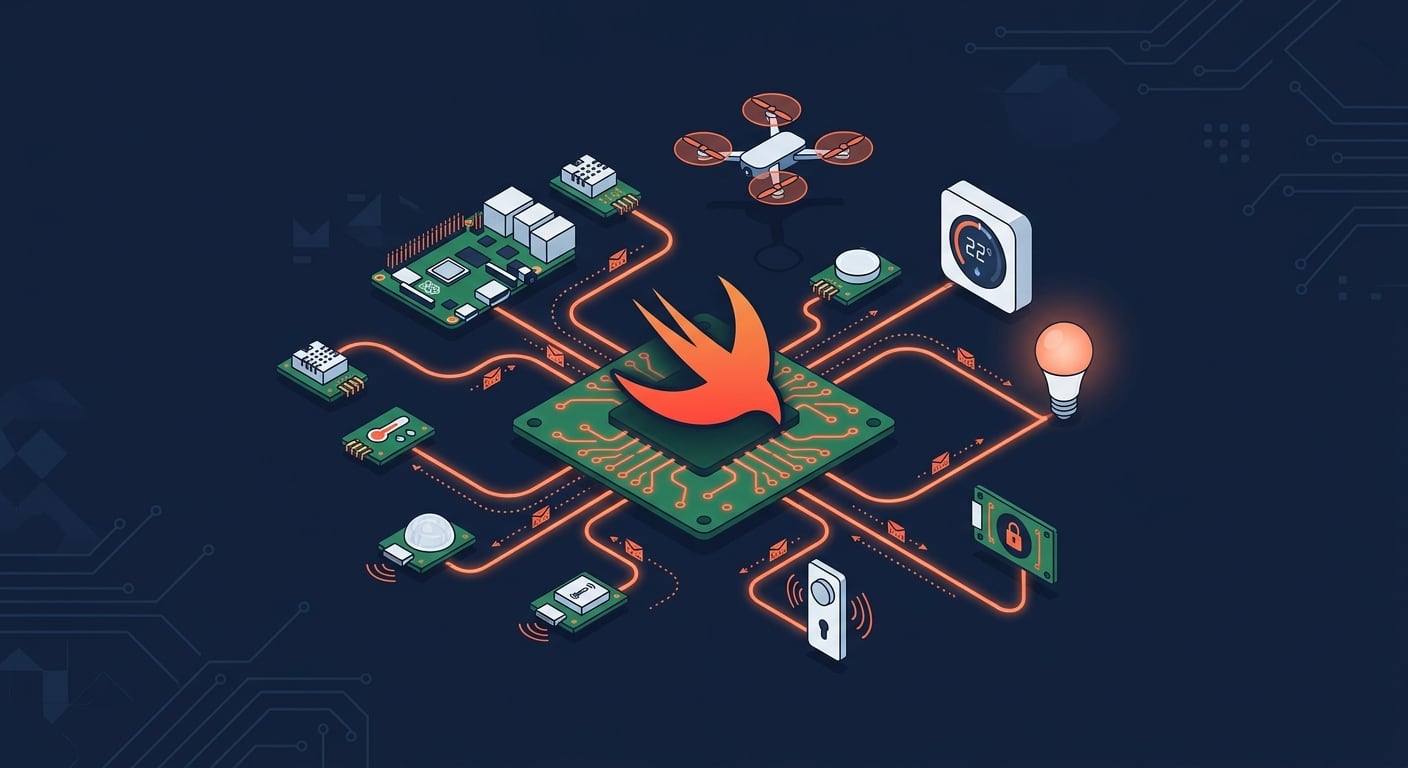
This week, the AWS IoT Device SDK for Swift reached general availability. As a member of the Swift Server Workgroup (SSWG), this one caught my attention. The SDK brings production-ready MQTT 5 connectivity, Device Shadow, Jobs, and fleet provisioning to Swift developers on macOS, iOS, tvOS, and Linux.

Swift on IoT and Edge devices, an AI generated illustration

I’m curious to see what you will build with it. Swift on the server has matured over the past few years, and now it reaches IoT devices too. This connects to a broader trend of running Swift at the edge. WendyOS, for example, is an open-source operating system for physical AI that offers first-class Swift support for deploying apps to NVIDIA Jetson and Raspberry Pi hardware. Between server-side Swift, IoT, and edge computing, the language is showing up in places that would have surprised most people a few years ago.

Now, let’s get into this week’s AWS news.

Headlines
Amazon RDS for SQL Server supports Bring Your Own Media – Customers who migrate SQL Server applications from on-premises environments can now reuse their existing Microsoft SQL Server licenses, including Software Assurance, through Microsoft’s License Mobility program on Amazon RDS. BYOM is integrated with AWS License Manager for tracking license usage and compliance. Read more.

Amazon Cognito now supports multi-Region replication – You can now synchronize user and machine identity data, including credentials, user pool configurations, and federation setups, to a secondary user pool in a standby Region in near real-time. In the event of a disruption in the primary Region, signed-in users continue accessing their applications without re-authenticating, and registered users can sign in with their existing credentials. Multi-Region replication is available as an add-on for user pools in Essentials or Plus feature tiers across 16 Regions. Read more.

GPT-5.5, GPT-5.4, and Codex from OpenAI are now generally available on Amazon Bedrock – You can now use GPT-5.5 and GPT-5.4 in production workloads on Amazon Bedrock and build with Codex for AI-powered software development, with the same security, governance, and operational controls you already use across AWS. GPT-5.5 is the most capable model from OpenAI, excelling at agentic coding, data analysis, and multi-step autonomous tasks. Codex is available through the Codex App, the Codex CLI, and IDE integrations with Visual Studio Code, JetBrains, and Xcode. Pricing matches OpenAI first-party rates, and usage counts toward existing AWS commitments. Read more.

Last week’s launches
Here are some launches and updates from this past week that caught my attention:

For a full list of AWS announcements, be sure to keep an eye on the What’s New with AWS page.

Upcoming AWS events
Learn more about AWS, browse and join upcoming AWS-led in-person and virtual events, startup events, and developer-focused events as well as AWS Summits and AWS Community Days. Join the AWS Builder Center to connect with builders, share solutions, and access content that supports your development.

That’s all for this week. Check back next Monday for another Weekly Roundup!

— seb

Try the new console experience in Amazon Bedrock, optimized for Anthropic- and OpenAI-compatible APIs

Today, we’re announcing a new console experience in Amazon Bedrock for you to experiment, iterate, and scale with the latest AI models on Amazon Bedrock’s next-generation inference engine built for high performance, reliability, and security. This console has a refreshed workflow optimized for bedrock-mantle endpoint, which supports the latest GPT, Claude, and open-weight models with the OpenAI Responses API, OpenAI Chat Completions API, and the Anthropic Messages API.

The new console experience makes it simple to find the right model and move quickly from evaluation to production.

  • New model card: You can browse the full model catalog, compare them side by side on capabilities, modality support, context window, and applicable service quotas in a single view, removing the need to stitch together documentation, and limit calculators.
  • Project-based work: You can make a project to run evaluations and review usage insights in one streamlined workflow that mirrors the lifecycle of building a generative AI application.
  • Live documentation: You can use project-aware live documentation: code samples, SDK snippets, and API references are automatically prefilled with your project variables. You can copy a snippet straight from the console into your application and run it without modification.

How to get started
You can try a new experience by choosing Try the new Bedrock Console from within the Amazon Bedrock console, or by using the new console link directly.

You can find a project-based dashboard to show inference requests and error by range of recent dates, recently used models, and the project list. You can create a project, assign models, configure API keys, and start making inference requests in minutes.

A new model catalog shows the latest GPT, Claude, and open-weight models that are supported on the bedrock-mantle engine. You can see the details of features, tokens, pricing, input/output, pricing information, and Regional availability. You can also compare up to 3 models in a single view.

When you choose the project dashboard, you can see the models used in the project, the distribution of your token usage such as total token usage, token usage per minute, inference requests per minute, and tokens per inference request. This can inform your model selection, prompt optimization, and workload consistency decisions.

You can select up to 3 models to start evaluating to compare responses side by side with the same prompt.

To build your application in the project, choose Getting started. You can migrate existing code, build a new app with the Anthropic or OpenAI SDK, or connect an AI coding assistant to Bedrock.

Choose the API & SDK, your SDK (either Anthropic or OpenAI), your preferred programming language, and your authentication method. It shows your environment code to run these in your terminal for a quick test, or save to a .env file for your application. You can also send your first request with sample code snippets to verify your setup.

When you choose Clients, you can select the AI coding agent source such as Claude Code, Cline, Codex, Cursor, or OpenCode that you want to connect to the bedrock-mantle engine. It provides instructions on how to install the AI agent, use your AWS IAM credentials or use a Bedrock API key, set environment variables, and route requests from each AI agent through Bedrock.

To learn about Anthropic- and OpenAI-compatible APIs, choose Live API docs. You can choose Anthropic API Protocol for access to Claude model features like the Messages API or OpenAI API Protocol for access to features like Responses API.

For example, when you choose OpenAI Response API, it retrieves a model response with the given model ID. These API references are automatically prefilled with the project’s selected model ID, Region, bedrock-mantle endpoint URL, and API key reference, and they update in place as you change models or settings.

You can also choose the existing Bedrock console to manage fully-managed features such as Agents, Knowledge Bases, Guardrails, fine-tuning, or the InvokeModel and Converse APIs to run on the bedrock-runtime endpoint.

Now available
The new console experience is available in all AWS Regions where the bedrock-mantle endpoint is offered: US East (N. Virginia, Ohio), US West (Oregon), Asia Pacific (Jakarta, Mumbai, Sydney, Tokyo), Europe (Frankfurt, Ireland, London, Milan, Stockholm), and South America (São Paulo). Check the full list of Regions for future updates.

Give the new console experience a try in the new Amazon Bedrock console and send feedback to AWS re:Post for Amazon Bedrock or through your usual AWS Support contacts.

Channy

Updated on July 13, 2026 – Fixed the first console image to reflect the latest UI.

Get started with OpenAI GPT-5.5, GPT-5.4 models, and Codex on Amazon Bedrock

As we previewed in What’s Next with AWS 2026, we’re announcing the availability of OpenAI GPT-5.5, GPT-5.4 models, and Codex on Amazon Bedrock, giving you access to frontier models and a coding agent for software development.

According to OpenAI, GPT-5.5 and GPT-5.4 models are excellent for coding, reasoning, agentic workflows, and complex professional work. You can use GPT-5.5 for the hardest customer workloads and GPT-5.4 for the best price-performance. You can call them through Responses API on Amazon Bedrock’s next-generation inference engine built for high performance, reliability, and security.

Codex is the OpenAI coding agent for AI-powered software development. According to OpenAI, more than 4 million developers use Codex every week to write, refactor, debug, test, and validate code across large codebases. With GPT-5.5 powering inference, Codex introduces a new class of intelligence optimized for complex, long-horizon developer workflows. You can use the Codex App, the Codex CLI, and IDE integrations with Visual Studio Code, JetBrains, and Xcode, with all model inference routed through the Responses API on Amazon Bedrock.

For customers with data residency requirements, all processing stays within the Bedrock Region you select. You pay per token with no seat licenses and no per-developer commitments.

GPT-5.5 and GPT-5.4 models on Bedrock in action
You can access the model programmatically using the OpenAI Responses API to call the bedrock-mantle endpoints through the OpenAI SDK, command-line tools such as curl.

Let’s start with OpenAI SDK for Python. Install OpenAI SDK.

pip install -U openai

Set the environment variables for authentication.

export OPENAI_BASE_URL="https://bedrock-mantle.us-east-2.api.aws/openai/v1"
export OPENAI_API_KEY="<BEDROCK_API_KEY>"
export BEDROCK_OPENAI_MODEL_ID="openai.gpt-5.5"

Here is a sample Python code to call GPT-5.5 model on Bedrock:

import os
from openai import OpenAI
 
client = OpenAI(
    base_url=os.environ["OPENAI_BASE_URL"],
    api_key=os.environ["OPENAI_API_KEY"],
)
 
response = client.responses.create(
    model=os.environ["BEDROCK_OPENAI_MODEL_ID"],
    input=[
        {
            "role": "developer",
            "content": "You are a software engineer with excellent AWS cloud knowledge. Be concise and practical.",
        },
        {
            "role": "user",
            "content": "Design a distributed architecture on AWS in Python that should support 100k requests per second across multiple geographic regions.",
        },
    ],
    reasoning={"effort": "medium"},
    text={"verbosity": "low"},
)
 
print(response.output_text)

You can call directly the model endpoint using curl.

curl "$OPENAI_BASE_URL/responses" \
  -H "Content-Type: application/json" \
  -H "Authorization: Bearer $OPENAI_API_KEY" \
  -d '{
    "model": "openai.gpt-5.5",
    "input": [
      {
        "role": "developer",
        "content": "You are a software engineer with excellent AWS cloud knowledge."
      },
      {
        "role": "user",
        "content": "Design a distributed architecture on AWS in Python that should support 100k requests per second across multiple geographic regions."
      }
    ],
    "reasoning": {"effort": "medium"},
    "text": {"verbosity": "low"}
  }'

You can use the Responses API when you want to use model-managed multi-turn state, need hosted tools, function tools, or richer tool orchestration, and run background or long-running work. To learn more, visit the OpenAI Cookbook Responses examples and getting started guide.

Using OpenAI Codex with GPT-5.5 on Amazon Bedrock
You can download Codex CLI, Codex App or Codex VS Code extension and get started with the Bedrock for model inference. Codex supports two Bedrock authentication pathways: Amazon Bedrock API key or AWS SDK credential chain. If you set AWS_BEARER_TOKEN_BEDROCK, Codex uses it first; otherwise Codex falls back to AWS SDK credential chain.

Set AWS_BEARER_TOKEN_BEDROCK in the environment that Codex will read:

export AWS_BEARER_TOKEN_BEDROCK=<your-bedrock-api-key>

Then, configure your preferred Region and set the model ID to openai.gpt-5.5 in ~/.codex/config.toml, which is required for Bedrock API-key authentication. You can also choose openai.gpt-5.4, openai.gpt-oss-120b, or openai.gpt-oss-20b. For the desktop app or VS Code extension, put any environment variables the app needs in ~/.codex/.env.

model = "openai.gpt-5.5"
model_provider = "amazon-bedrock"
[model_providers.amazon-bedrock.aws]
region = "us-east-2"

Restart the desktop app or VS Code extension after changing ~/.codex/config.toml or ~/.codex/.env. In Codex CLI, you should see a /status tab that looks like this:

In Codex App, you can use GPT-5.5 model through Amazon Bedrock inference.

To learn more about how to configure Codex to use OpenAI models on Amazon Bedrock, visit Use Codex with Amazon Bedrock.

Things to know
Let me share some important technical details that I think you’ll find useful.

  • Model latency: OpenAI model information positions GPT-5.5 as fast and GPT-5.4 as medium speed, but customer-perceived latency depends on reasoning effort, output length, tool calls, background mode, Region, quotas, throttling, prompt size, and cache hits. Start GPT-5.5 at medium effort. Start GPT-5.4 with effort set explicitly rather than relying on its none default.
  • Scaling and capacity: Bedrock’s new inference engine is designed to rapidly provision and serve capacity across many different models. When accepting requests, we prioritize keeping steady state workloads running, and ramp usage and capacity rapidly in response to changes in demand. During periods of high demand, requests are queued, rather than rejected.

Now available
OpenAI GPT models and Codex on Amazon Bedrock are available today: GPT-5.5 model in the US East (Ohio) Region, GPT-5.4 model in the US East (Ohio) and US West (Oregon) Regions. Check the full list of Regions for future updates. To learn more, visit the OpenAI on Amazon Bedrock page and the Amazon Bedrock pricing page.

Give GPT-5.5, GPT-5.4 models, and Codex on Amazon Bedrock a try today and send feedback to AWS re:Post for Amazon Bedrock or through your usual AWS Support contacts.

Channy

Updated on June, 1, 2026 – The GPT 5.5 and 5.4 models now support the Responses API only on Amazon Bedrock, and console support is coming soon.

Updated on June, 3, 2026 – Amazon Bedrock now supports GPT‑5.4 from OpenAI in AWS GovCloud (US-West) Region.

Updated on June, 7, 2026 – You can use the GPT 5.5 and 5.4 models in the new Amazon Bedrock console.

AWS Weekly Roundup: AWS Transform at 1 year, Claude Platform on AWS, EC2 M3 Ultra Mac instances, and more (May 18, 2026)

Just a year ago, we launched AWS Transform for .NET, Mainframe and VMware workloads, the first agentic AI service purpose-built for modernizing enterprise applications at scale. At re:Invent 2025, we introduced AWS Transform custom, which enables organizations to modernize and transform code at scale using AWS-managed and custom transformations. You can upgrade language versions, migrate frameworks, optimize performance, and analyze code bases using transformations that are ready to use or can be customized to meet your organization’s specific requirements. We also introduced full-stack Windows modernization capabilities and Reimagine capabilities and automated testing functionality for mainframe.

In 12 months, thousands of customers migrated hundreds of thousands of servers, saved 1.6+ million hours, and processed 4.5+ billion lines of code with AWS Transform. Celebrating its 1-year anniversary, AWS Transform agents now available in Kiro, Claude, Cursor, and Codex, including the agent builder toolkit Kiro power for building customized transformation agents.

To learn what happened in 12 months, the four things we learned, and how that evolved our roadmap, visit the one-year anniversary blog post.

Last week’s launches
Here are last week’s launches that caught my attention:

  • The general availability of Claude Platform on AWS – You can get direct access to Anthropic’s native Claude Platform experience, including APIs, console, and early-access beta features, directly through your existing AWS account, without managing separate accounts, billing, or tracking. Claude Platform on AWS is operated by Anthropic, and customer data is processed outside the AWS security boundary. To learn more, visit the deep dive blog post.
  • Amazon EC2 M3 Ultra Mac instances – These instances are built on Apple M3 Ultra Mac Studio computers featuring a 28-core CPU, 60-core GPU, 32-core Neural Engine, and 256GB of unified memory. Compared to EC2 M4 Max Mac instances, M3 Ultra Mac instances provide 2x the unified memory, 1.75x the CPU cores, 1.5x the GPU cores, and 2x the Neural Engine cores, giving Apple developers the headroom to run significantly more Xcode simulators in parallel and accelerate on-device ML workflows to improve product time to market.
  • Amazon Redshift RG instances powered by AWS Graviton – These instances deliver better performance, running data warehouse and data lake workloads up to 2.4x as fast as previous generation RA3 instances, at 30% lower price per vCPU. RG instances include Redshift’s custom-built vectorized data lake query engine that processes Apache Iceberg and Parquet data on your cluster nodes.
  • Amazon Bedrock Advanced Prompt Optimization – You can optimize your prompts for any model on Bedrock, while comparing your original prompts to your optimized prompts across up to 5 models simultaneously. You can also use this if you are migrating to a new model or just want to get better performance on your current model.
  • AWS Security Agent full repository code scanning (preview) – You can use a new capability in AWS Security Agent that performs deep, context-aware security analysis of your entire codebase. When vulnerabilities are found, the scanner generates code remediation—specific fixes tied to the exact file and line—enabling teams to remediate security vulnerabilities faster than ever before. This capability is available at no additional charge for existing AWS Security Agent customers during the preview.
  • AWS Interconnect – multicloud connectivity with Oracle Cloud Infrastructure (preview) – You can quickly provision resilient, scalable private connections to other cloud providers using AWS Interconnect – multicloud connectivity. OCI is the latest CSP to adopt the open specification that powers AWS Interconnect. This allows AWS to provide a consistent, simple experience to our customers on OCI (preview), Google Cloud (generally available), and Microsoft Azure (coming later in 2026).

Additional updates
Here are some additional news items that you might find interesting:

  • Accelerate AI research and education with Build on Trainium program – Read how the next generation of AI researchers is using Amazon chips to accelerate discovery. AWS invested $110 million to give university researchers access to purpose-built AI chips. AWS Trainium is speeding up AI research at UC Berkeley, MIT, Carnegie Mellon, and more. All research is open source, meaning improvements flow back to the broader developer community.
  • A full list of AWS Community Days 2026 – There’s something different about an event where the speakers are your peers, the organizers are volunteers who do this out of passion, and the agenda was shaped by the community itself. That’s exactly what AWS Community Days are, and they’re happening in cities across every continent, every year.
  • The Kiro Startups Credit program is back – Thousands of founders applied in the first round, and now applications are open again. Apply to receive up to one year of Kiro Pro+ credits automatically applied to your organization’s AWS account.

For a full list of AWS blog posts, be sure to keep an eye on the AWS Blogs page.

Learn more about AWS, browse and join upcoming AWS-led in-person and virtual events, startup events, and developer-focused events including AWS Summits. Join the AWS Builder Center to connect with builders, share solutions, and access content that supports your development.

That’s all for this week. Check back next Monday for another Weekly Roundup!

Channy

Amazon Bedrock introduces new advanced prompt optimization and migration tool

Today, we’re announcing Amazon Bedrock Advanced Prompt Optimization, a new tool that you can use to optimize your prompts for any model on Amazon Bedrock, while comparing your original prompts to optimized prompts across up to 5 models simultaneously. With the new prompt optimization, you can migrate to a new model or improve performance from your current model. You can test them to make sure they see no regressions on known use cases and also improve on underperforming tasks.

The new prompt optimizer takes in your prompt template, example user inputs for the variable values, ground truth answers, and an evaluation metric to use as a guide. You can even use this with multimodal user inputs – it supports png, jpg, and pdf as inputs to your prompt templates so you can optimize prompts for tasks like document and image analysis.

You can also provide an AWS Lambda function, LLM-as-a-judge rubric, or a short natural language description to guide the optimization. The prompt optimizer works in a metric-driven feedback loop to optimize the prompt and resulting model responses for the evaluation metric, and outputs the original and final prompt templates with evaluation scores, cost estimates, and latency.

Bedrock Advanced Prompt Optimization in action
To get started with the new prompt optimization, choose Create prompt optimization on the Advanced Prompt Optimization page of Amazon Bedrock console.

Pick up to 5 inference models for which to optimize your prompts. You can use this if you are migrating to a new model or just want to get better performance on their current model. If you’re changing models, you can select your current model as a baseline and up to 4 other models. If you aren’t changing models, then just select your current model to see before and after optimization.

You should prepare your prompt templates in JSONL format with example user data, ground truth answers, and an evaluation metric or rewriting guidance. For .jsonl files, each JSON object must be on a single line.

{
    "version": "bedrock-2026-05-14",           // required; Fixed value
    "templateId": "string",                    // required
    "promptTemplate": "string",                // required
    "steeringCriteria": ["string"],            // optional
    "customEvaluationMetricLabel": "string",   // required if customLLMJConfig or evaluationMetricLambdaArn is used
    "customLLMJConfig": {                      // optional
        "customLLMJPrompt": "string",          // required if customLLMJConfig present
        "customLLMJModelId": "string"          // required if customLLMJConfig present
    },
    "evaluationMetricLambdaArn": "string",     // optional
    "evaluationSamples": [                     // required
        {
            "inputVariables": [                // required
                {
                    "variableName1": "string",
                    "variableName2": "string"
                }
            ],
            "referenceResponse": "string"      // optional
            "inputVariablesMultimodal": [      // optional
                {
                "Arbitrary_Name": {            // required for your multimodal variable.
                    "type": "string",          // choose from "PDF" or "IMAGE". Acceptable filetypes for IMAGE = png, jpg,  
                    "s3Uri": "string"          // input the S3 path of the file
                }
            ]
        }
    ]
}

You can upload files directly or import prompt templates from Amazon Simple Storage Service (Amazon S3) and set an S3 output location where prompt optimization results and evaluation data will be stored. Then, choose Create optimization.

Amazon Bedrock automatically sends your prompt templates and example data with optional ground truth to your inference models, evaluates the responses with your evaluation metric, then rewrites the prompt in a feedback loop to optimize it for your inference models. You’ll see evaluation results based on your provided metric and your final optimized prompts.

As you noted, you can evaluate prompt quality in three ways: a Lambda function with your own Python scoring logic, LLM-as-a-Judge with a custom rubric, or natural-language steering criteria. You can just choose one per prompt template, but can do multiple prompt templates in a job, so they can use a different method for each prompt template if they want.

  • Lambda function: If you have a concrete metric (accuracy, F1, execution accuracy, structured-JSON match, etc.), you can deploy a Lambda function containing your custom scoring logic and configure evaluationMetricS3Uri field of the prompt template. Inside the Lambda, the core is a compute_score implementation that programmatically compares model outputs against reference responses.
  • LLM-as-a-Judge: If your task is open-ended (summarization, generation, reasoning explanations) and you want a rubric-based score, you can configure the S3 config file in the customLLMJConfig field of the prompt template to define named metrics with structured instructions and a rating scale. A Bedrock judge model evaluates each prompt-response pair and returns a score with reasoning. The default model is Claude Sonnet 4.6 and you can also select your own from a list of judge models.
  • Steering criteria: If you know the qualities you want (brand voice, format, safety constraints) but don’t want to author a full judge prompt, you can define criteria in the input dataset through the steeringCriteria array of the prompt template. Instead of structured metrics with rating scales, you provide free-form natural language criteria that the LLM judge evaluates holistically. If you use this option, then a default LLM-as-a-judge prompt will evaluate the responses and incorporate your steering criteria into the judge prompt. The judge model in this case is Anthropic Claude Sonnet 4.6.

To learn more about how to use the advanced prompt optimization and migration, visit the advanced prompt optimization in Bedrock guide and the sample codes in Github.

Now available
Amazon Bedrock Advanced Prompt Optimization is available today in US East (N. Virginia, Ohio), US West (Oregon), Asia Pacific (Mumbai, Seoul, Singapore, Sydney, Tokyo), Canada (Central), Europe (Frankfurt, Ireland, London, Zurich), and South America (São Paulo) Regions. You are charged based on the Bedrock model-inference tokens consumed during optimization, at the same per-token rates as regular Bedrock inference. To learn more, visit the Amazon Bedrock pricing page.

Give the advanced prompt optimization a try in the Amazon Bedrock console or with CreateAdvancedPromptOptimizationJob API today and send feedback to AWS re:Post for Amazon Bedrock or through your usual AWS Support contacts.

Channy

Modernize your workflows: Amazon WorkSpaces now gives AI agents their own desktop

Enterprises face a significant challenge when deploying AI agents: the desktop and legacy applications that power most business workflows are simply inaccessible to modern AI systems. According to a 2024 Gartner report, 75% of organizations run legacy applications that lack modern APIs, and 71% of Fortune 500 companies operate critical processes on mainframe systems without adequate programmatic access. For many organizations, this has meant choosing between delaying AI adoption or undertaking expensive and risky modernization projects.

Today, we are announcing that Amazon WorkSpaces now enables AI agents to securely operate desktop applications without requiring application modernization. The same managed virtual desktops that millions of employees use and trust can now also serve AI agents, turning WorkSpaces into infrastructure for scaling enterprise productivity, not just delivering it. Because agents operate within your existing WorkSpaces environment, there are no APIs to build, no application migrations to plan, and no new infrastructure to manage.

Some of our customers had an early opportunity to give their agents a WorkSpace. Chris Noon, Director, Nuvens Consulting shared with us, “WorkSpaces lets our clients give AI agents the same secure, governed desktop environment their employees already use — no custom API integrations, full audit trails, and enterprise-grade isolation out of the box. For regulated industries, that’s not a nice-to-have — it’s the baseline.”

Secure cloud desktop access for AI agents
With WorkSpaces, AI agents can securely access and operate desktop applications running inside managed WorkSpaces environments to complete complex business workflows. Agents authenticate through AWS Identity and Access Management (IAM) and connect via Workspaces with complete audit trails available through AWS CloudTrail and Amazon CloudWatch. Because agents operate within secure WorkSpaces environments rather than on local machines, your existing security controls and compliance policies remain fully intact.

Amazon Workspaces supports the industry-standard Model Context Protocol (MCP), which means WorkSpaces works with any agent framework, such as LangChain, CrewAI and Strands Agents.

Let’s try it out
To set up a WorkSpaces environment for AI agents, I started in the AWS Management Console by creating a new WorkSpaces Applications stack—the environment definition that controls how agents connect and what they’re allowed to do.

From the Amazon WorkSpaces console, I chose Create stack and configured the basics: name, fleet association, and VPC endpoints. In Step 3 of the stack creation workflow, I noticed the new AI agents section with two options. The first, No AI agent access, is the default configuration for standard WorkSpaces designed for people. The second, Add AI Agents, allows AI agents to securely access and operate applications using their own identity and permissions. I selected Add AI Agents to enable agent connections on this stack.

Workspaces Screenshot

Next, I will enable storage before configuring the agent access settings to define how agents interact with the desktop.

Workspaces screenshot

Under Agent features, I enabled three capabilities. Computer input allows the agent to click, type, and scroll within the desktop. Computer vision allows the agent to capture screenshots of the desktop, which is how it “sees” the application. Finally, screenshot storage configures where session screenshots are stored for audit and debugging.

Workspaces Screenshot

Under Desktop screen layout, I set the screen resolution to 1280×720 and image format to PNG. The resolution determines the fidelity of what the agent sees during a session—a complex application with dense UI elements might benefit from higher resolution, while a terminal-style interface works well at 720p.

Workspaces Screenshot

With my stack configured, WorkSpaces exposes a managed MCP endpoint. I pointed my agent framework to this endpoint, provided IAM credentials for authentication, and my agent began interacting with the desktop applications installed on the fleet’s image.

To see this in action, here’s an agent built with the Strands Agent SDK and Amazon Bedrock handling a prescription refill, looking up the patient record, searching for the medication, placing the order, and confirming a successful refill, all inside a sample pharmacy system with no API.

The application doesn’t know an agent is driving it. Nothing about the software was modified, rebuilt, or integrated. The agent worked with it exactly as it exists today.

Now available
This feature is available today at no additional cost in US East (N. Virginia, Ohio), US West (Oregon), Canada (Central), Europe (Frankfurt, Ireland, Paris, London), and Asia (Tokyo, Mumbai, Sydney, Seoul, Singapore) Regions.

Get started building today using our GitHub repo, or visit the WorkSpaces page for more details.

Updated July 1, 2026– Feature has moved from public preview to GA.

AWS Weekly Roundup: What’s Next with AWS 2026, Amazon Quick, OpenAI partnership, and more (May 4, 2026)

Last week, I took some time off in York, England, often described as the most haunted city in the country. I wandered through the ruins of abbeys that have stood for nearly a thousand years, walked along medieval walls, and spent an evening on a ghost tour hearing stories passed down through centuries. There’s something grounding about standing in a place that has witnessed so much history. Now I’m back at my desk, and the contrast is hard to miss: those abbey stones have stood for a thousand years largely unchanged, while in the span of a single week away, the pace of technological change has moved forward yet again.

The ruins of Whitby Abbey in North Yorkshire. Stones that have seen a thousand years, while this week alone brought another wave of change.

Now, let’s get into this week’s AWS news.

Headlines
On April 28, Matt Garman, CEO of AWS, Colleen Aubrey, SVP Amazon Applied AI Solutions, Julia White, CMO of AWS, and OpenAI leaders took the stage to share how customers are changing the way businesses operate with agents. The event brought a packed slate of announcements across Amazon Quick, Amazon Connect, and a deeper partnership with OpenAI. Here’s a roundup of the biggest announcements from the event.

Amazon Quick expands with a desktop app, new pricing plans, and visual asset generation – Amazon Quick is an AI assistant for work that connects to your apps, learns what matters to you, and takes action on your behalf. This week, Quick introduced a new desktop app (Preview) that keeps you connected to your local files, calendar, and communications without opening a browser. You can sign up within minutes using your personal email address or existing Google, Apple, Github, or Amazon credentials—no AWS account required. Quick can now generate polished documents, presentations, infographics, and images directly from the chat interface, and native integrations expand to include Google Workspace, Zoom, Airtable, Dropbox, and Microsoft Teams. A new Build custom apps with Quick capability (Preview) lets you create intelligent apps, dashboards, and web pages connected to the rest of your business using natural language.

Amazon Connect expands into four agentic AI solutions – Amazon Connect is expanding from a single product into a set of four agentic AI solutions designed to work within your existing workflows. Amazon Connect Decisions is a supply chain planning and intelligence solution that shifts teams from crisis management to proactive planning, combining 30 years of Amazon operational science with more than 25 specialized supply chain tools. Amazon Connect Talent (Preview) is an agentic AI hiring solution that delivers AI-led interviews, science-backed assessments, and consistent evaluation for talent acquisition leaders managing scaled hiring. Amazon Connect Customer, previously known as Amazon Connect, delivers personalized customer experiences across voice, chat, and digital channels, with new configuration capabilities that enable organizations to set up conversational AI in weeks rather than months. Amazon Connect Health delivers agentic patient verification, appointment management, patient insights, ambient documentation, and medical coding, giving patients faster access to care and clinicians more time to deliver it.

AWS and OpenAI expand their partnership across Amazon Bedrock – AWS and OpenAI are bringing the latest OpenAI models to Amazon Bedrock, launching Codex on Amazon Bedrock, and introducing Amazon Bedrock Managed Agents powered by OpenAI — all in limited preview. OpenAI models on Amazon Bedrock (Limited preview) brings the latest OpenAI models, including GPT-5.5 and GPT-5.4, to the Bedrock APIs you already use, with unified security, governance, and cost controls. No additional infrastructure to configure, no new security model to learn. Codex on Amazon Bedrock (Limited preview) lets you access the OpenAI coding agent within your existing AWS environments, authenticating with your AWS credentials, processing inference through Bedrock, and applying Codex usage toward your AWS cloud commitments. Codex on Bedrock is available through the Bedrock API, starting with the Codex CLI, the Codex desktop app, and a Visual Studio Code extension. Amazon Bedrock Managed Agents, powered by OpenAI (Limited preview) combines OpenAI frontier models with AWS infrastructure to build production-ready OpenAI-powered agents in the cloud, built with the OpenAI harness for faster execution, sharper reasoning, and reliable steering of long-running tasks.

To learn more, visit Top announcements of the What’s Next with AWS, 2026.

Last week’s launches
Here are some launches and updates from this past week that caught my attention:

  • Amazon EC2 M8in and M8ib instances are now generally available – Powered by custom 6th-gen Intel Xeon Scalable processors and 6th-gen AWS Nitro cards, these instances deliver up to 43% higher performance over M6in and M6ib. M8in offers 600 Gbps network bandwidth, while M8ib delivers up to 300 Gbps EBS bandwidth. Available in US East (N. Virginia), US West (Oregon), Asia Pacific (Tokyo), and Europe (Spain).
  • Amazon EC2 R8in and R8ib instances are now generally available – Memory-optimized instances built on the same 6th-gen Intel Xeon Scalable processors and Nitro cards, with the same 600 Gbps network and 300 Gbps EBS bandwidth profiles. Well-suited for large commercial databases, data lakes, and in-memory databases such as SAP HANA. Available in US East (N. Virginia, Ohio), US West (Oregon), and Europe (Spain).
  • Amazon EC2 C8ine and M8ine instances are now generally available – Network-optimized instances offering up to 2.5x higher packet performance per vCPU and up to 2x higher network throughput for traffic through internet gateways compared to C6in and M6in. Designed for security and network virtual appliances including virtual firewalls, load balancers, and 5G UPF workloads. Available in US East (N. Virginia), US West (Oregon), and Asia Pacific (Tokyo) for C8ine; US East (N. Virginia) and US West (Oregon) for M8ine.
  • Amazon Bedrock AgentCore adds optimization capabilities (Preview) – AgentCore now offers recommendations, batch evaluations, and A/B tests to complete the observe-evaluate-improve loop for agents in production. Recommendations analyze production traces and evaluation outputs to propose optimized system prompts and tool descriptions, which you can validate with batch evaluations against pre-defined test cases or A/B tests against live traffic. Every recommendation requires your approval before it ships.
  • AWS Lambda adds support for Ruby 4.0 – Ruby 4.0, the latest LTS release, is available as a Lambda managed runtime and container base image. It includes support for Lambda advanced logging controls, including JSON structured logs, configurable logging levels, and target CloudWatch log group configuration. Available in all AWS Regions, including China Regions and AWS GovCloud (US).

For a full list of AWS announcements, be sure to keep an eye on the What’s New with AWS page.

Other AWS news
Here are some additional posts and resources that you might find interesting:

  • Amazon Q Developer end-of-support announcement – Amazon Q Developer IDE plugins and paid subscriptions will reach end of support on April 30, 2027, giving customers 12 months to transition to Kiro. New signups will be blocked starting May 15, 2026, although existing subscriptions can continue to add users. Starting May 29, 2026, Opus 4.6 will no longer be available on Q Developer Pro; Opus 4.5 and other existing models remain available, and the latest coding models including Opus 4.7 are available exclusively on Kiro. Amazon Q Developer in the AWS Management Console and first-party AWS experiences (documentation, mobile app, Slack, and Microsoft Teams) are not affected.
  • AWS 10,000 AIdeas Competition: Meet the Winners – AWS announced the 20 winners of the 10,000 AIdeas Competition, a global challenge where builders submitted AI applications built entirely with Kiro and the AWS Free Tier, with submissions from 115 countries narrowed down through four rounds of evaluation and two rounds of community voting. Winners span Global Champions, Regional Champions, Innovation Awards, and Creative Track categories, with cash prizes and AWS credits awarded across each tier.
  • AWS Student Builder Groups – AWS Cloud Clubs is evolving to AWS Student Builder Groups. The community now spans 600+ colleges and universities across 63 countries. Existing Cloud Club memberships, badges, and progress carry forward, and Cloud Club Captains become Group Leaders. Membership is open to any learner 18 or older. You can find a group near you on AWS Builder Center or apply to launch a new group on your campus.

Upcoming AWS events
Check your calendar and sign up for upcoming AWS events:

Visit the AWS Builder Center to meet other builders, contribute solutions, and find resources that help you keep building. You can also browse upcoming AWS-led in-person and virtual events, plus developer-focused sessions.

— Esra

This post is part of our Weekly Roundup series. Check back each week for a quick roundup of interesting news and announcements from AWS!

AWS Weekly Roundup: Claude Opus 4.7 in Amazon Bedrock, AWS Interconnect GA, and more (April 20, 2026)

Last week I had the honor of delivering a commencement speech at the University of Namur (uNamur) for their 2025 graduation ceremony.

uNamur Graduation Ceremony

Standing in front of freshly minted computer science graduates, I talked about the future of software development in the age of AI. My message to them was simple: AI will not make you obsolete. We’ve seen tools evolve over the decades, from punch cards to IDEs to AI-assisted coding, but the work remains yours, not the tool’s. The developers who will thrive are those who stay curious, think in systems, communicate with precision, and take ownership of what they build. The world needs more people with coding skills, not fewer. AI raises the bar on what we can accomplish, and that’s a good thing.

Now, let’s get into this week’s AWS news.

Headlines
Anthropic’s Claude Opus 4.7 is now available in Amazon Bedrock – Anthropic’s most intelligent Opus model is now available in Amazon Bedrock, with improved performance across coding, long-running agents, and professional knowledge work. Claude Opus 4.7 scores 64.3% on SWE-bench Pro and 87.6% on SWE-bench Verified, extending its lead in agentic coding with stronger long-horizon autonomy and complex code reasoning. It also does better on knowledge work tasks like document creation, financial analysis, and multi-step research.

The model runs on Bedrock’s next-generation inference engine with dynamic capacity allocation, adaptive thinking (letting Claude allocate thinking token budgets based on request complexity), and the full 1M token context window. It also adds high-resolution image support for better accuracy on charts, dense documents, and screen UIs. Claude Opus 4.7 is available at launch in US East (N. Virginia), Asia Pacific (Tokyo), Europe (Ireland), and Europe (Stockholm), with up to 10,000 requests per minute per account per Region.

AWS Interconnect is now generally available with a new option to simplify last-mile connectivity – AWS Interconnect brings two managed private connectivity capabilities to general availability. The first, AWS Interconnect – Multicloud, provides Layer 3 private connections between AWS VPCs and other cloud providers (Google Cloud available now, Azure and OCI coming later in 2026). Traffic flows over the AWS global backbone and the partner cloud’s private network, never over the public internet, with built-in MACsec encryption, multi-facility resiliency, and CloudWatch monitoring. AWS published the underlying specification on GitHub under Apache 2.0 so any cloud provider can become an Interconnect partner.

The second capability, AWS Interconnect – Last Mile, simplifies high-speed private connections from branch offices, data centers, and remote locations to AWS through existing network providers. It provisions 4 redundant connections across 2 physical locations automatically, configures BGP routing, activates MACsec encryption and Jumbo Frames by default, and offers bandwidth from 1 Gbps to 100 Gbps adjustable from the console without reprovisioning. Last Mile launches in US East (N. Virginia) with Lumen as the initial partner.

Last week’s launches
Here are some launches and updates from this past week that caught my attention:

  • Amazon ECR pull through cache now supports referrer discovery and sync – ECR’s pull through cache now automatically discovers and syncs OCI referrers (image signatures, SBOMs, attestations) from upstream registries into your private repositories. This means end-to-end image signature verification and SBOM discovery workflows work without client-side workarounds.
  • AWS Transform is now available in Kiro and VS Code – AWS Transform, the agentic migration and modernization factory, is now accessible via Kiro (as a Power) and VS Code (as an extension). You can run custom transformations for common patterns like Java/Python/Node.js version upgrades and AWS SDK migrations directly from your IDE, with job state shared across the web console, CLI, and IDE.
  • Aurora DSQL launches connector for PHP – A new Aurora DSQL Connector for PHP (PDO_PGSQL) simplifies building PHP applications on Aurora DSQL by automatically generating IAM tokens, handling SSL configuration, managing connection pooling, and providing opt-in optimistic concurrency control retry with exponential backoff.
  • Amazon Q supports document-level access controls for Google Drive – Amazon Q now enforces document-level access controls for Google Drive knowledge bases, combining indexed ACL replication for fast pre-retrieval filtering with real-time permission checks against Google Drive at query time.
  • AWS Secrets Manager now supports hybrid post-quantum TLS – Secrets Manager now supports hybrid post-quantum key exchange using ML-KEM to protect secrets against both current and future quantum computing threats. This is automatically enabled in Secrets Manager Agent 2.0.0+, Lambda Extension v19+, and the CSI Driver 2.0.0+.
  • Amazon EC2 C8in and C8ib instances are now generally available – Powered by custom 6th-gen Intel Xeon Scalable processors and 6th-gen AWS Nitro cards, these instances deliver up to 43% higher performance over C6in. C8in offers 600 Gbps network bandwidth (highest among enhanced networking EC2 instances), while C8ib delivers up to 300 Gbps EBS bandwidth (highest among non-accelerated compute instances), scaling up to 384 vCPUs.

For a full list of AWS announcements, be sure to keep an eye on the What’s New with AWS page.

Other AWS news
Here are some additional posts and resources that you might find interesting:

  • Navigating enterprise networking challenges with Amazon EKS Auto Mode – This post explains how EKS Auto Mode automates Kubernetes networking infrastructure including VPC CNI configuration, load balancer provisioning, and DNS management, reducing operational overhead while preserving enterprise security controls.
  • Introducing granular cost attribution for Amazon Bedrock – My colleague Micah talked about this feature last week already, but the blog post came out after last week’s roundup. Amazon Bedrock now automatically attributes inference costs to the specific IAM principal that made each API call, with results flowing into AWS Cost and Usage Reports (CUR 2.0). You can aggregate costs by team, project, or cost center using IAM principal tags and session tags.
  • Accelerate development workflows with Amazon EBS Volume Clones – EBS Volume Clones let you create instant, point-in-time copies of EBS volumes that are immediately usable without waiting for data transfer. The post highlights use cases including dev/test environment refreshes, disaster recovery testing, and CI/CD pipeline acceleration.
  • Modernize VB6 applications at scale with AWS Transform Custom – A walkthrough of using AWS Transform Custom’s agentic AI capabilities to convert legacy Visual Basic 6.0 applications to modern C# ASP.NET Core web applications, addressing challenges like COM dependencies, ADO-to-Entity Framework migration, and VB6 forms-to-Blazor UI conversion.
  • Migrating and decomposing APIs with zero-downtime using CloudFront – A zero-downtime API migration strategy using CloudFront Functions with CloudFront KeyValueStore for intelligent, user-aware traffic routing based on the Strangler Fig pattern. This is similar to what AWS Migration Hub Refactor Spaces offers, but implemented with just CloudFront and edge functions.

Upcoming AWS events
Check your calendar and sign up for upcoming AWS events:

  • AWS Events: Browse upcoming AWS-led in-person and virtual events, startup events, and developer-focused events near you.
  • AWS Builder Center: Find community-led events, meetups, and user groups in your area.

That’s all for this week. Check back next Monday for another Weekly Roundup!

— seb

Introducing Anthropic’s Claude Opus 4.7 model in Amazon Bedrock

Today, we’re announcing Claude Opus 4.7 in Amazon Bedrock, Anthropic’s most intelligent Opus model for advancing performance across coding, long-running agents, and professional work.

Claude Opus 4.7 is powered by Amazon Bedrock’s next generation inference engine, delivering enterprise-grade infrastructure for production workloads. Bedrock’s new inference engine has brand-new scheduling and scaling logic which dynamically allocates capacity to requests, improving availability particularly for steady-state workloads while making room for rapidly scaling services. It provides zero operator access—meaning customer prompts and responses are never visible to Anthropic or AWS operators—keeping sensitive data private.

According to Anthropic, Claude Opus 4.7 model provides improvements across the workflows that teams run in production such as agentic coding, knowledge work, visual understanding,long-running tasks. Opus 4.7 works better through ambiguity, is more thorough in its problem solving, and follows instructions more precisely.

  • Agentic coding: The model extends Opus 4.6’s lead in agentic coding, with stronger performance on long-horizon autonomy, systems engineering, and complex code reasoning tasks. According to Anthropic, the model records high-performance scores with 64.3% on SWE-bench Pro, 87.6% on SWE-bench Verified, and 69.4% on Terminal-Bench 2.0.
  • Knowledge work: The model advances professional knowledge work, with stronger performance on document creation, financial analysis, and multi-step research workflows. The model reasons through underspecified requests, making sensible assumptions and stating them clearly, and self-verifies its output to improve quality on the first step. According to Anthropic, the model reaches 64.4% on Finance Agent v1.1.
  • Long-running tasks: The model stays on track over longer horizons, with stronger performance over its full 1M token context window as it reasons through ambiguity and self-verifies its output.
  • Vision: the model adds high-resolution image support, improving accuracy on charts, dense documents, and screen UIs where fine detail matters.

The model is an upgrade from Opus 4.6 but may require prompting changes and harness tweaks to get the most out of the model. To learn more, visit Anthropic’s prompting guide.

Claude Opus 4.7 model in action
You can get started with Claude Opus 4.7 model in Amazon Bedrock console. Choose Playground under Test menu and choose Claude Opus 4.7 when you select model. Now, you can test your complex coding prompt with the model.

I run the following prompt example about technical architecture decision:
Design a distributed architecture on AWS in Python that should support 100k requests per second across multiple geographic regions.

You can also access the model programmatically using the Anthropic Messages API to call the bedrock-runtime through Anthropic SDK or bedrock-mantle endpoints, or keep using the Invoke and Converse API on bedrock-runtime through the AWS Command Line Interface (AWS CLI) and AWS SDK.

To get started with making your first API call to Amazon Bedrock in minutes, choose Quickstart in the left navigation pane in the console. After choosing your use case, you can generate a short term API key to authenticate your requests as testing purpose.

When you choose the API method such as the OpenAI-compatible Responses API, you can get sample codes to run your prompt to make your inference request using the model.


To invoke the model through the Anthropic Claude Messages API, you can proceed as follows using anthropic[bedrock] SDK package for a streamlined experience:

from anthropic import AnthropicBedrockMantle
# Initialize the Bedrock Mantle client (uses SigV4 auth automatically)
mantle_client = AnthropicBedrockMantle(aws_region="us-east-1")
# Create a message using the Messages API
message = mantle_client.messages.create(
    model="anthropic.claude-opus-4-7",
    max_tokens=10000,
    messages=[ 
	    {"role": "user", "content": "Design a distributed architecture on AWS in Python that should support 100k requests per second across multiple geographic regions"}
    ]
)
print(message.content[0].text)

You can also run the following command to invoke the model directly to bedrock-runtime endpoint using the AWS CLI and the Invoke API:

aws bedrock-runtime invoke-model \ 
 --model-id anthropic.claude-opus-4-7 \ 
 --region us-east-1 \ 
 --body '{"anthropic_version":"bedrock-2023-05-31", "messages": [{"role": "user", "content": "Design a distributed architecture on AWS in Python that should support 100k requests per second across multiple geographic regions."}], "max_tokens": 32000}' \ 
 --cli-binary-format raw-in-base64-out \ 
invoke-model-output.txt

For more intelligent reasoning capability, you can use Adaptive thinking with Claude Opus 4.7, which lets Claude dynamically allocate thinking token budgets based on the complexity of each request.

To learn more, visit the Anthropic Claude Messages API and check out code examples for multiple use cases and a variety of programming languages.

Things to know
Let me share some important technical details that I think you’ll find useful.

  • Choosing APIs: You can choose from a variety of Bedrock APIs for model inference, as well as the Anthropic Messages API. The Bedrock-native Converse API supports multi-turn conversations and Guardrails integration. The Invoke API provides direct model invocation and lowest-level control.
  • Scaling and capacity: Bedrock’s new inference engine is designed to rapidly provision and serve capacity across many different models. When accepting requests, we prioritize keeping steady state workloads running, and ramp usage and capacity rapidly in response to changes in demand. During periods of high demand, requests are queued, rather than rejected.

Now available
Anthropic’s Claude Opus 4.7 model is available today in the US East (N. Virginia), Asia Pacific (Tokyo), Europe (Ireland), and Europe (Stockholm) Regions; check the full list of Regions for future updates. To learn more, visit the Claude by Anthropic in Amazon Bedrock page and the Amazon Bedrock pricing page.

Give Anthropic’s Claude Opus 4.7 a try in the Amazon Bedrock console today and send feedback to AWS re:Post for Amazon Bedrock or through your usual AWS Support contacts.

Channy

Updated on April 17, 2026 – Fixed code samples and CLI commends to align new version.

Updated on May 30, 2026 – Removed requests per minute (RPM) quotas in Bedrock.

Amazon Bedrock Guardrails supports cross-account safeguards with centralized control and management

Today, we’re announcing the general availability of cross-account safeguards in Amazon Bedrock Guardrails, a new capability that enables centralized enforcement and management of safety controls across multiple AWS accounts within an organization.

With this new capability, you can specify a guardrail in a new Amazon Bedrock policy within the management account of your organization that automatically enforces configured safeguards across all member entities for every model invocation with Amazon Bedrock. This organization-wide implementation supports uniform protection across all accounts and generative AI applications with centralized control and management. This capability also offers flexibility to apply account-level and application-specific controls depending on use case requirements in addition to organizational safeguards.

  • Organization-level enforcements apply a single guardrail from your organization’s management account to all entities within the organization through policy settings. This guardrail automatically enforces filters across all member entities, including organizational units (OUs) and individual accounts, for all Amazon Bedrock model invocations.
  • Account-level enforcement enables automatic enforcement of configured safeguards across all Amazon Bedrock model invocations in your AWS account. The configured safeguards in the account-level guardrail apply to all inference API calls.

You can now establish and centrally manage dependable, comprehensive protection through a single, unified approach. This supports consistent adherence to corporate responsible AI requirements while significantly reducing the administrative burden of monitoring individual accounts and applications. Your security team no longer needs to oversee and verify configurations or compliance for each account independently.

Getting started with centralized enforcement in Amazon Bedrock Guardrails
You can get started with account-level and organization-level enforcement configuration in the Amazon Bedrock Guardrails console. Before the enforcement configuration, you need to create a guardrail with a particular version to support the guardrail configuration remains immutable and cannot be modified by member accounts and complete prerequisites for using the new capability such as resource-based policies for guardrails.

To enable account-level enforcement, choose Create in the section of Account-level enforcement configurations.

You can choose the guardrail and version to automatically apply to all Bedrock inference calls from this account in this Region. With general availability, we introduce the new feature defining which models will be affected by the enforcement with either Include or Exclude behavior.

You can also configure selective content guarding controls for system prompts and user prompts with either Comprehensive or Selective.

  • Use Comprehensive when you want to enforce guardrails on everything, regardless of what the caller tags. This is the safer default when you don’t want to rely on callers to correctly identify sensitive content.
  • Use Selective when you trust callers to tag the right content and want to reduce unnecessary guardrail processing. This is useful when callers handle a mix of pre-validated and user-generated content, and only need guardrails applied to specific portions.

After creating the enforcement, you can test and verify enforcement using a role in your account. The account-enforced guardrail should automatically apply to both prompts and outputs.

Check the response for guardrail assessment information. The guardrail response will include enforced guardrail information. You can also test by making a Bedrock inference call using InvokeModel, InvokeModelWithResponseStream, Converse, or ConverseStream APIs.

To enable organization-level enforcement, go to AWS Organizations console and choose Policies menu. You can enable the Bedrock policies in the console.

You can create a Bedrock policy that specifies your guardrail and attach it to your target accounts or OUs. Choose Bedrock policies enabled and Create policy. Specify your guardrail ARN and version and configure the input tags setting for in the AWS Organizations. To learn more, visit Amazon Bedrock policies in AWS Organizations and Amazon Bedrock policy syntax and examples.

After creating the policy, you can attach the policy to your desired organizational units, accounts, root in the Targets tab.

Search and select your organization root, OUs, or individual accounts to attach your policy, and choose Attach policy.

You can test that the guardrail is being enforced on member accounts and verify which guardrail is enforced. From a member account attached, you should see the organization enforced guardrail under the section Organization-level enforcement configurations.

The underlying safeguards within the specified guardrail are then automatically enforced for every model inference request across all member entities, ensuring consistent safety controls. To accommodate varying requirements of individual teams or applications, you can attach different policies with associated guardrails to different member entities through your organization.

Things to know
Here are key considerations to know about GA features:

  • You can now choose to include or exclude specific models in Bedrock for inference, enabling centralized enforcement on model invocation calls. You can also choose to safeguard partial or complete system prompts and input prompts. To learn more, visit Apply cross-account safeguards with Amazon Bedrock Guardrails enforcement.
  • Ensure you are specifying the accurate guardrail Amazon Resource Names (ARN) in the policy. Specifying an incorrect or invalid ARN will result in policy violations, non-enforcement of safeguards, and the inability to use the models in Amazon Bedrock for inference. To learn more, visit Best practices for using Amazon Bedrock policies.
  • Automated Reasoning checks are not supported with this capability.

Now available
Cross-account safeguards in Amazon Bedrock Guardrails is generally available today in the all AWS commercial and GovCloud Regions where Bedrock Guardrails is available. For Regional availability and a future roadmap, visit the AWS Capabilities by Region. Charges apply to each enforced guardrail according to its configured safeguards. For detailed pricing information on individual safeguards, visit Amazon Bedrock Pricing page.

Give this capability a try in the Amazon Bedrock console and send feedback to AWS re:Post for Amazon Bedrock Guardrails or through your usual AWS Support contacts.

Channy

Introducing OpenClaw on Amazon Lightsail to run your autonomous private AI agents

Today, we’re announcing the general availability of OpenClaw on Amazon Lightsail to launch OpenClaw instance, pairing your browser, enabling AI capabilities, and optionally connecting messaging channels. Your Lightsail OpenClaw instance is pre-configured with Amazon Bedrock as the default AI model provider. Once you complete setup, you can start chatting with your AI assistant immediately — no additional configuration required.

OpenClaw is an open-source self-hosted autonomous private AI agent that acts as a personal digital assistant by running directly on your computer. You can run AI agents on OpenClaw through your browser to connect to messaging apps like WhatsApp, Discord, or Telegram to perform tasks such as managing emails, browsing the web, and organizing files, rather than just answering questions.

AWS customers have asked if they can run OpenClaw on AWS. Some of them blogged about running OpenClaw on Amazon EC2 instances. As someone who has experienced installing OpenClaw directly on my home device, I learned that this is not easy and that there are many security considerations.

So, let me introduce how to launch a pre-configured OpenClaw instance on Amazon Lightsail more easily and run it securely.

OpenClaw on Amazon Lightsail in action
To get started, go to the Amazon Lightsail console and choose Create instance on the Instances section. After choosing your preferred AWS Region and Availability Zone, Linux/Unix platform to run your instance, choose OpenClaw under Select a blueprint.

You can choose your instance plan (4 GB memory plan is recommended for optimal performance) and enter a name for your instance. Finally choose Create instance. Your instance will be in a Running state in a few minutes.

Before you can use the OpenClaw dashboard, you should pair your browser with OpenClaw. This creates a secure connection between your browser session and OpenClaw. To pair your browser with OpenClaw, choose Connect using SSH in the Getting started tab.

When a browser-based SSH terminal opens, you can see the dashboard URL, security credentials displayed in the welcome message. Copy them and open the dashboard in a new browser tab. In the OpenClaw dashboard, you can paste the copied access token into the Gateway Token field in the OpenClaw dashboard.

When prompted, press y to continue and a to approve with device pairing in the SSH terminal. When pairing is complete, you can see the OK status in the OpenClaw dashboard and your browser is now connected to your OpenClaw instance.

Your OpenClaw instance on Lightsail is configured to use Amazon Bedrock to power its AI assistant. To enable Bedrock API access, copy the script in the Getting started tab and run copied script into the AWS CloudShell terminal.

Once the script is complete, go to Chat in the OpenClaw dashboard to start using your AI assistant!

You can set up OpenClaw to work with messaging apps like Telegram and WhatsApp for interacting with your AI assistant directly from your phone or messaging client. To learn more, visit Get started with OpenClaw on Lightsail in the Amazon Lightsail User Guide.

Things to know
Here are key considerations to know about this feature:

  • Permission — You can customize AWS IAM permissions granted to your OpenClaw instance. The setup script creates an IAM role with a policy that grants access to Amazon Bedrock. You can customize this policy at any time. But, you should be careful when modifying permissions because it may prevent OpenClaw from generating AI responses. To learn more, visit AWS IAM policies in the AWS documentation.
  • Cost — You pay for the instance plan you selected on an on-demand hourly rate only for what you use. Every message sent to and received from the OpenClaw assistant is processed through Amazon Bedrock using a token-based pricing model. If you select a third-party model distributed through AWS Marketplace such as Anthropic Claude or Cohere, there may be additional software fees on top of the per-token cost.
  • Security — Running a personal AI agent on OpenClaw is powerful, but it may cause security threat if you are careless. I recommend to hide your OpenClaw gateway never to expose it to open internet. The gateway auth token is your password, so rotate it often and store it in your environment file not hardcoded in config file. To learn more about security tips, visit Security on OpenClaw gateway.

Now available
OpenClaw on Amazon Lightsail is now available in all AWS commercial Regions where Amazon Lightsail is available. For Regional availability and a future roadmap, visit the AWS Capabilities by Region.

Give a try in the Lightsail console and send feedback to AWS re:Post for Amazon Lightsail or through your usual AWS support contacts.

Channy

AWS Weekly Roundup: Claude Sonnet 4.6 in Amazon Bedrock, Kiro in GovCloud Regions, new Agent Plugins, and more (February 23, 2026)

Last week, my team met many developers at Developer Week in San Jose. My colleague, Vinicius Senger delivered a great keynote about renascent software—a new way of building and evolving applications where humans and AI collaborate as co-developers using Kiro. Other colleagues, Du’An Lightfoot, Elizabeth Fuentes, Laura Salinas, and Sandhya Subramani spoke about building and deploying production-ready AI agents. Everyone stayed to ask and hear the questions related to agent memory, multi-agent patterns, meta-tooling and hooks. It was interesting how many developers were actually building agents.

We are continuing to meet developers and hear their feedback at third-party developer conferences. You can meet us at the dev/nexus, the largest and longest-running Java ecosystem conference on March 4-6 in Atlanta. My colleague, James Ward will speak about building AI Agents with Spring and MCP, and Vinicius Senger and Jonathan Vogel will speak about 10 tools and tips to upgrade your Java code with AI. I’ll keep sharing places for you to connect with us.

Last week’s launches
Here are some of the other announcements from last week:

  • Claude Sonnet 4.6 model in Amazon Bedrock – You can now use Claude Sonnet 4.6 which offers frontier performance across coding, agents, and professional work at scale. Claude Sonnet 4.6 approaches Opus 4.6 intelligence at a lower cost. It enables faster, high-quality task completion, making it ideal for high-volume coding and knowledge work use cases.
  • Amazon EC2 Hpc8a instances powered by 5th Gen AMD EPYC processors – You can use new Hpc8a instances delivering up to 40% higher performance, increased memory bandwidth, and 300 Gbps Elastic Fabric Adapter networking. You can accelerate compute-intensive simulations, engineering workloads, and tightly coupled HPC applications.
  • Amazon SageMaker Inference for custom Amazon Nova models – You can now configure the instance types, auto-scaling policies, and concurrency settings for custom Nova model deployments with Amazon SageMaker Inference to best meet your needs.
  • Nested virtualization on virtual Amazon EC2 instances – You can create nested virtual machines by running KVM or Hyper-V on virtual EC2 instances. You can leverage this capability for use cases such as running emulators for mobile applications, simulating in-vehicle hardware for automobiles, and running Windows Subsystem for Linux on Windows workstations.
  • Server-Side Encryption by default in Amazon Aurora – Amazon Aurora further strengthens your security posture by automatically applying server-side encryption by default to all new databases clusters using AWS-owned keys. This encryption is fully managed, transparent to users, and with no cost or performance impact.
  • Kiro in AWS GovCloud (US) Regions – You can use Kiro for the development teams behind government missions. Developers in regulated environments can now leverage Kiro’s agentic AI tool with the rigorous security controls required.

For a full list of AWS announcements, be sure to keep an eye on the What’s New with AWS page.

Additional updates
Here are some additional news items that you might find interesting:

  • Introducing Agent Plugins for AWS – You can see how new open-source Agent Plugins for AWS extend coding agents with skills for deploying applications to AWS. Using the deploy-on-aws plugin, you can generate architecture recommendations, cost estimates, and infrastructure-as-code directly from your coding agent.
  • A chat with Byron Cook on automated reasoning and trust in AI systems – You can hear how to verify AI systems doing the right thing using automated reasoning when they generate code or manage critical decisions. Byron Cook’s team has spent a decade proving correctness in AWS and apply those techniques to agentic systems.
  • Best practices for deploying AWS DevOps Agent in production – You can read best practices for setting up DevOps Agent Spaces that balance investigation capability with operational efficiency. According to Swami Sivasubramanian, AWS DevOps Agent, a frontier agent that resolves and proactively prevents incidents, has handled thousands of escalations, with an estimated root cause identification rate of over 86% within Amazon.

From AWS community
Here are my personal favorite posts from AWS community:

Join the AWS Builder Center to connect with community, share knowledge, and access content that supports your development.

Upcoming AWS events
Check your calendar and sign up for upcoming AWS events:

  • AWS Summits – Join AWS Summits in 2026, free in-person events where you can explore emerging cloud and AI technologies, learn best practices, and network with industry peers and experts. Upcoming Summits include Paris (April 1), London (April 22), and Bengaluru (April 23–24).
  • Amazon Nova AI Hackathon – Join developers worldwide to build innovative generative AI solutions using frontier foundation models and compete for $40,000 in prizes across five categories including agentic AI, multimodal understanding, UI automation, and voice experiences during this six-week challenge from February 2nd to March 16th, 2026.
  • AWS Community Days – Community-led conferences where content is planned, sourced, and delivered by community leaders, featuring technical discussions, workshops, and hands-on labs. Upcoming events include Ahmedabad (February 28), JAWS Days in Tokyo (March 7), Chennai (March 7), Slovakia (March 11), and Pune (March 21).

Browse here for upcoming AWS led in-person and virtual events, startup events, and developer-focused events.

That’s all for this week. Check back next Monday for another Weekly Roundup!

Channy

Announcing Amazon SageMaker Inference for custom Amazon Nova models

Since we launched Amazon Nova customization in Amazon SageMaker AI at AWS NY Summit 2025, customers have been asking for the same capabilities with Amazon Nova as they do when they customize open weights models in Amazon SageMaker Inference. They also wanted have more control and flexibility in custom model inference over instance types, auto-scaling policies, context length, and concurrency settings that production workloads demand.

Today, we’re announcing the general availability of custom Nova model support in Amazon SageMaker Inference, a production-grade, configurable, and cost-efficient managed inference service to deploy and scale full-rank customized Nova models. You can now experience an end-to-end customization journey to train Nova Micro, Nova Lite, and Nova 2 Lite models with reasoning capabilities using Amazon SageMaker Training Jobs or Amazon HyperPod and seamlessly deploy them with managed inference infrastructure of Amazon SageMaker AI.

With Amazon SageMaker Inference for custom Nova models, you can reduce inference cost through optimized GPU utilization using Amazon Elastic Compute Cloud (Amazon EC2) G5 and G6 instances over P5 instances, auto-scaling based on 5-minute usage patterns, and configurable inference parameters. This feature enables deployment of customized Nova models with continued pre-training, supervised fine-tuning, or reinforcement fine-tuning for your use cases. You can also set advanced configurations about context length, concurrency, and batch size for optimizing the latency-cost-accuracy tradeoff for your specific workloads.

Let’s see how to deploy customized Nova models on SageMaker AI real-time endpoints, configure inference parameters, and invoke your models for testing.

Deploy custom Nova models in SageMaker Inference
At AWS re:Invent 2025, we introduced new serverless customization in Amazon SageMaker AI for popular AI models including Nova models. With a few clicks, you can seamlessly select a model and customization technique, and handle model evaluation and deployment. If you already have a trained custom Nova model artifact, you can deploy the models on SageMaker Inference through the SageMaker Studio or SageMaker AI SDK.

In the SageMaker Studio, choose a trained Nova model in Models in your models in the Models menu. You can deploy the model by choosing Deploy button, SageMaker AI and Create new endpoint.

Choose the endpoint name, instance type, and advanced options such as instance count, max instance count, permission and networking, and Deploy button. At GA launch, you can use g5.12xlarge, g5.24xlarge, g5.48xlarge, g6.12xlarge, g6.24xlarge, g6.48xlarge, and p5.48xlarge instance types for the Nova Micro model, g5.48xlarge, g6.48xlarge, and p5.48xlarge for the Nova Lite model, and p5.48xlarge for the Nova 2 Lite model.

Creating your endpoint requires time to provision the infrastructure, download your model artifacts, and initialize the inference container.

After model deployment completes and the endpoint status shows InService, you can perform real-time inference using the new endpoint. To test the model, choose the Playground tab and input your prompt in the Chat mode.

You can also use the SageMaker AI SDK to create two resources: a SageMaker AI model object that references your Nova model artifacts, and an endpoint configuration that defines how the model will be deployed.

The following code sample creates a SageMaker AI model that references your Nova model artifacts. For supported container images by Region, refer table lists the container image URIs:

# Create a SageMaker AI model
    model_response = sagemaker.create_model(
        ModelName= 'Nova-micro-ml-g5-12xlarge',
        PrimaryContainer={
            'Image': '708977205387.dkr.ecr.us-east-1.amazonaws.com/nova-inference-repo:v1.0.0',
            'ModelDataSource': {
                'S3DataSource': {
                   'S3Uri': 's3://your-bucket-name/path/to/model/artifacts/',
                   'S3DataType': 'S3Prefix',
                   'CompressionType': 'None'
                }
            },
            # Model Parameters
            'Environment': {
                'CONTEXT_LENGTH': 8000,
                'MAX_CONCURRENCY': 16,
                'DEFAULT_TEMPERATURE': 0.0,
                'DEFAULT_TOP_P': 1.0
            }
        },
        ExecutionRoleArn=SAGEMAKER_EXECUTION_ROLE_ARN,
        EnableNetworkIsolation=True
    )
    print("Model created successfully!")

Next, create an endpoint configuration that defines your deployment infrastructure and deploy your Nova model by creating a SageMaker AI real-time endpoint. This endpoint will host your model and provide a secure HTTPS endpoint for making inference requests.

# Create Endpoint Configuration
    production_variant = {
        'VariantName': 'primary',
        'ModelName': 'Nova-micro-ml-g5-12xlarge',
        'InitialInstanceCount': 1,
        'InstanceType': 'ml.g5.12xlarge',
    }
    
    config_response = sagemaker.create_endpoint_config(
        EndpointConfigName= 'Nova-micro-ml-g5-12xlarge-Config',
        ProductionVariants= production_variant
    )
    print("Endpoint configuration created successfully!")
    
# Deploy your Noval model
    endpoint_response = sagemaker.create_endpoint(
        EndpointName= 'Nova-micro-ml-g5-12xlarge-endpoint',
        EndpointConfigName= 'Nova-micro-ml-g5-12xlarge-Config'
    )
    print("Endpoint creation initiated successfully!")

After the endpoint is created, you can send inference requests to generate predictions from your custom Nova model. Amazon SageMaker AI supports synchronous endpoints for real-time with streaming/non-streaming modes and asynchronous endpoints for batch processing.

For example, the following code creates streaming completion format for text generation:

# Streaming chat request with comprehensive parameters
streaming_request = {
"messages": [
        {"role": "user", "content": "Compare our Q4 2025 actual spend against budget across all departments and highlight variances exceeding 10%"}
    ],
    "max_tokens": 512,
    "stream": True,
    "temperature": 0.7,
    "top_p": 0.95,
    "top_k": 40,
    "logprobs": True,
    "top_logprobs": 2,
    "reasoning_effort": "low",  # Options: "low", "high"
    "stream_options": {"include_usage": True}
}

invoke_nova_endpoint(streaming_request)

def invoke_nova_endpoint(request_body):
"""
    Invoke Nova endpoint with automatic streaming detection.
    
    Args:
        request_body (dict): Request payload containing prompt and parameters
    
    Returns:
        dict: Response from the model (for non-streaming requests)
        None: For streaming requests (prints output directly)
    """
    body = json.dumps(request_body)
    is_streaming = request_body.get("stream", False)
    
    try:
        print(f"Invoking endpoint ({'streaming' if is_streaming else 'non-streaming'})...")
        
        if is_streaming:
            response = runtime_client.invoke_endpoint_with_response_stream(
                EndpointName=ENDPOINT_NAME,
                ContentType='application/json',
                Body=body
            )
            
            event_stream = response['Body']
            for event in event_stream:
                if 'PayloadPart' in event:
                    chunk = event['PayloadPart']
                    if 'Bytes' in chunk:
                        data = chunk['Bytes'].decode()
                        print("Chunk:", data)
        else:
            # Non-streaming inference
            response = runtime_client.invoke_endpoint(
                EndpointName=ENDPOINT_NAME,
                ContentType='application/json',
                Accept='application/json',
                Body=body
            )
            
            response_body = response['Body'].read().decode('utf-8')
            result = json.loads(response_body)
            print("✅ Response received successfully")
            return result
    
    except ClientError as e:
        error_code = e.response['Error']['Code']
        error_message = e.response['Error']['Message']
        print(f"❌ AWS Error: {error_code} - {error_message}")
    except Exception as e:
        print(f"❌ Unexpected error: {str(e)}")

To use full code examples, visit Getting started with customizing Nova models on SageMaker AI. To learn more about best practices on deploying and managing models, visit Best practices for SageMaker AI.

Now available
Amazon SageMaker Inference for custom Nova models is available today in US East (N. Virginia) and US West (Oregon) AWS Regions. For Regional availability and a future roadmap, visit the AWS Capabilities by Region.

The feature supports Nova Micro, Nova Lite, and Nova 2 Lite models with reasoning capabilities, running on EC2 G5, G6, and P5 instances with auto-scaling support. You pay only for the compute instances you use, with per-hour billing and no minimum commitments. For more information, visit Amazon SageMaker AI Pricing page.

Give it a try in Amazon SageMaker AI console and send feedback to AWS re:Post for SageMaker or through your usual AWS Support contacts.

Channy

AWS Weekly Roundup: Claude Opus 4.6 in Amazon Bedrock, AWS Builder ID Sign in with Apple, and more (February 9, 2026)

Here are the notable launches and updates from last week that can help you build, scale, and innovate on AWS.

Last week’s launches
Here are the launches that got my attention this week.

Let’s start with news related to compute and networking infrastructure:

  • Introducing Amazon EC2 C8id, M8id, and R8id instances: These new Amazon EC2 C8id, M8id, and R8id instances are powered by custom Intel Xeon 6 processors. These instances offer up to 43% higher performance and 3.3x more memory bandwidth compared to previous generation instances.
  • AWS Network Firewall announces new price reductions: The service has added the hourly and data processing discounts on NAT Gateways that are service-chained with Network Firewall secondary endpoints. Additionally, AWS Network Firewall has removed additional data processing charges for Advanced Inspection, which enables Transport Layer Security (TLS) inspection of encrypted network traffic.
  • Amazon ECS adds Network Load Balancer support for Linear and Canary deployments: Applications that commonly use NLB, such as those requiring TCP/UDP-based connections, low latency, long-lived connections, or static IP addresses, can take advantage of managed, incremental traffic shifting natively from ECS when rolling out updates.
  • AWS Config now supports 30 new resource types: These range across key services including Amazon EKS, Amazon Q, and AWS IoT. This expansion provides greater coverage over your AWS environment, enabling you to more effectively discover, assess, audit, and remediate an even broader range of resources.
  • Amazon DynamoDB global tables now support replication across multiple AWS accounts: DynamoDB global tables are a fully managed, serverless, multi-Region, and multi-active database. With this new capability, you can replicate tables across AWS accounts and Regions to improve resiliency, isolate workloads at the account level, and apply distinct security and governance controls.
  • Amazon RDS now provides an enhanced console experience to connect to a database: The new console experience provides ready-made code snippets for Java, Python, Node.js, and other programming languages as well as tools like the psql command line utility. These code snippets are automatically adjusted based on your database’s authentication settings. For example, if your cluster uses IAM authentication, the generated code snippets will use token-based authentication to connect to the database. The console experience also includes integrated CloudShell access, offering the ability to connect to your databases directly from within the RDS console.

Then, I noticed three news items related to security and how you authenticate on AWS:

  • AWS Builder ID now supports Sign in with Apple: AWS Builder ID, your profile for accessing AWS applications including AWS Builder Center, AWS Training and Certification, AWS re:Post, AWS Startups, and Kiro, now supports sign-in with Apple as a social login provider. This expansion of sign-in options builds on the existing sign-in with Google capability, providing Apple users with a streamlined way to access AWS resources without managing separate credentials on AWS.
  • AWS STS now supports validation of select identity provider specific claims from Google, GitHub, CircleCI and OCI: You can reference these custom claims as condition keys in IAM role trust policies and resource control policies, expanding your ability to implement fine-grained access control for federated identities and help you establish your data perimeters. This enhancement builds upon IAM’s existing OIDC federation capabilities, which allow you to grant temporary AWS credentials to users authenticated through external OIDC-compatible identity providers.
  • AWS Management Console now displays Account Name on the Navigation bar for easier account identification: You now have an easy way to identify your accounts at a glance. You can now quickly distinguish between accounts visually using the account name that appears in the navigation bar for all authorized users in that account.
  • Amazon CloudFront announces mutual TLS support for origins: Now with origin mTLS support, you can implement a standardized, certificate-based authentication approach that eliminates operational burden. This enables organizations to enforce strict authentication for their proprietary content, ensuring that only verified CloudFront distributions can establish connections to backend infrastructure ranging from AWS origins and on-premises servers to third-party cloud providers and external CDNs.

Finally, there is not a single week without news around AI :

  • Claude Opus 4.6 now available in Amazon Bedrock: Opus 4.6 is Anthropic’s most intelligent model to date and a premier model for coding, enterprise agents, and professional work. Claude Opus 4.6 brings advanced capabilities to Amazon Bedrock customers, including industry-leading performance for agentic tasks, complex coding projects, and enterprise-grade workflows that require deep reasoning and reliability.
  • Structured outputs now available in Amazon Bedrock: Amazon Bedrock now supports structured outputs, a capability that provides consistent, machine-readable responses from foundation models that adhere to your defined JSON schemas. Instead of prompting for valid JSON and adding extra checks in your application, you can specify the format you want and receive responses that match it—making production workflows more predictable and resilient.

For a full list of AWS announcements, be sure to keep an eye on the What’s New with AWS? page.

Upcoming AWS events
Check your calendars so that you can sign up for this upcoming event:

AWS Community Day Romania (April 23–24, 2026): This community-led AWS event brings together developers, architects, entrepreneurs, and students for more than 10 professional sessions delivered by AWS Heroes, Solutions Architects, and industry experts. Attendees can expect expert-led technical talks, insights from speakers with global conference experience, and opportunities to connect during dedicated networking breaks, all hosted at a premium venue designed to support collaboration and community engagement.

If you’re looking for more ways to stay connected beyond this event, join the AWS Builder Center to learn, build, and connect with builders in the AWS community.

Check back next Monday for another Weekly Roundup.

— seb

AWS Weekly Roundup: Kiro CLI latest features, AWS European Sovereign Cloud, EC2 X8i instances, and more (January 19, 2026)

At the end of 2025 I was happy to take a long break to enjoy the incredible summers that the southern hemisphere provides. I’m back and writing my first post in 2026 which also happens to be my last post for the AWS News Blog (more on this later).

The AWS community is starting the year strong with various AWS re:invent re:Caps being hosted around the globe, with some communities already hosting their AWS Community Day events, the AWS Community Day Tel Aviv 2026 was hosted last week.

Last week’s launches
Here are last week’s launches that caught my attention:

  • Kiro CLI latest features – Kiro CLI now has granular controls for web fetch URLs, keyboard shortcuts for your custom agents, enhanced diff views, and much more. With these enhancements, you can now use allowlists or blocklists to restrict which URLs the agent can access, ensure a frictionless experience when working with multiple specialized agents in a single session, to name a few.
  • AWS European Sovereign Cloud – Following an announcement in 2023 of plans to build a new, independent cloud infrastructure, last week we announced the general availability of the AWS European Sovereign Cloud to all customers. The cloud is ready to meet the most stringent sovereignty requirements of European customers with a comprehensive set of AWS services.
  • Amazon EC2 X8i instancesPreviously launched in preview at AWS re:Invent 2025, last week we announced the general availability of new memory-optimized Amazon Elastic Compute Cloud (Amazon EC2) X8i instances. These instances are powered by custom Intel Xeon 6 processors with a sustained all-core turbo frequency of 3.9 GHz, available only on AWS. These SAP certified instances deliver the highest performance and fastest memory bandwidth among comparable Intel processors in the cloud.

For a full list of AWS announcements, be sure to keep an eye on the What’s New with AWS? page.

Additional updates
These projects, blog posts, and news articles also caught my attention:

  • 5 core features in Amazon Quick Suite – AWS VP Agentic AI Swami Sivasubramanian talks about how he uses Amazon Quick Suite for just about everything. In October 2025 we announced Amazon Quick Suite, a new agentic teammate that quickly answers your questions at work and turns insights into actions for you. Amazon Quick Suite has become one of my favorite productivity tools, helping me with my research on various topics in addition to providing me with multiple perspectives on a topic.
  • Deploy AI agents on Amazon Bedrock AgentCore using GitHub Actions – Last year we announced Amazon Bedrock AgentCore, a flexible service that helps you seamlessly create and manage AI agents across different frameworks and models, whether hosted on Amazon Bedrock or other environments. Learn how to use a GitHub Actions workflow to automate the deployment of AI agents on AgentCore Runtime. This approach delivers a scalable solution with enterprise-level security controls, providing complete continuous integration and delivery (CI/CD) automation.

Upcoming AWS events
Join us January 28 or 29 (depending on your time zone) for Best of AWS re:Invent, a free virtual event where we bring you the most impactful announcements and top sessions from AWS re:Invent. Jeff Barr, AWS VP and Chief Evangelist, will share his highlights during the opening session.

There is still time until January 21 to compete for $250,000 in prizes and AWS credits in the Global 10,000 AIdeas Competition (yes, the second letter is an I as in Idea, not an L as in like). No code required yet: simply submit your idea, and if you’re selected as a semifinalist, you’ll build your app using Kiro within AWS Free Tier limits. Beyond the cash prizes and potential featured placement at AWS re:Invent 2026, you’ll gain hands-on experience with next-generation AI tools and connect with innovators globally.

Earlier this month, the 2026 application for the Community Builders program launched. The application is open until January 21st, midnight PST so here’s your last chance to ensure that you don’t miss out.

If you’re interested in these opportunities, join the AWS Builder Center to learn with builders in the AWS community.

With that, I close one of my most meaningful chapters here at AWS. It’s been an absolute pleasure to write for you and I thank you for taking the time to read the work that my team and I pour our absolute hearts into. I’ve grown from the close collaborations with the launch teams and the feedback from all of you. The Sub-Sahara Africa (SSA) community has grown significantly, and I want to dedicate more time focused on this community, I’m still at AWS and I look forward to meeting at an event near you!

Check back next Monday for another Weekly Roundup!

Veliswa Boya

❌