BBVA is expanding its work with OpenAI through a multi-year AI transformation program, rolling out ChatGPT Enterprise to all 120,000 employees. Together, the companies will develop AI solutions that enhance customer interactions, streamline operations, and help build an AI-native banking experience.
GPT-5.2 is OpenAI’s strongest model yet for math and science, setting new state-of-the-art results on benchmarks like GPQA Diamond and FrontierMath. This post shows how those gains translate into real research progress, including solving an open theoretical problem and generating reliable mathematical proofs.
The enormous energy requirements of modern AI models are driving tech giants into space. However, the hurdles are immense - from cooling to radiation. But companies are thinking in terms of decades, not years.
But plenty of questions remain. Are we witnessing genuine breakthroughs, or another round of tech-driven hype? And what ethical questions arise when human brain tissue becomes a computational component?
What the Technology Actually Is
For almost 50 years, neuroscientists have grown neurons on arrays of tiny electrodes to study how they fire under controlled conditions.
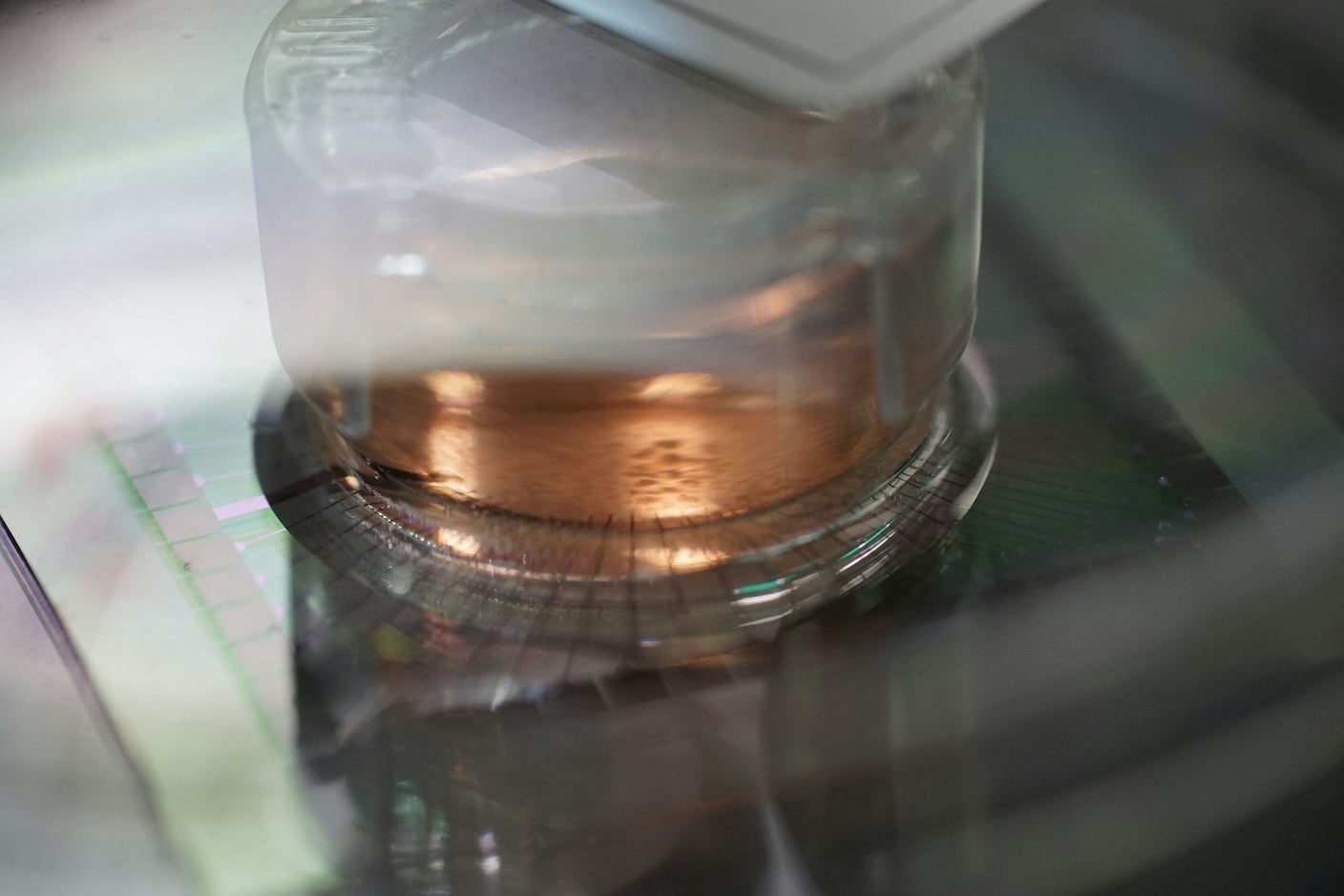
A newly fabricated microelectrode array. Bram Servais
By the early 2000s, researchers attempted rudimentary two-way communication between neurons and electrodes, planting the first seeds of a bio-hybrid computer. But progress stalled until another strand of research took off: brain organoids.
Today, using stem cell-derived neural tissue is commonplace—from drug testing to developmental research. Yet the neural activity in these models remains primitive, far from the organized firing patterns that underpin cognition or consciousness in a real brain.
While complex network behavior is beginning to emerge even without much external stimulation, experts generally agree that current organoids are not conscious, nor close to it.
‘Organoid Intelligence’
The field entered a new phase in 2022, when Melbourne-based Cortical Labs published a high-profile study showing cultured neurons learning to play Pong in a closed-loop system.
The paper drew intense media attention—less for the experiment itself than for its use of the phrase “embodied sentience.” Many neuroscientists said the language overstated the system’s capabilities, arguing it was misleading or ethically careless.
A year later, a consortium of researchers introduced the broader term “organoid intelligence.” This is catchy and media-friendly, but it risks implying parity with artificial intelligence systems, despite the vast gap between them.
Ethical debates have also lagged behind the technology. Most bioethics frameworks focus on brain organoids as biomedical tools—not as components of biohybrid computing systems.
Meanwhile, despite front-page news in Nature, many people remain unclear about what a “living computer” actually is.
A Fast-Moving Research and Commercial Landscape
Companies and academic groups in the United States, Switzerland, China, and Australia are racing to build biohybrid computing platforms.
Swiss company FinalSpark already offers remote access to its neural organoids. Cortical Labs is preparing to ship a desktop biocomputer called CL1. Both expect customers well beyond the pharmaceutical industry—including AI researchers looking for new kinds of computing systems.
The coming years will determine whether organoid intelligence transforms computing or becomes a short-lived curiosity. At present, claims of intelligence or consciousness are unsupported. Today’s systems display only simple capacity to respond and adapt, not anything resembling higher cognition.
More immediate work focuses on consistently reproducing prototype systems, scaling them up, and finding practical uses for the technology.
Several teams are exploring organoids as an alternative to animal models in neuroscience and toxicology.
Much of what makes the field compelling—and unsettling—is the broader context.
As billionaires such as Elon Musk pursue neural implants and transhumanist visions, organoid intelligence prompts deep questions.
What counts as intelligence? When, if ever, might a network of human cells deserve moral consideration? And how should society regulate biological systems that behave, in limited ways, like tiny computers?
The technology is still in its infancy. But its trajectory suggests that conversations about consciousness, personhood, and the ethics of mixing living tissue with machines may become pressing far sooner than expected.
Disclosure statement: Bram Servais formerly worked for Cortical Labs but holds no shared patents or stock and has severed all financial ties.
The US Department of Defense has officially launched "GenAI.mil," a centralized platform designed to give roughly three million civilian and military employees and contractors direct access to generative AI. To kick things off, the system is rolling out Google Cloud's "Gemini for Government."
ElevenLabs has made a name for itself building realistic AI voices. What started as two Polish engineers annoyed by terrible movie dubbing has grown into a profitable company now valued at $6.6 billion, doubling from just nine months ago. The company recently announced a $100 million tender offer led by Sequoia and ICONIQ, with participation from a16z […]
OpenAI co-founds the Agentic AI Foundation under the Linux Foundation and donates AGENTS.md to support open, interoperable standards for safe agentic AI.
Humans are visual creatures. Images and video are the most immersive forms of content. It’s no accident that more than 80% of internet traffic is video, that social platforms are becoming image- and video-first, and that video games and movies are the largest categories of consumer spend.
Generative media will be even bigger. At Sequoia’s inaugural AI Ascent event in 2023, Jensen Huang made the provocative prediction that “Every pixel will be generated, not rendered.” Today, that dream appears closer than ever: frontier video and image models have crossed the uncanny valley, and the first compelling use cases of generative media are starting to emerge across advertising, cinema, storytelling and more.
Projects that once demanded years of work and $100M budgets can now be explored much more quickly and affordably, opening the door to new creative possibilities. We’re seeing generative media begin to transform familiar media use cases: digital ads, viral TikToks, short films, and micro dramas. There will also be wholly new experiences created that we can’t even begin to imagine, from education to personalized media to generated games. The doors to building with creative AI are wide open to anybody with a computer.
fal has built the leading platform for enterprises and developers to build with generative media models. Video models are compute-intensive and finicky to work with, and creating wonderful outputs requires excellence on multiple levels. fal offers AI creatives exactly what they want for this exciting but strange new paradigm, including 400+ models available on-demand across open- and closed-weight (including models like OpenAI Sora and DeepMind Veo), Day 0 support for new model releases, incredibly fast inference speeds, an ergonomic developer API, an advanced playground UI, and enterprise features around model fine-tunes, styles and collaboration.
fal’s customers are the tastemakers of generative media, with use cases ranging from e-commerce (Shopify) to creative suites (Adobe and Canva) to AI-native platforms (Perplexity) to millions of individual developers. While the momentum behind the business has been staggering, we are even more excited by the quality and caliber of teams currently experimenting on fal, creating immersive new education experiences, virtual pets, indie animation studios, and more. If even a small subset of these explorations make it to production, the world will be a dramatically more colorful, entertaining place.
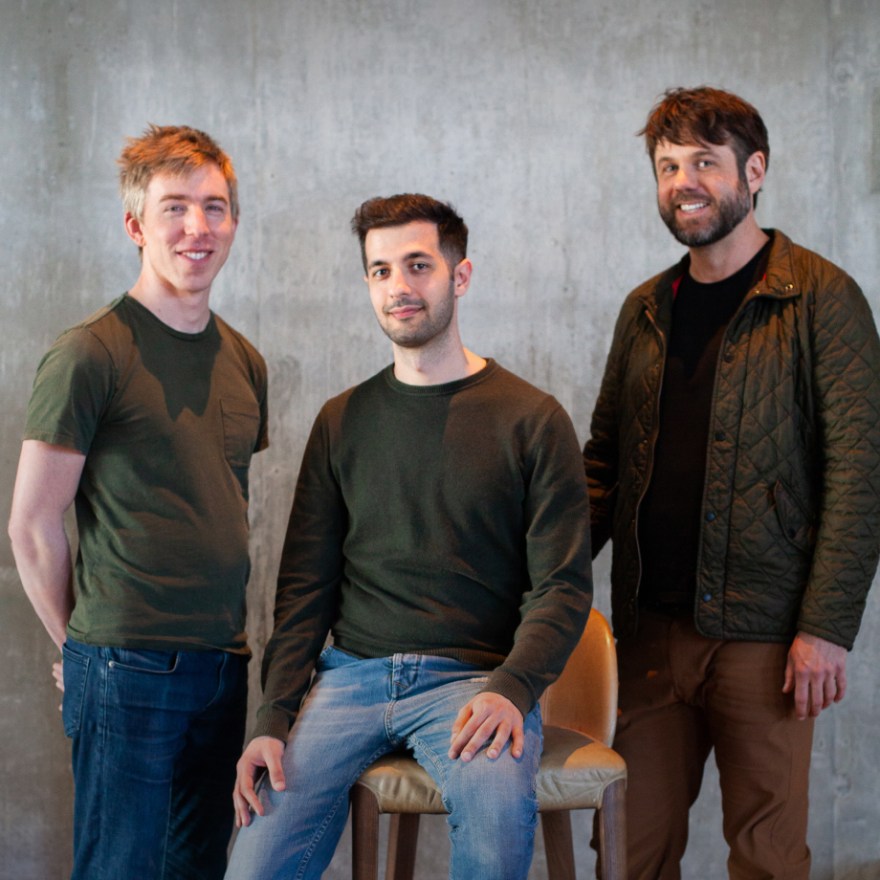
We are delighted to partner with co-founders Burkay Gur (Coinbase ML) and Gorkem Yurtseven (Amazon) and Head of Engineering Batuhan Taskaya (the youngest-ever Python core developer and maintainer). The team is spiky up and down the platform stack, from having one of the best kernel and compiler inference teams in the world, to nurturing model provider relationships with finesse, to grassroots devrel. Their early bet on generative media shows up across their relationships with model providers, infrastructure performance and ability to dream with creators.
We are at the beginning of a compute explosion in generative video. As the generative media wave accelerates, fal is the inference platform powering the future of AI-first creativity. The team is growing fast to keep up with that demand, and we at Sequoia are proud to lead their Series D.
Perplexity has developed a security system designed to protect AI browser agents from manipulated web content. According to the company, the system—called BrowseSafe—achieves a detection rate of 91 percent for prompt injection attacks.
 Login
Login