Reading view

AWS Weekly Roundup: Student Rewards on AWS Builder Center, Local Zone in Las Vegas, and more (August 24, 2026)

During my time at AWS, I have always looked for opportunities to work with students. I have delivered over 50 talks at universities across the region, and watching the potential in the room is always a strong motivator. It reminds me of why I do this work, and that the students I meet today may well become our customers and collaborators tomorrow. That is why I am happy to open this week with Student Rewards on AWS Builder Center.
Rick Suttles published Introducing Student Rewards on AWS Builder Center, a new benefit for verified higher education students. When you verify your enrollment through SheerID and complete your Builder Center profile, you unlock 12 months of premium AWS Skill Builder access (900+ courses, hands-on labs, certification exam prep, and game-based learning). From there, you earn badges through actions on Builder Center: publishing articles, commenting, and maintaining engagement. At 7 badges, you unlock $10 in AWS Credits. At 14 badges, another $20 in credits. At 21 badges, you earn an AWS Foundational Certification exam voucher ($100 value).

This represents a commitment of over $500 million in resources during this back-to-school season, providing students with the training, tools, and certification needed to start building their careers in cloud and AI. Student Rewards is available to students 18 years or older and enrolled at accredited higher education institutions worldwide, subject to verification and applicable terms.

Verify your student status and start learning, earning badges, and unlocking rewards!

Last week’s launches
Here’s what else happened this week.

  • A new AWS Local Zone in Las Vegas, Nevada – This new Local Zone supports Amazon EC2 C7i, M7i, R7i, and C8gn instances, Amazon EBS, Amazon ECS, Amazon EKS, Application Load Balancer, and AWS Direct Connect. AWS Local Zones are now available in more than 30 metropolitan areas worldwide. In addition, AWS added a fourth Availability Zone to the Europe (London) Region, delivering next-generation AI and ML capacity with Trn3 and P6 accelerated instances alongside general-purpose compute.
  • Amazon EC2 Auto Scaling now supports batch instance termination – You can now pass up to 100 instance IDs to the TerminateInstanceInAutoScalingGroup API to terminate them as a batch, reducing the number of API calls needed to scale down your Auto Scaling groups. Batch termination is designed for workloads that need to rapidly scale down, such as AI/ML training jobs, container orchestrators, or event-driven architectures that spin up large fleets temporarily.
  • AWS CloudShell now includes a built-in visual file editor – CloudShell now includes a visual file editor that you can launch directly from your shell session using a single edit command. The editor supports syntax highlighting, find-and-replace, multi-line selection, copy-paste, and undo-redo in a single browser session. Whether you are updating a deployment script, modifying an agent steering file, editing a CloudFormation template, or fixing a Lambda function, the editor provides a seamless edit-and-run experience without leaving CloudShell.
  • Amazon Bedrock now supports SpaceXAI Grok 4.6 with cross-Region inference – Grok 4.6, a frontier model built for coding, agentic tasks, and knowledge work, is now available on Amazon Bedrock. The model runs on the bedrock-runtime endpoint with support for the Responses, Chat Completions, and Converse APIs, and works with existing account-level controls including model invocation logging, Amazon CloudWatch metrics, and cost itemization in AWS Cost Explorer.
  • Amazon Bedrock expands API support and introduces cross-Region inference for OpenAI models – Amazon Bedrock now supports OpenAI GPT-5.6 models (Sol, Terra, and Luna) with the Responses, Converse, and Chat Completions APIs, and adds cross-Region inference. Geo cross-Region inference routes requests within a predefined geography (including new US Geo support with this launch), while Global cross-Region inference serves requests from any commercial AWS Region at a lower per-token cost.
  • AgentCore payments is now generally available in Amazon Bedrock AgentCore – At general availability, AgentCore payments includes Quick Create for Coinbase credential provisioning directly within the AgentCore console, a curated Coinbase Bazar MCP server of pay-per-use x402 endpoints via AgentCore gateway, support for the Machine Payment Protocol (MPP), and the “upto” scheme in the x402 protocol for pay-per-inference and dynamic pricing use cases. To learn more, visit the AI Blog post.
  • AWS Glue 6.0 delivers 30% price reduction and Iceberg v3 support – AWS Glue 6.0 is built on a fully modernized runtime, Apache Spark 4.1, Python 3.13, and Scala 2.13, delivering 30% lower pricing than previous AWS Glue versions. With Iceberg v3, Glue 6.0 adds the VARIANT data type with automatic shredding for faster reads on semi-structured data, deletion vectors for high-performance row-level updates, geometry and geography data types for spatial processing, and flexible schema evolution.

For a full list of AWS announcements, be sure to keep an eye on the What’s New with AWS page.

Other AWS news
Here are some additional posts you may find useful:

  • Updates to your AWS Sign-In experience – AWS is gradually introducing updates to the sign-in and sign-up experience. The redesigned sign-in page introduces a unified email entry point for root users and customers using the new email-based sign-in method, while IAM users continue signing in with their account ID, username, and password. The page also includes sign-in options for customers whose AWS account was created using a supported identity provider (Google, GitHub, Apple, or Amazon.com). A redesigned session selection page simplifies viewing and managing multiple active account and role sessions. If your organization relies on browser automation or scripted workflows that interact with the sign-in page, review the post to understand how these changes might affect your configuration.
  • In the works: AWS Builder Lofts in Berlin, Hyderabad, and São Paulo – My colleague Channy announced plans to open new Builder Lofts in three cities. Since the first Builder Loft opened in San Francisco in July 2025, it has welcomed more than 22,500 developers through its doors. Each new location will be a permanent community space offering free workshops, networking events, pitch nights, content creation spaces, and co-working areas. Berlin will focus on digital sovereignty and security-readiness, Hyderabad on AI and cloud-native architecture, and São Paulo on supporting Latin America’s developer ecosystem.
  • AWS and Amazon WorkSpaces recognized as a Leader in the 2026 Gartner Magic Quadrant for Desktop as a Service – AWS has been named a Leader in the 2026 Gartner Magic Quadrant for Desktop as a Service (DaaS) for the third consecutive year, evaluated on Completeness of Vision and Ability to Execute. Gartner noted strengths in operations, geographic strategy, and overall viability. This is also the first year the evaluation includes Amazon WorkSpaces for AI agents, a capability that runs AI agents within the same desktop environment, security perimeter, and audit trail as human users.

For a full list of AWS blog posts, be sure to keep an eye on the AWS Blogs page.

Upcoming AWS events
Check your calendar and sign up for upcoming AWS events:

Visit the AWS Builder Center to meet other builders, contribute solutions, and find resources that help you keep building.

Summer is slowly coming to an end, and I am already planning a few days off in the coming months to keep me motivated through the rainy autumn ahead. I hope you are doing the same. Come back next week for more!

— Esra

  •  

AWS Weekly Roundup: AWS FinOps Agent in preview, Gemma 4 on Bedrock, Kiro Pro Max, and more (June 15, 2026)

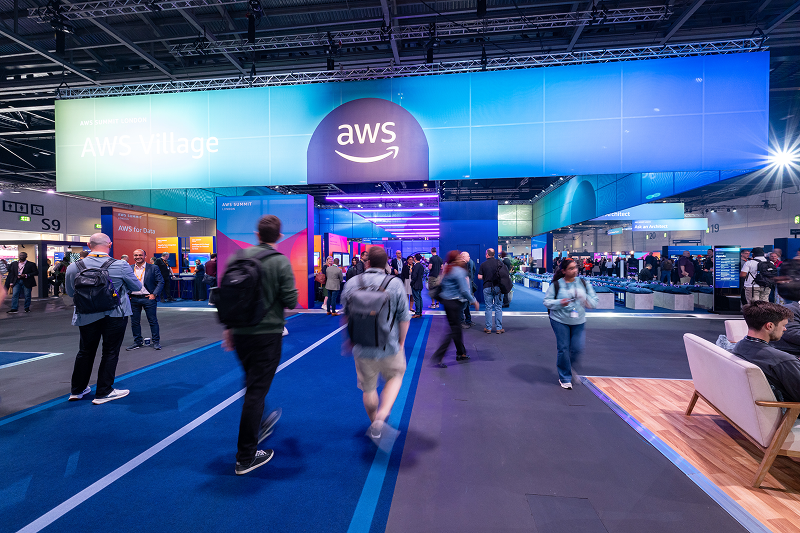
This week, New York City is hosting AWS Summit, bringing together builders, customers, and AWS teams for a full day of announcements, demos, and technical sessions at the Javits Center. I wrote blog posts for some of the Summit launches, so I am excited to see them go live this week. I just won’t be watching from the Javits Center. I’ll be at a four-day music festival, following the launches on my phone while trying to figure out how to put up a tent. If you weren’t able to attend in person like me, the keynote livestream is available on June 17, with Dr. Swami Sivasubramanian, VP of Agentic AI, and Chet Kapoor, VP of Security Services and Observability, covering new capabilities across developer tools, AI infrastructure, and security.

Here’s what happened this week.

Headlines
How frontier teams are reinventing AI-native development – Swami published a detailed post this week drawing on data from experiments across hundreds of Amazon engineering teams. The findings are worth reading carefully if you are thinking about how to structure AI adoption on your own team.

A six-engineer team rebuilt the Amazon Bedrock inference engine in 76 days, a project originally scoped for 30 developers over 12 to 18 months. The median productivity gain across structured pilots with Amazon Stores teams was 4.5x in normalized deployment velocity, with some teams exceeding 10x. Perfect Order Experience went from a two-week feature cycle to shipping in an afternoon. WW Grocery cut design document creation from five days to a few hours.

The post distills these results into five practices for becoming a frontier team. First, invest in agent context: build steering files, coding standards, and structured repositories before writing production code. Second, expect an initial slowdown while workflows are restructured, and push through it. Third, maintain a steady backlog of well-scoped tasks so agents can run in parallel without constant supervision. Fourth, make intent explicit through structured specifications before code generation begins. Fifth, shift testing left so agents can self-correct before code reaches the pipeline.

The post closes with a note that commit velocity is only part of the picture, and that a follow-up will cover release management, operations, security operations, and EOL upgrades.

AWS FinOps Agent is now available in preview – AWS FinOps Agent is a new agent for FinOps practitioners and engineering teams that answers cost questions, surfaces optimization opportunities, investigates cost anomalies, and runs recurring FinOps workflows on a defined schedule. You can use it to query your AWS costs, generate cost reports for finance and engineering teams, and surface rightsizing, idle resource, and Savings Plans recommendations from AWS Cost Optimization Hub and AWS Compute Optimizer. The agent can open Jira tickets on your behalf based on those recommendations. When a cost anomaly is detected, FinOps Agent can automatically investigate the root cause and post findings to a Slack channel.

Last week’s launches
I’ll start with one I wrote this week, then cover the other launches that caught my attention:

  • Amazon EC2 M9g and M9gd instances are now generally available – Powered by AWS Graviton5 processors and built on the sixth-generation AWS Nitro System, M9g instances deliver up to 25% better compute performance compared to Graviton4-based instances, with up to 35% faster performance for web applications, up to 35% for machine learning inference, and up to 30% for databases. Graviton5 is the first processor in the AWS fleet to support PCIe Gen6 and DDR5-8800 memory, and includes a 5x larger L3 cache compared to the previous generation. M9g and M9gd instances offer up to 15% higher network bandwidth and 20% higher Amazon EBS bandwidth on average across sizes compared to M8g. This release also introduces the Nitro Isolation Engine, an enhancement to the Nitro System that uses formal verification to provide mathematically proven isolation between virtual machines — establishing Nitro as the first formally verified cloud hypervisor. M9gd instances add up to 11.4 TB of NVMe SSD local storage with 30% higher IOPS compared to M8gd. Both instance types support Instance Bandwidth Configuration (IBC) for adjusting bandwidth allocation between EBS and VPC networking by up to 25%.
  • Anthropic Claude Fable 5 on Amazon Bedrock – Claude Fable 5 launched on Amazon Bedrock on June 9, bringing extended asynchronous task execution, advanced vision capabilities across diagrams, charts, and PDFs, and proactive self-verification. Access requires opting into data sharing via the Data Retention API before invoking the model; Anthropic requires 30-day retention of inputs and outputs for Mythos-class models. Important note on availability: On June 12, Anthropic asked AWS to revoke access to Claude Fable 5 and Claude Mythos 5 for all users to support compliance with a US Government export control directive. All other models, including Opus 4.8, are unaffected. Read the Anthropic statement for details. AWS will share further updates as they become available.
  • Gemma 4 models are now available on Amazon Bedrock – The Gemma 4 family from Google DeepMind is now available on Amazon Bedrock across three variants: Gemma 4 31B (dense, 256K-token context window, suited for reasoning and coding workloads), Gemma 4 26B-A4B (mixture-of-experts architecture, targeting cost- and latency-sensitive workloads), and Gemma 4 E2B (smallest variant, designed for low-latency interactive use cases). All three support native function calling, structured output, reasoning, response streaming, multimodal input across text, image, video, and audio, and more than 35 languages.
  • Amazon OpenSearch Service launches MCP Apps for agentic observability – Amazon OpenSearch Service now supports MCP Apps, enabling observability workflows inside compatible agentic IDEs including Claude Desktop and VS Code. An AI agent in your local environment can investigate incidents using logs, traces, metrics, and alerts stored in OpenSearch domains, collections, and Amazon Managed Service for Prometheus. Each MCP App tool call returns a dual response: a text summary for the agent to reason over and an interactive visualization rendered in the same conversation thread. Available MCP App tools cover log, metrics, and trace investigation; service performance; topology; dynamic visualizations; agent health; cluster health; and instrumentation scoring.

Other AWS news
Here are some additional posts and updates you may find useful:

  • AWS CLI v1 enters maintenance mode – When CLI v1 enters maintenance mode, the botocore and s3transfer dependencies will be vendored directly into the CLI v1 codebase rather than installed as separate packages. This means upgrading CLI v1 will no longer update the standalone botocore or s3transfer packages, and installing those packages independently will have no effect on the versions used by CLI v1. Environments with both CLI v1 and boto3 installed will contain separate copies of these libraries. New CLI v1 releases will be limited to critical bug fixes and security issues. The recommended path is to migrate to AWS CLI v2.
  • AWS Workload Credentials Provider is now available – AWS Workload Credentials Provider is a lightweight client-side provider that automates deployment of exported certificates from AWS Certificate Manager (ACM) and local caching of secrets from AWS Secrets Manager across AWS and non-AWS workloads. Previously, customers had to build custom EventBridge automation to detect certificate renewals and deploy updates, which becomes harder to maintain as public certificate lifetimes decrease per the CA/Browser Forum mandate. The provider handles this automatically, runs on Windows and Linux, and supports Apache and NGINX. For secrets, it maintains full backwards compatibility with the AWS Secrets Manager Agent.
  • Kiro Pro Max is now available – Kiro has introduced a new Pro Max tier, adding higher usage limits, access to the latest frontier models, and additional agentic capabilities for development teams. Kiro Pro Max is designed for professional developers who need sustained, high-volume use across coding, specification generation, and agent-driven tasks.

Upcoming AWS events
Check your calendar and sign up for upcoming AWS events:

Visit the AWS Builder Center to meet other builders, contribute solutions, and find resources that help you keep building. You can also browse upcoming AWS-led in-person and virtual events, plus developer-focused sessions.

— Esra

This post is part of our Weekly Roundup series. Check back each week for a quick roundup of interesting news and announcements from AWS!

  •  

AWS Weekly Roundup: What’s Next with AWS 2026, Amazon Quick, OpenAI partnership, and more (May 4, 2026)

Last week, I took some time off in York, England, often described as the most haunted city in the country. I wandered through the ruins of abbeys that have stood for nearly a thousand years, walked along medieval walls, and spent an evening on a ghost tour hearing stories passed down through centuries. There’s something grounding about standing in a place that has witnessed so much history. Now I’m back at my desk, and the contrast is hard to miss: those abbey stones have stood for a thousand years largely unchanged, while in the span of a single week away, the pace of technological change has moved forward yet again.

The ruins of Whitby Abbey in North Yorkshire. Stones that have seen a thousand years, while this week alone brought another wave of change.

Now, let’s get into this week’s AWS news.

Headlines
On April 28, Matt Garman, CEO of AWS, Colleen Aubrey, SVP Amazon Applied AI Solutions, Julia White, CMO of AWS, and OpenAI leaders took the stage to share how customers are changing the way businesses operate with agents. The event brought a packed slate of announcements across Amazon Quick, Amazon Connect, and a deeper partnership with OpenAI. Here’s a roundup of the biggest announcements from the event.

Amazon Quick expands with a desktop app, new pricing plans, and visual asset generation – Amazon Quick is an AI assistant for work that connects to your apps, learns what matters to you, and takes action on your behalf. This week, Quick introduced a new desktop app (Preview) that keeps you connected to your local files, calendar, and communications without opening a browser. You can sign up within minutes using your personal email address or existing Google, Apple, Github, or Amazon credentials—no AWS account required. Quick can now generate polished documents, presentations, infographics, and images directly from the chat interface, and native integrations expand to include Google Workspace, Zoom, Airtable, Dropbox, and Microsoft Teams. A new Build custom apps with Quick capability (Preview) lets you create intelligent apps, dashboards, and web pages connected to the rest of your business using natural language.

Amazon Connect expands into four agentic AI solutions – Amazon Connect is expanding from a single product into a set of four agentic AI solutions designed to work within your existing workflows. Amazon Connect Decisions is a supply chain planning and intelligence solution that shifts teams from crisis management to proactive planning, combining 30 years of Amazon operational science with more than 25 specialized supply chain tools. Amazon Connect Talent (Preview) is an agentic AI hiring solution that delivers AI-led interviews, science-backed assessments, and consistent evaluation for talent acquisition leaders managing scaled hiring. Amazon Connect Customer, previously known as Amazon Connect, delivers personalized customer experiences across voice, chat, and digital channels, with new configuration capabilities that enable organizations to set up conversational AI in weeks rather than months. Amazon Connect Health delivers agentic patient verification, appointment management, patient insights, ambient documentation, and medical coding, giving patients faster access to care and clinicians more time to deliver it.

AWS and OpenAI expand their partnership across Amazon Bedrock – AWS and OpenAI are bringing the latest OpenAI models to Amazon Bedrock, launching Codex on Amazon Bedrock, and introducing Amazon Bedrock Managed Agents powered by OpenAI — all in limited preview. OpenAI models on Amazon Bedrock (Limited preview) brings the latest OpenAI models, including GPT-5.5 and GPT-5.4, to the Bedrock APIs you already use, with unified security, governance, and cost controls. No additional infrastructure to configure, no new security model to learn. Codex on Amazon Bedrock (Limited preview) lets you access the OpenAI coding agent within your existing AWS environments, authenticating with your AWS credentials, processing inference through Bedrock, and applying Codex usage toward your AWS cloud commitments. Codex on Bedrock is available through the Bedrock API, starting with the Codex CLI, the Codex desktop app, and a Visual Studio Code extension. Amazon Bedrock Managed Agents, powered by OpenAI (Limited preview) combines OpenAI frontier models with AWS infrastructure to build production-ready OpenAI-powered agents in the cloud, built with the OpenAI harness for faster execution, sharper reasoning, and reliable steering of long-running tasks.

To learn more, visit Top announcements of the What’s Next with AWS, 2026.

Last week’s launches
Here are some launches and updates from this past week that caught my attention:

  • Amazon EC2 M8in and M8ib instances are now generally available – Powered by custom 6th-gen Intel Xeon Scalable processors and 6th-gen AWS Nitro cards, these instances deliver up to 43% higher performance over M6in and M6ib. M8in offers 600 Gbps network bandwidth, while M8ib delivers up to 300 Gbps EBS bandwidth. Available in US East (N. Virginia), US West (Oregon), Asia Pacific (Tokyo), and Europe (Spain).
  • Amazon EC2 R8in and R8ib instances are now generally available – Memory-optimized instances built on the same 6th-gen Intel Xeon Scalable processors and Nitro cards, with the same 600 Gbps network and 300 Gbps EBS bandwidth profiles. Well-suited for large commercial databases, data lakes, and in-memory databases such as SAP HANA. Available in US East (N. Virginia, Ohio), US West (Oregon), and Europe (Spain).
  • Amazon EC2 C8ine and M8ine instances are now generally available – Network-optimized instances offering up to 2.5x higher packet performance per vCPU and up to 2x higher network throughput for traffic through internet gateways compared to C6in and M6in. Designed for security and network virtual appliances including virtual firewalls, load balancers, and 5G UPF workloads. Available in US East (N. Virginia), US West (Oregon), and Asia Pacific (Tokyo) for C8ine; US East (N. Virginia) and US West (Oregon) for M8ine.
  • Amazon Bedrock AgentCore adds optimization capabilities (Preview) – AgentCore now offers recommendations, batch evaluations, and A/B tests to complete the observe-evaluate-improve loop for agents in production. Recommendations analyze production traces and evaluation outputs to propose optimized system prompts and tool descriptions, which you can validate with batch evaluations against pre-defined test cases or A/B tests against live traffic. Every recommendation requires your approval before it ships.
  • AWS Lambda adds support for Ruby 4.0 – Ruby 4.0, the latest LTS release, is available as a Lambda managed runtime and container base image. It includes support for Lambda advanced logging controls, including JSON structured logs, configurable logging levels, and target CloudWatch log group configuration. Available in all AWS Regions, including China Regions and AWS GovCloud (US).

For a full list of AWS announcements, be sure to keep an eye on the What’s New with AWS page.

Other AWS news
Here are some additional posts and resources that you might find interesting:

  • Amazon Q Developer end-of-support announcement – Amazon Q Developer IDE plugins and paid subscriptions will reach end of support on April 30, 2027, giving customers 12 months to transition to Kiro. New signups will be blocked starting May 15, 2026, although existing subscriptions can continue to add users. Starting May 29, 2026, Opus 4.6 will no longer be available on Q Developer Pro; Opus 4.5 and other existing models remain available, and the latest coding models including Opus 4.7 are available exclusively on Kiro. Amazon Q Developer in the AWS Management Console and first-party AWS experiences (documentation, mobile app, Slack, and Microsoft Teams) are not affected.
  • AWS 10,000 AIdeas Competition: Meet the Winners – AWS announced the 20 winners of the 10,000 AIdeas Competition, a global challenge where builders submitted AI applications built entirely with Kiro and the AWS Free Tier, with submissions from 115 countries narrowed down through four rounds of evaluation and two rounds of community voting. Winners span Global Champions, Regional Champions, Innovation Awards, and Creative Track categories, with cash prizes and AWS credits awarded across each tier.
  • AWS Student Builder Groups – AWS Cloud Clubs is evolving to AWS Student Builder Groups. The community now spans 600+ colleges and universities across 63 countries. Existing Cloud Club memberships, badges, and progress carry forward, and Cloud Club Captains become Group Leaders. Membership is open to any learner 18 or older. You can find a group near you on AWS Builder Center or apply to launch a new group on your campus.

Upcoming AWS events
Check your calendar and sign up for upcoming AWS events:

Visit the AWS Builder Center to meet other builders, contribute solutions, and find resources that help you keep building. You can also browse upcoming AWS-led in-person and virtual events, plus developer-focused sessions.

— Esra

This post is part of our Weekly Roundup series. Check back each week for a quick roundup of interesting news and announcements from AWS!

  •  

AWS Weekly Roundup: Amazon S3 turns 20, Amazon Route 53 Global Resolver general availability, and more (March 16, 2026)

Twenty years ago this past week, Amazon S3 launched publicly on March 14, 2006. While Amazon Simple Storage Service is often considered the foundational storage service that defined cloud infrastructure, what began as a simple object storage service has grown into something far larger in scope and scale.

As of March 2026, S3 stores more than 500 trillion objects, serves more than 200 million requests per second globally across hundreds of exabytes of data, and the price has dropped to just over 2 cents per gigabyte — an approximately 85% reduction since launch. My colleague Sébastien Stormacq wrote a detailed look at the engineering and the road ahead in Twenty years of Amazon S3 and building what’s next, and if you want to read about those earliest customers and how they shaped what AWS became, I recommend How three startups helped Amazon invent cloud computing and paved the way for AI. Twenty years is worth pausing to celebrate.

Alongside the 20th anniversary of S3, Channy Yun also wrote about a new S3 feature this week: Account regional namespaces for Amazon S3 general purpose buckets. With this feature, you can create general purpose buckets in your own account regional namespace by appending your account’s unique suffix to your requested bucket name, ensuring your desired names are always reserved exclusively for your account. You can enforce adoption across your organization using AWS IAM policies and AWS Organizations service control policies with the new s3:x-amz-bucket-namespace condition key. Read Channy’s post to learn more about account regional namespaces for Amazon S3 general purpose buckets.

This week’s featured launch is one I have a personal connection to: the general availability of Amazon Route 53 Global Resolver. I wrote about the preview of this capability back in December at re:Invent 2025, and I had a great time putting that post together, so I am happy to hear that it’s generally available now.

Amazon Route 53 Global Resolver is an internet-reachable anycast DNS resolver that provides DNS resolution for authorized clients from any location. It is now generally available across 30 AWS Regions, with support for both IPv4 and IPv6 DNS query traffic. Route 53 Global Resolver gives authorized clients in your organization anycast DNS resolution of public internet domains and private domains associated with Route 53 private hosted zones — from any location, not just from within a specific VPC or Region. It also provides DNS query filtering to block potentially malicious domains, domains that are not safe for work, and domains associated with advanced DNS threats such as DNS tunneling and Domain Generation Algorithms (DGA). Centralized query logging is included as well. With general availability, Global Resolver adds protection against Dictionary DGA threats.

Last week’s launches
Here are some of the other announcements from last week:

  • Amazon Bedrock AgentCore Runtime now supports stateful MCP server features — Amazon Bedrock AgentCore Runtime now supports stateful Model Context Protocol (MCP) server features, enabling developers to build MCP servers that use elicitation, sampling, and progress notifications alongside existing support for resources, prompts, and tools. With stateful MCP sessions, each user session runs in a dedicated microVM with isolated resources, and the server maintains session context across multiple interactions using an Mcp-Session-Id header. Elicitation enables server-initiated, multi-turn conversations to gather structured input from users during tool execution. Sampling allows servers to request LLM-generated content from the client for tasks such as personalized recommendations. Progress notifications keep clients informed during long-running operations. To learn more, see the Amazon Bedrock AgentCore documentation.
  • Amazon WorkSpaces now supports Microsoft Windows Server 2025 — New bundles powered by Microsoft Windows Server 2025 are now available for Amazon WorkSpaces Personal and Amazon WorkSpaces Core. These bundles include security capabilities such as Trusted Platform Module 2.0 (TPM 2.0), Unified Extensible Firmware Interface (UEFI) Secure Boot, Secured-core server, Credential Guard, Hypervisor-protected Code Integrity (HVCI), and DNS-over-HTTPS. Existing Windows Server 2016, 2019, and 2022 bundles remain available. You can use the managed Windows Server 2025 bundles or create a custom bundle and image. This support is available in all AWS Regions where Amazon WorkSpaces is available. For more information, visit the Amazon WorkSpaces FAQs.
  • AWS Builder ID now supports Sign in with GitHub and Amazon — AWS Builder ID now supports two additional social login options: GitHub and Amazon. These options join the existing Google and Apple sign-in capabilities. With this update, developers can access their AWS Builder ID profile — and services including AWS Builder Center, AWS Training and Certification, and Kiro — using their existing GitHub or Amazon account credentials, without managing a separate set of credentials. To learn more and get started, visit the AWS Builder ID documentation.
  • Amazon Redshift introduces reusable templates for COPY operations — Amazon Redshift now supports templates for the COPY command, allowing you to store and reuse frequently used COPY parameters. Templates help maintain consistency across data ingestion operations, reduce the effort required to execute COPY commands, and simplify maintenance by applying template updates automatically to all future uses. Support for COPY templates is available in all AWS Regions where Amazon Redshift is available, including the AWS GovCloud (US) Regions. To get started, see the documentation or read the Standardize Amazon Redshift operations using Templates blog.

For a full list of AWS announcements, be sure to keep an eye on our News Blog channel the What’s New with AWS page.

Upcoming AWS events
Check your calendar and sign up for upcoming AWS events:

AWS Summits – Join AWS Summits in 2026, free in-person events where you can explore emerging cloud and AI technologies, learn best practices, and network with industry peers and experts. Upcoming Summits include Paris (April 1), London (April 22), and Bengaluru (April 23–24).

AWS Community Days – Community-led conferences where content is planned, sourced, and delivered by community leaders, featuring technical discussions, workshops, and hands-on labs. Upcoming events include Pune (March 21), San Francisco (April 10), and Romania (April 23-24).

AWS at NVIDIA GTC 2026 — Join us at our AWS sessions, booths, demos, and ancillary events in NVIDIA GTC 2026 on March 16 – 19, 2026 in San Jose. You can receive 20% off event passes through AWS and request a 1:1 meeting at GTC.

AWS Community GameDay Europe — Taking place on March 17, 2026, AWS Community GameDay Europe is a team-based, hands-on AWS challenge event running simultaneously across 50+ cities in Europe. Your team is dropped into a broken AWS environment — misconfigured services, failing architectures, and security gaps — and has two hours to fix as much as possible. Find your nearest city and sign up at awsgameday.eu.

Join the AWS Builder Center to connect with builders, share solutions, and access content that supports your development. Browse here for upcoming AWS-led in-person and virtual events and developer-focused events.

That’s all for this week. Check back next Monday for another Weekly Roundup!

— Esra

This post is part of our Weekly Roundup series. Check back each week for a quick roundup of interesting news and announcements from AWS!

  •  

AWS Weekly Roundup: Amazon EC2 M8azn instances, new open weights models in Amazon Bedrock, and more (February 16, 2026)

I joined AWS in 2021, and since then I’ve watched the Amazon Elastic Compute Cloud (Amazon EC2) instance family grow at a pace that still surprises me. From AWS Graviton-powered instances to specialized accelerated computing options, it feels like every few months there’s a new instance type landing that pushes performance boundaries further. As of February 2026, AWS offers over 1,160 Amazon EC2 instance types, and that number keeps climbing.

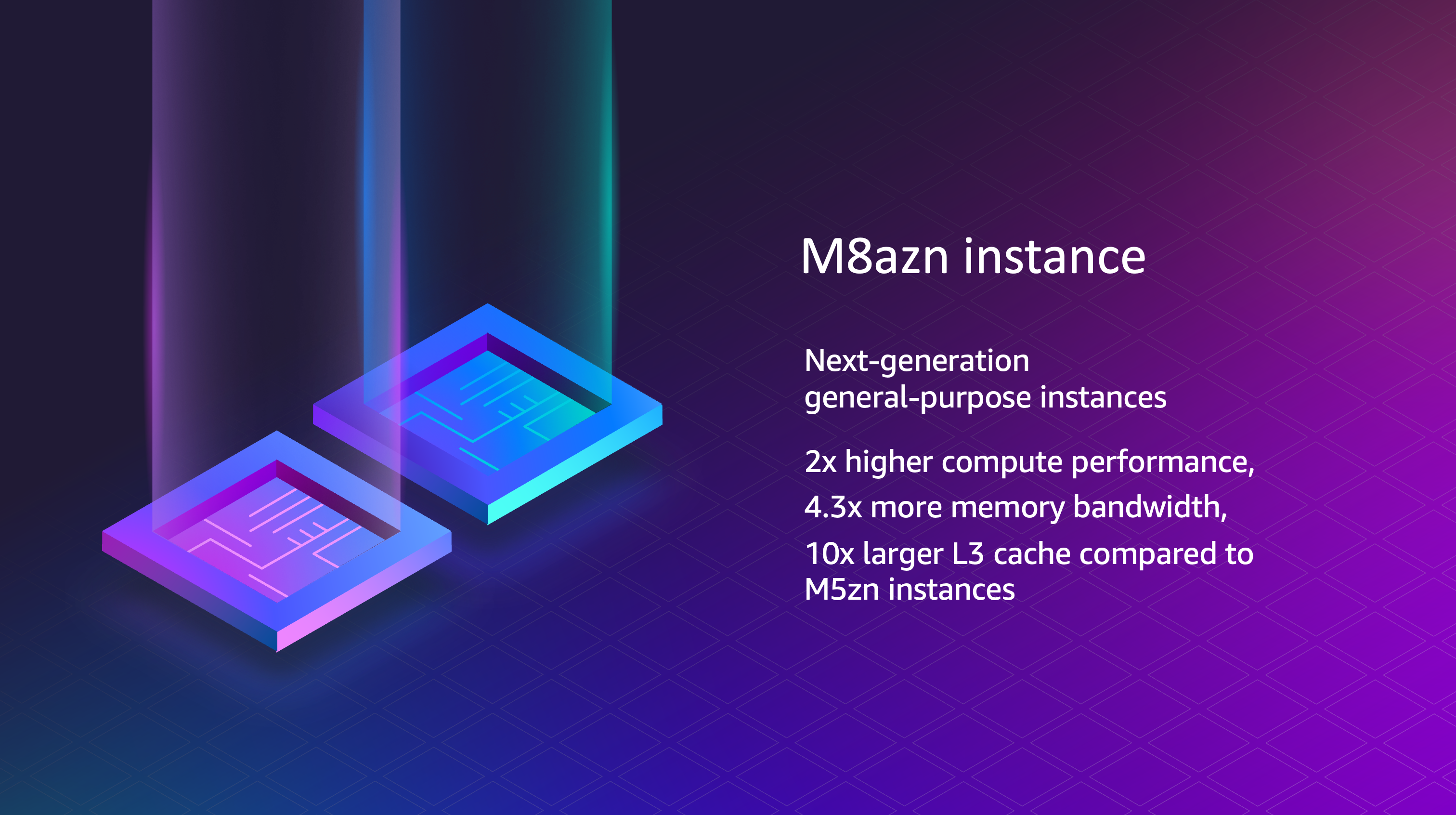
This week’s opening news is a good example: The general availability of Amazon EC2 M8azn instances. These are general purpose, high-frequency, high-network instances powered by fifth generation AMD EPYC processors, offering the highest maximum CPU frequency in the cloud at 5 GHz. Compared to the previous generation M5zn instances, M8azn instances deliver up to 2x compute performance, 4.3x higher memory bandwidth, and a 10x larger L3 cache. They also provide up to 2x networking throughput and up to 3x Amazon Elastic Block Store (Amazon EBS) throughput compared with M5zn.

Built on the AWS Nitro System using sixth generation Nitro Cards, M8azn instances target workloads such as real-time financial analytics, high-performance computing, high-frequency trading, CI/CD pipelines, gaming, and simulation modeling across automotive, aerospace, energy, and telecommunications. The instances feature a 4:1 ratio of memory to vCPU and are available in 9 sizes ranging from 2 to 96 vCPUs with up to 384 GiB of memory, including two bare metal variants. For more information visit the Amazon EC2 M8azn instance page.

Last week’s launches
Here are some of the other announcements from last week:

  • Amazon Bedrock adds support for six fully managed open weights models – Amazon Bedrock now supports DeepSeek V3.2, MiniMax M2.1, GLM 4.7, GLM 4.7 Flash, Kimi K2.5, and Qwen3 Coder Next. These models span frontier reasoning and agentic coding workloads. DeepSeek V3.2 and Kimi K2.5 target reasoning and agentic intelligence, GLM 4.7 and MiniMax M2.1 support autonomous coding with large output windows, and Qwen3 Coder Next and GLM 4.7 Flash provide cost-efficient alternatives for production deployment. These models are powered by Project Mantle and provide out-of-the-box compatibility with OpenAI API specifications. With the launch, you can also use new open weight models–DeepSeek v3.2 , MiniMax 2.1, and Qwen3 Coder Next in Kiro, a spec-driven AI development tool.
  • Amazon Bedrock expands support for AWS PrivateLink – Amazon Bedrock now supports AWS PrivateLink for the bedrock-mantle endpoint, in addition to existing support for the bedrock-runtime endpoint. The bedrock-mantle endpoint is powered by Project Mantle, a distributed inference engine for large-scale machine learning model serving on Amazon Bedrock. Project Mantle provides serverless inference with quality of service controls, higher default customer quotas with automated capacity management, and out-of-the-box compatibility with OpenAI API specifications. AWS PrivateLink support for OpenAI API-compatible endpoints is available in 14 AWS Regions. To get started, visit the Amazon Bedrock console or the OpenAI API compatibility documentation.
  • Amazon EKS Auto Mode announces enhanced logging for managed Kubernetes capabilities – You can now configure log delivery sources using Amazon CloudWatch Vended Logs in Amazon EKS Auto Mode. This helps you collect logs from Auto Mode’s managed Kubernetes capabilities for compute autoscaling, block storage, load balancing, and pod networking. Each Auto Mode capability can be configured as a CloudWatch Vended Logs delivery source with built-in AWS authentication and authorization at a reduced price compared to standard CloudWatch Logs. You can deliver logs to CloudWatch Logs, Amazon S3, or Amazon Data Firehose destinations. This feature is available in all Regions where EKS Auto Mode is available.
  • Amazon OpenSearch Serverless now supports Collection Groups – You can use new Collection Groups to share OpenSearch Compute Units (OCUs) across collections with different AWS Key Management Service (AWS KMS) keys. Collection Groups reduce overall OCU costs through a shared compute model while maintaining collection-level security and access controls. They also introduce the ability to specify minimum OCU allocations alongside maximum OCU limits, providing guaranteed baseline capacity at startup for latency-sensitive applications. Collection Groups are available in all Regions where Amazon OpenSearch Serverless is currently available.
  • Amazon RDS now supports backup configuration when restoring snapshots – You can view and modify the backup retention period and preferred backup window before and during snapshot restore operations. Previously, restored database instances and clusters inherited backup parameter values from snapshot metadata and could only be modified after restore was complete. You can now view backup settings as part of automated backups and snapshots, and specify or modify these values when restoring, eliminating the need for post-restoration modifications. This is available for all Amazon RDS database engines (MySQL, PostgreSQL, MariaDB, Oracle, SQL Server, and Db2) and Amazon Aurora (MySQL-Compatible and PostgreSQL-Compatible editions) in all AWS commercial Regions and AWS GovCloud (US) Regions at no additional cost.

For a full list of AWS announcements, be sure to keep an eye on the What’s New with AWS page.

Upcoming AWS events
Check your calendar and sign up for upcoming AWS events:

AWS Summits – Join AWS Summits in 2026, free in-person events where you can explore emerging cloud and AI technologies, learn best practices, and network with industry peers and experts. Upcoming Summits include Paris (April 1), London (April 22), and Bengaluru (April 23–24).

AWS AI and Data Conference 2026 – A free, single-day in-person event on March 12 at the Lyrath Convention Centre in Ireland. The conference covers designing, training, and deploying agents with Amazon Bedrock, Amazon SageMaker, and QuickSight, integrating them with AWS data services, and applying governance practices to operate them at scale. The agenda includes strategic guidance and hands-on labs for architects, developers, and business leaders.

AWS Community Days – Community-led conferences where content is planned, sourced, and delivered by community leaders, featuring technical discussions, workshops, and hands-on labs. Upcoming events include Ahmedabad (February 28), Slovakia (March 11), and Pune (March 21).

Join the AWS Builder Center to connect with builders, share solutions, and access content that supports your development. Browse here for upcoming AWS led in-person and virtual events and developer-focused events.

That’s all for this week. Check back next Monday for another Weekly Roundup!

— Esra

This post is part of our Weekly Roundup series. Check back each week for a quick roundup of interesting news and announcements from AWS!


  •  
❌