Geekplus, one of the world’s largest warehouse automation technology providers, has launched RoboShuttle Hyper, its next-generation tote-to-person climbing AMR solution. Engineered for high-throughput operations, including B2C e-commerce order surges, fresh-food and cold-chain fulfillment, consolidation warehouse operations and micro-fulfillment centers (MFCs), RoboShuttle Hyper delivers up to 6,000 totes per hour per 1,000 square meters. The accompanying […]
Chinese robotics company Unitree has priced its initial public offering at a valuation of approximately $9 billion, becoming the country’s first mainland-listed humanoid robot manufacturer and highlighting growing investor interest in AI-powered robotics despite rising geopolitical tensions. The Hangzhou-based company said it has priced its Shanghai STAR Market IPO at 150.8 yuan ($22.34) per share, […]
Commissioning a robotic production cell requires coordinated testing across robot controls, drives, safety functions, field devices, and plant networks. A robotic cell can run cleanly during a shop demonstration and still lose hours when it reaches the plant. The robot may be ready while a drive uses the wrong parameter set. A sensor can change […]
A property manager calls about a 1958 mixed-use building downtown. The utility wants time-of-use metering installed by next quarter, the tenants want their AC to keep running through the switchover, and nobody on the ownership side wants to hear the words “full rewire”. This is, more or less, how most smart grid retrofit jobs start. […]
Chinese companies represent almost 70 percent of the global humanoid robot market Chinese humanoid robot manufacturers could face a significant setback in one of the world’s largest technology markets after the US Federal Communications Commission (FCC) moved to block new foreign-produced advanced robotic devices from receiving equipment authorization. The move follows a determination by US […]
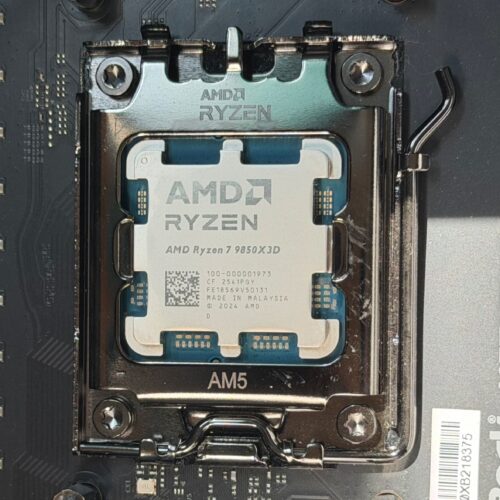
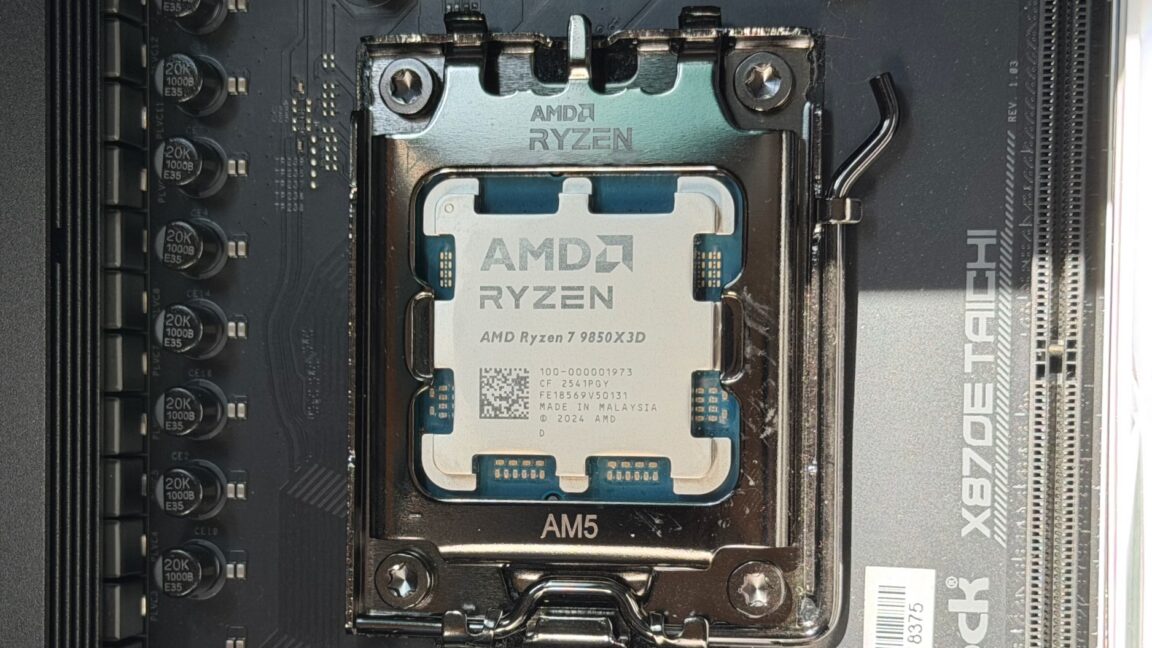
A decade ago, AMD added a protection to its high-end CPUs to protect them against cold boot attacks and other types of physical exploits that siphon sensitive data out of the connected memory chips. Short for Transparent Secure Memory Encryption, TSME encrypts the entire contents stored in memory, making the data useless to physical attackers.
Over time, AMD added TSME to lower-end processors, including the consumer version of its Ryzen chips, a CPU that costs less than the Pro version. Over the years, users of these lower-end chips have gotten used to the added security. Recently and without warning or notice, this lower-end line of AMD chips suddenly dropped the protection, and did so in a way that was impossible to detect on Windows machines and required a fair amount of technical work when using Linux.
Now you see it, now you don't
AMD has yet to say why TSME worked on these CPUs, or even to confirm the change. AMD declined to answer questions sent by email other than to say TSME "is a security feature only applied to PRO CPUs as part of AMD PRO Technologies." The statement is the first known time the chipmaker has explicitly made this restriction public.

 Login
Login