Login

Both Charts Are Right. So Why Do They Disagree?
The statistical paradox that shows how combining data can reverse the story.
The post Both Charts Are Right. So Why Do They Disagree? appeared first on Towards Data Science.

The statistical paradox that shows how combining data can reverse the story.
The post Both Charts Are Right. So Why Do They Disagree? appeared first on Towards Data Science.

How participant-aware evaluation changed performance across three machine-learning models
The post When EEG Models See the Same People in Training and Testing appeared first on Towards Data Science.

Getting your data science code running anywhere
The post Deploying Data Science Tools: Part 1 appeared first on Towards Data Science.
Matching messy text, choosing representative examples, and generating comparison data.
The post What OpenAI’s 719 Math Papers Mean for Data Science appeared first on Towards Data Science.
Jonathan the giant tortoise was born when Darwin was still a young man. Youthful gene activity may account for his exceptionally long life.
Getting a DNA sample is simple. Rub a Q-tip a few times inside your cheek, and voilà.
Not so with a 400-pound Aldabra giant tortoise. At the age of roughly 194, Jonathan is the oldest known living land animal on Earth. He’s spent most of his life lounging on the manicured lawns of the governor’s residence on the island of St. Helena, where he arrived as an adult. Though blinded by cataracts, Jonathan still chows down on grub and has excellent hearing.
Even among long-lived tortoises, Jonathan is exceptional. He’s lived around a century longer than others of his kind. Now, thanks to his DNA, an intrepid team of scientists may know why.
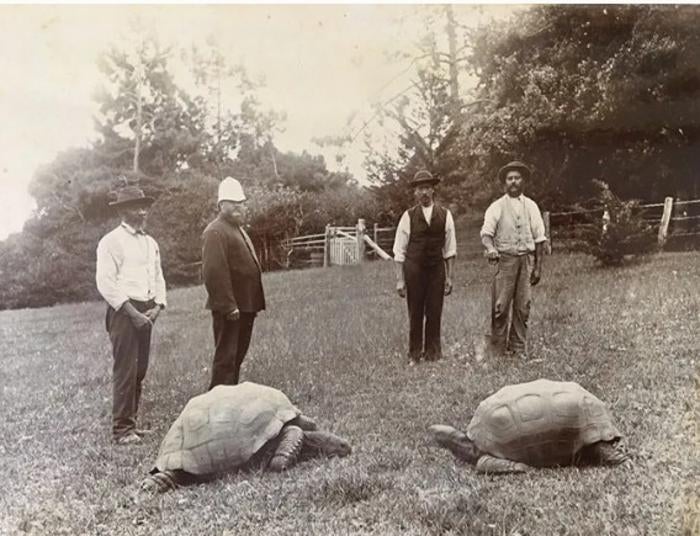
Getting a sample was tricky and dangerous. Jonathan’s veterinarian, Joe Hollins, lured him in with fresh greens, then quickly wedged his mouth open to scrape cells from inside his cheek. The tortoise tolerated the unusual procedure for only a few seconds. Any longer, and Hollins might have faced the wrath of Jonathan’s razor-sharp beak.
But the maneuver paid off. After sequencing the sample, the team found that Jonathan’s genome was better maintained compared to tortoises roughly a century younger.
As animals age, their DNA accumulates mutations. Telomeres, the protective end caps of chromosomes, shrink. Chemical tags that control which genes are turned on or off also go awry, straying from their normal patterns and settling on unexpected spots across the genome.
For study author Stephen Clark, founder of the nonprofit Kallel Foundation, this growing disorganization, called entropy, is central to aging. Yet Jonathan has weathered plenty of biological wear and tear despite his advanced age.
“Nature has already solved the puzzle of aging in remarkable ways, and Jonathan’s genome provides a blueprint for cellular resilience,” said Clark in a press release.
Animal research has given us clues to how we might live healthier, longer lives.
At one end of the spectrum are short-lived creatures. Studies of lowly roundworms and fruit flies—often squished or swatted—have uncovered genes and molecular pathways that let cells sense nutrients, withstand stress, and clear cellular waste. These processes falter with age.
At the other extreme are animals that seemingly don’t age. Take the hydra, a tiny, carnivorous jellyfish-like animal. In long-term studies, some species showed no detectable rise in mortality or lower reproduction with age and retained the ability to regenerate after severe injuries. Their “immortality” may come from a steady supply of stem cells and resilience against senescent cells that no longer work properly.
Naked mole rats have also caught scientists’ attention. These nearly hairless rodents can live more than 30 years, roughly 10 times longer than a mouse of similar size. They resist many types of cancer, maintain strong hearts and muscle mass into old age, and rarely develop Alzheimer’s disease, even with toxic protein buildup. By studying these animals’ genetics, scientists have discovered ways they preserve gene expression machinery and maintain protein stability as the clock ticks on.
Tortoises offered more inspiration. In 2019, scientists sequenced the genome of Lonesome George, the last known Pinta Island giant tortoise, who died at an estimated 100 years old. His genome revealed beneficial adaptations in DNA repair, immune function, and inflammation. A subsequent study comparing multiple turtle lineages found shared genetic changes associated with cellular resiliency against stress and cancer protection.
“Each of these long-lived species has some kind of special trick,” biologist Steve Austad at the University of Alabama at Birmingham told The New York Times. “And some of those may turn out to be relevant to human aging.”
But as the oldest land creature, Jonathan is irreplaceable. Hidden in his DNA may be another set of tricks for keeping cells, and maybe the entire body, functioning for longer.
Collecting Jonathan’s DNA without getting bitten or kicked was only the first hurdle. Shipping the precious cargo across the ocean without damaging it was another. Then came the headache of piecing his genome together.
Cheek cells yield shorter DNA fragments that must be stitched together, and samples can be contaminated with bacteria. The first try at reconstructing Jonathan’s genomic blueprint had gaps, so the team, led by the Nashville-based nonprofit Kallel Foundation, used DNA from a younger tortoise to fill them in. Roughly 95 percent of the resulting Frankenstein genome was Jonathan’s.
A blood draw, the gold standard for DNA sequencing, might have yielded a clearer map. But St. Helena officials ruled it out because of the risk of infection.
Even so, Jonathan’s genes revealed intriguing differences compared to four other Aldabra tortoises roughly a century his junior. Of the 287 genes unique to Jonathan, many were involved in DNA repair or preventing telomeres from shortening—both of which help keep the genome stable. Roughly a dozen of Jonathans’ genes overlapped with genes implicated in naked mole rat longevity and that of other long-lived animals, hinting at shared evolutionary strategies.
But the surprise finding related to his epigenetics, the system of chemical tags, or DNA methylation, that regulates gene activity. Young animals tend to maintain relatively consistent methylation patterns between cells, coordinating which genes switch on or off. With age, some of these marks disappear while others attach chaotically, making gene activity less predictable.
Clark calls this growing disorganization entropy. As expected, Jonathan’s epigenome showed higher overall entropy than his younger peers. But some genes were spared.
Those involved in mitochondrial function kept a surprisingly youthful profile, comparable to that of a five-year-old Aldabra. Mitochondria, the cell’s energy producers, are closely linked to aging and age-related diseases. Maintaining mitochondrial health may have helped fuel DNA repair systems and warded off disarray in the epigenome—potentially creating a virtuous cycle to keep disorganization in check.
The findings echo genetic research on a woman who lived past 117. Although she harbored clusters of mutated blood cells and signs of DNA damage, her mitochondria appeared healthier than those of women decades younger.
How genes behave is just one piece of the aging picture. Diet, exercise, environment, and mental health all play roles. Jonathan mostly lived a life of luxury, with abundant fresh food, a safe home, and his veterinarian, Hollis, close at hand.
These comforts may have contributed to his longevity. But the results point to potential biological pathways that the body uses to stay spry for longer. The team plans to map the genomes of more Aldabra tortoises and other long-lived creatures. By studying these outliers, we may better grasp our own longevity and learn how to fight off age-related diseases.
“Our goal is to take these evolutionary insights and immediately translate them into practical, affordable treatments for everyday people,” said Clark.
The post The Oldest Living Land Animal Is 194. DNA May Now Reveal the Secret to His Longevity. appeared first on SingularityHub.


It only helps when your models make different mistakes.
The post Does Stacking Beat Your Best Model? appeared first on Towards Data Science.
A technical reflection on why data scientists need software engineering principles when AI agents write code.
The post A Scaffold at the Gate: Building AI Applications That Can Evolve appeared first on Towards Data Science.
 Enterprise applications have become increasingly demanding. Agentic AI has compounded the need for vast amounts of enterprise data with frequent, complex...
Enterprise applications have become increasingly demanding. Agentic AI has compounded the need for vast amounts of enterprise data with frequent, complex queries across increasingly large datasets. Meeting that demand requires greater data throughput without a proportional increase in cost. NVIDIA cuDF addresses this challenge by leveraging the massive parallelism and high-bandwidth memory of…
A practical guide to strengthening churn, CLV, and other traditional models with text
The post How to Leverage NLP for Product Data Science appeared first on Towards Data Science.
The technology could one day decode dreams—or reveal our most private thoughts.
Brain scans contain clues about what someone is looking at, but turning those signals back into recognizable images is difficult. Now, researchers in Israel have built an AI system that recreates what people are looking at with uncanny accuracy.
Functional MRI scans, which track blood flow in the brain, are a common tool for decoding what is going on in people’s minds. Previous research has shown they can reveal neural activity linked to what a person is seeing, and scientists have long been interested in using AI to convert these signals into a visual representation of the scene in front of them.
So far, this has proved difficult, with early attempts producing blurry images and AI image generators inventing details that bear little resemblance to what the person saw. But now, a team at the Weizmann Institute of Science has developed a system called Brain-IT that sets a new bar for accuracy and can be adapted to a new person using just an hour of scan data.
“All in all, really we outperformed the others by a significant margin,” Michal Irani, who led the research, told MIT Technology Review. She adds that the team hopes the tool could enable new discoveries about how the brain works and even help paralyzed people communicate.
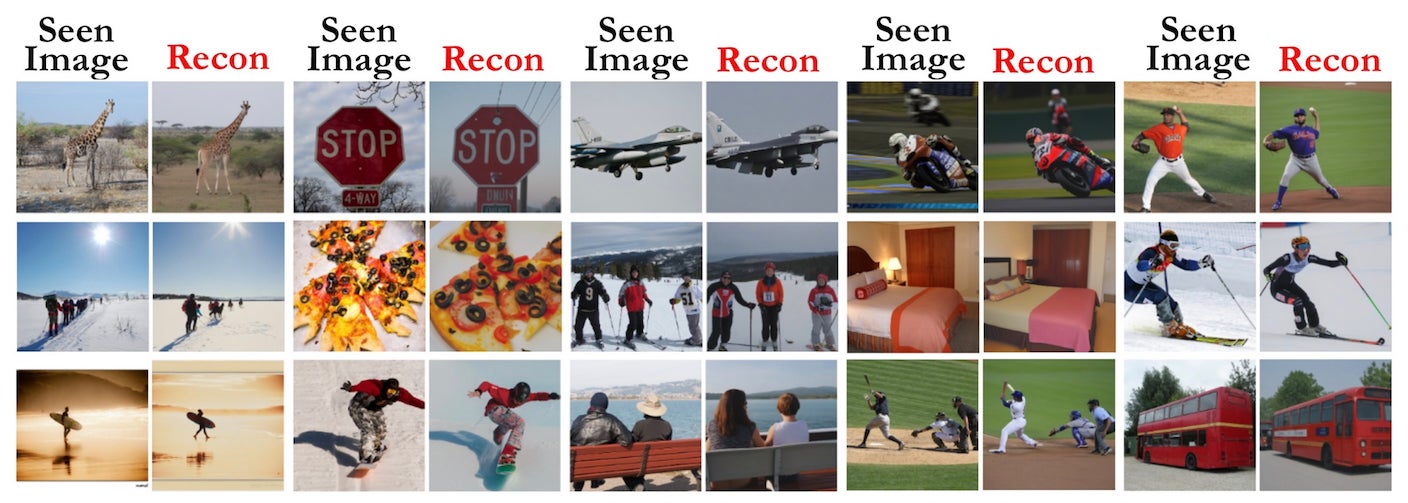
Existing methods for reconstructing images from brain scans can look good, but they often get important details like the position or color of objects wrong, thanks largely to AI image generators’ willingness to fill gaps in the data with what they expect to see.
The success of the new system, which was presented at this year’s International Conference on Learning Representations, is down to a novel design choice. Rather than trying to translate the brain signals in one shot, it uses two neural networks to separately predict an image’s layout and its contents. The outputs from these models are then fed into an image generation model that produces a detailed picture.
The team trained the system on a publicly available dataset in which eight volunteers each viewed around 9,000 photographs in a high-resolution brain scanner. The researchers also used a previously developed brain encoder that predicts how the brain would respond to a given image to simulate scans for around 120,000 extra photographs.
When tested on data from four of the volunteers, Brain-IT outperformed ten other reconstruction methods on seven out of eight standard measures of image similarity. In particular, it did much better at capturing the layout of a scene—where objects sit, as well as their colors and shapes.
The system can also be adapted quickly to work with new people because the way it processes brain scans is built around groups of brain cells whose functions seem to be shared across individuals. Calibrating it for someone new largely comes down to working out where those groups sit in their brain.
With one hour of scan data from a new volunteer, the system matched the results of previous methods trained on a full 40 hours, which could make the approach far more practical for researchers. “None of us can afford 40 hours of imaging for a new subject,” Tommy Sprague, a neuroscientist at the University of California, Santa Barbara, told MIT Technology Review.
But the technology’s ability to extract information about what someone is thinking also raises concerns around mental privacy, Sprague added. The reliance on fMRI, which requires a willing subject to lie still inside a scanner, currently limits misuse, but Irani and others are working on decoding brain activity from simpler devices like EEG, which records electrical signals using electrodes on the scalp.
While Irani acknowledges the potential risks, she’s trying to focus on the positive potential of the technology. In the future, she hopes to move beyond still images to capturing video and even audio, which could help decode imagined scenes and dreams. “That’s something we don’t have yet,” she says. “But we’re striving to achieve it.”
True mind reading may still be some way off. But due to the power of AI, it looks increasingly likely that our innermost thoughts will no longer be as secure as we’ve imagined.
The post This AI Reconstructs What You’re Looking at From a Brain Scan appeared first on SingularityHub.

 The NVIDIA KGMON team placed second in the KDD Cup 2026 Data Agents competition with a system built around a simple idea of making an agent's harness smaller,...
The NVIDIA KGMON team placed second in the KDD Cup 2026 Data Agents competition with a system built around a simple idea of making an agent’s harness smaller, clearer, and easier to verify. The competition asked agents to answer natural-language questions over heterogeneous data sources, including databases, CSV and JSON files, prose documents, PDFs, and briefing videos.
The Paper2Agent system could make it easier to understand papers, reproduce results, and generate hypotheses.
For centuries, the humble scientific paper has been the way researchers share discoveries. These papers are highly formulaic. Each starts with an introduction laying out the problem, followed by hypotheses, results, and conclusions.
More recently, journals have asked authors to include code or datasets—like brain scans or gene activity—for others to inspect and reuse. Video and image summaries are now often welcome too.
But for the most part, papers haven’t changed much. They may tell an intriguing story—if you can get past all the jargon. And a PDF dozens of pages long makes it tough to reproduce results, often the first step in a new project. Human error can also leave out important pieces.
“For years, we have felt that static research papers are not the best way to represent scientific knowledge,” wrote James Zou at Stanford University. His team is about to shake things up. This month, they described Paper2Agent, a workflow that turns papers into interactive AI agents.
These aren’t your average chatbots. Each is trained on a paper’s text, figures, and data, and asked to reproduce its results, essentially running through the experiments in a virtual world. This gives them a deeper understanding of the work, turning them into virtual “authors” that can answer complex questions about it. They can also apply methods from one paper to a new dataset and even collaborate with other paper agents across disciplines.
There’s now “an opportunity to fundamentally reimagine what knowledge looks like,” Zou said in a press release. “Instead of having only passive artifacts, why don’t we convert each static record into an active embodiment of knowledge?”
The volume of scientific publishing has skyrocketed in recent decades. Global scientific output topped three million papers in 2023, and the numbers are still climbing.
That much literature would overwhelm anyone. Yet reading papers to build up foundational knowledge is the first step in any scientific project. The challenge is even thornier when research crosses disciplines—say AI and protein science, or machine consciousness and neuroscience. In these cases, scientists must master multiple fields, but the connections they form often spark breakthroughs.
The sheer volume creates another headache: reproducibility. Scientists are a critical bunch. Before building on a previous paper’s conclusions, they often try to recreate the experiment to see if they get the same results.
It doesn’t always work. In the landmark 2015 Reproducibility Project, only 39 percent of psychology studies produced results consistent with their original findings. A 2026 analysis didn’t fare much better. And large language models may add a wrinkle in machine learning research, where the pipeline, from data collection to model selection and training, isn’t always well documented.
For Zou and team, turning papers into AI agents could help us tackle these problems.
To develop Paper2Agent, the team first ask it to scan all sections of a paper and then try to recreate its results. Along the way, it captures details that a reader might otherwise have to dig out, such as experimental setups and chemicals, and saves them in a digital vault called an MCP server.
Anthropic developed MCP to give AI systems access to tools, data, and workflows through a common interface. Scientists can then link a large language model of their choice to the server, query the agent in everyday language, or run new experiments using their own data while borrowing the paper’s methods.
In other words, Paper2Agent is like a translator between a human-written paper and a chatbot.
That might sound redundant. After all, it’s already possible to upload a paper to ChatGPT, Claude, or another chatbot and ask questions. The difference is in the training: A chatbot can summarize a paper’s results, but it doesn’t have a deeper understanding of how those results came to be or whether the underlying analysis holds up.
By trying to replicate results based on the paper, Paper2Agent’s AI gets a sort of hands-on experience, potentially making it less prone to hallucination. The agents can “provide much more in-depth insights to the readers,” Zou told Nature.
In one experiment, Paper2Agent created an agent based on a recent paper describing AlphaGenome, an AI model that predicts how changes in DNA letters affect their function. It took under an hour without human supervision.
When asked genetics questions requiring AlphaGenome analysis, the agent answered with near-perfect accuracy. It was also two to four times faster than Biomi and other “AI scientists” given access to the same paper, likely because it had a better grasp of AlphaGenome’s tools and capabilities.
The tool didn’t always work. When the team applied it to 110 papers spanning computational biology, machine learning, astrophysics, and other fields, it successfully converted 76 percent into working agents. But that failure is arguably a feature, not a bug. Papers that couldn’t be agentified often lacked sufficient code, data, or model files, or relied on broken scripts and unavailable datasets.
“Agentification can therefore serve as a practical diagnostic of computational reproducibility,” wrote Zou and study author Jiacheng Miao.
Left alone, the agents began “talking” to each other.
In one test, Paper2Agent converted two studies on psoriasis into agents. Working with the AlphaGenome agent, the trio found a previously unknown genetic variant as a potential cause for the condition. An agent based on a paper about ADHD genetics similarly flagged a new mutation associated with increased risk. Another pair of agents identified a DNA letter variant linked to “bad” cholesterol, one that AlphaGenome had not pinpointed on its own.
These results showcase the power of collaboration in a world where papers aren’t isolated documents. “In the past, if there are two research groups that publish two different papers, those two research groups have to somehow find each other,” Zou said. Paper agents could make that matchmaking automatic, allowing findings from different studies to mesh—and produce new ideas—with far less human effort.
Paper2Agent is free to use, although installing and running it still needs some computer savvy scientists may not have. For trainees, it could become a shortcut that stunts their ability to critically evaluate a paper and spot flaws in the authors’ logic, instead taking an agent’s reply at face value.
Other questions remain. If agents become a new way of sharing scientific knowledge, who should be responsible for creating them? And can papers based primarily on wet-lab experiments, rather than code, also benefit?
Magdalena Skipper, editor-in-chief of Nature, which published the work, doesn’t expect conventional papers to disappear anytime soon. But she is optimistic that agentifying papers could alter the future of sharing scientific knowledge.
“There is a prospect that…there will be something genuinely influential that will change the way knowledge is disseminated, but importantly, the way that knowledge is interacted with,” she said.
The post This Tool Turns Scientific Articles Into Agents That Answer Questions and Collaborate appeared first on SingularityHub.
An exploration of the new data science roles emerging after the Large Language Model explosion.
The post AI Engineers, Applied Scientists, Forward Deployed Engineers: Let's Unpack. appeared first on Towards Data Science.