A step-by-step guide to transition matrices, the Chapman–Kolmogorov equation, and stationary distributions, built around a three-state writing example.
Imaging black holes is challenging because they are distant and appear tiny in the sky—for example, M87*’s observed ring spans just 42 microarcseconds. The...
Imaging black holes is challenging because they are distant and appear tiny in the sky—for example, M87*’s observed ring spans just 42 microarcseconds. The black hole itself emits no light, so telescopes capture radio emission from superheated gas swirling outside the event horizon. The black hole’s intense gravity bends the paths of this light, shaping the bright ring that frames the central…
AI models that learn like kids could reveal the secrets of our early years and inspire more efficient machine minds.
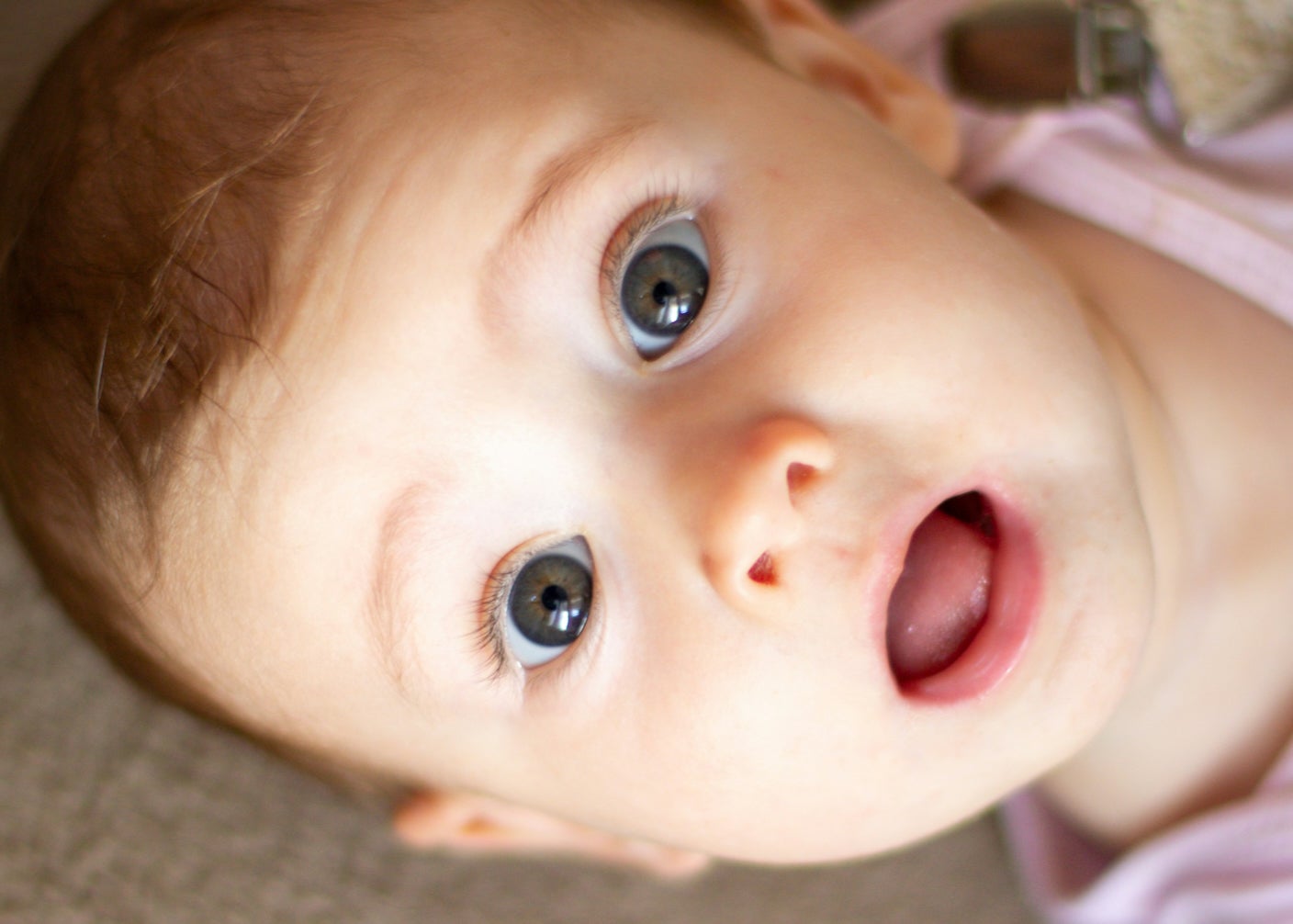
Babies are linguistic geniuses. Born into a noisy, chaotic world, they gradually distill incomprehensible sounds into words. Within two years, they can recognize thousands of words, follow complex sentences, and shout out their needs.
How they achieve this feat has long puzzled scientists. Babies develop language skills from an intimate world—the voices of their parents, chatter from strangers, nightly bedtime stories. A few hours of speech is enough to get them started.
This is a stark contrast to large language models (LLMs), which need to devour billions of words to mimic human conversation. Chatbots and AI agents are transforming how we interact with the digital sphere. But they guzzle water and energy, and signs that read “no data centers” now line neighborhood streets.
Building AI models that learn language the way babies do could reveal the secrets of our early years—including what happens when learning goes awry—and inspire more efficient machine minds.
An unusual study from Princeton University takes us a step closer. Using recordings from cameras and microphones from eight households, the team captured everyday sounds surrounding children from birth to roughly three years of age. These sonic diaries created a dense record of their waking lives. The researchers then built an AI learner for each child. Like a digital clone, each model experienced the child’s speech environment as it unfolded over time, rather than being trained on all the data in one fell swoop. The approach is a massive departure from the way engineers train LLMs.
“For more than a century, psychology has largely studied development from the outside,” said study author Uri Hasson in a press release. “Now we can take a complementary approach: Build a learning system, give it the child’s actual experience, and ask whether it develops the way the child does.”
Tiny Statisticians
Decades of research suggests babies respond to language long before they can explain what they know. A landmark study in the 1970s gave one- and four-month-old infants pacifiers that measured their sucking patterns and found they sucked faster when hearing a new speech sound, like shifting from a “b” to “p.”
At eight months, babies can detect words from a continuous stream of artificial speech, even without pauses between them. Somehow, they’ve learned to pick out statistical patterns in the sounds. And studies tracking babies’ eyes show their ability to recognize spoken words grows rapidly between 15 to 25 months, even before they can repeat them back.
More recently, scientists have eavesdropped on babies’ day-to-day lives using microphones and wearable recorders, linking emerging vocabulary to real-world audio and social interactions. Meanwhile, computational models that loosely mimic language development map some of the learning trajectory, though they’re often tailored to specific linguistic skills.
More powerful AI models—such as ones with the ability to “pay attention”—could better decode language acquisition. It’s now possible to “model learning under increasingly realistic conditions,” wrote Zara Harmon and Caroline Rowland at the Max Planck Institute for Psycholinguistics in the Netherlands, who were not involved in the study.
Installing cameras and microphones in your home just after welcoming a newborn is a tough sell. The team developed an ethical framework that gave parents ongoing control over the right to withdraw or delete recordings. They ultimately recruited 15 families with diverse socioeconomic backgrounds, daily routines, and linguistic environments.
Each home had between 4 and 14 devices humming away for about 12 hours a day, collectively capturing over a million hours of audio and video. An AI pipeline tackled the data avalanche, identifying when babies appeared on camera and detecting speech.
After getting rid of noise, long stretches of silence, and overlapping conversations, the team extracted up to 6,600 hours of audio per child to train individual AI models, starting with Coral.
The AI began as a blank slate, with no access to online resources, predefined English sounds, or clues about where one word ended and another began. The relatively small model had two main components. An audio encoder broke speech into 20-millisecond chunks, while a predictive decoder learned to anticipate which sounds were likely to come next. (This is a bit like how hearing the first notes of a familiar song is enough for you to know what follows.)
Rather than training on all the recordings at once, the AI “experienced” Coral’s linguistic world day by day, in much the same way Coral did.
It didn’t work.
“We were surprised to see that, despite the immense amount of speech available from a single child, the learning results were discouraging,” said study author Hadas Raviv. “Simply exposing Coral’s model to the rich stream of daily speech was not enough.”
With replay, the AI followed Coral’s learning trajectory. It first picked up the building blocks of speech—called phonemes—and eventually recognized recurring words. Learning started slow. But as Coral grew and spent more hours awake, both the infant and their AI twin were able to grasp new words at an accelerating pace. At around 1,000 days, their vocabulary had blossomed into thousands of words.
Across eight children, the models learned roughly 37 phonemes within 15 months and began recognizing words before age two, though at vastly different rates. To match each child’s learning trajectory, the team fine-tuned model settings, including how much speech was replayed each night.
“We’ve known for a long time that children’s developmental environments are complex,” said study author Casey Lew-Williams. “But now we can actually see this everyday complexity.”
That’s not to say the AI is a duplicate of a baby’s brain. It doesn’t process information in the parallel and energy-efficient way characteristic of neurons. And it learned solely with sound, whereas babies also draw on non-verbal cues—gazes, gestures, facial expressions, and interactions with others.
For the team, a key next step will be teasing apart which aspects of the model actually reflect infant learning, and which might be computational shortcuts that could inspire machine minds.
“The current model is only the beginning,” said Hasson. The accompanying video footage provides “an extraordinary amount of information about how children see, hear, interact, and act in the world. Our goal is to progressively give the models more of those capacities and see what emerges.”
A simulated scar and data from 31 animals after ischemia show how an inhomogeneous estimator, random labelling, and brms separate tissue loss from real interaction.
The Gebrüder Weiss site in Wels became a testing ground for the AMADEE-27 Mars analog mission recently. The Austrian Space Forum (ÖWF), the University of Applied Sciences Upper Austria (FH Oberösterreich), and other research partners last month tested scientific experiments and technical systems for the mission, which will take place in Portugal in April 2027. […]
Artificial intelligence is dramatically reducing the computational cost of solving complex theoretical problems in mathematics, physics and economics, according to new research from the Massachusetts Institute of Technology (MIT). A study by researchers at MIT FutureTech found that the proportion of advanced theoretical questions successfully answered by AI models increased from just 2.8 percent to […]
Rather than relying on text alone, the algorithm looks for clues in a paper’s reasoning.
Science is no longer a purely human endeavor. Machine minds are increasingly merging with human creativity to generate hypotheses, experiments, and ideas.
But with promise comes misuse. Like TikTok videos and AI-generated images splattered across the internet, AI slop has infiltrated science. Academic journals and conferences are being flooded with AI-generated content, and editors are drawing the line. As long as they disclose it, scientists can use chatbots to help write papers, as long as the underlying ideas are their own. Submitting a whole paper dreamed up by AI, with little human input, is another matter.
Publishers are turning to AI detectors to weed out slop. But detectors aren’t perfect. Most scrutinize turns of phrase, word choice, and other intricacies associated with machine-generated text. They can mislabel legitimate research because of how the paper is written, rather than on the merit or origin of its ideas. That’s especially problematic for scientists whose first language isn’t English and who rely on AI for heavy editing.
A team at the University of Maryland in College Park is now taking a different approach: Strip away the prose until only a skeleton of concepts remains. Their detector, called IdeaLens, learned to find patterns in how human and AI models organize ideas, build narratives, and construct arguments, all of which are integral to every scientific paper.
IdeaLens alone won’t stem the deluge of AI slop polluting scientific literature. But it joins a growing toolset that recognizes human contributions, even as the boundary between scientist- and AI-generated ideas grows blurry.
“Discerning the extent to which AI performs critical thinking—a task that, in our view, rightly belongs to human authors—is increasingly difficult,” wrote editors of The Journal of Clinical Psychiatry, who were not involved in the new work. But, “using AI to deliberately fabricate data or automate the interpretation of study findings crosses ethical lines and undermines scientific integrity.”
Fighting Fire With Fire
There’s no doubt that AI has already made waves in science.
Algorithms are tackling particle and space physics and deciphering biology. Drug companies are betting AI can accelerate drug discovery and fight cancer, Alzheimer’s, and other medical scourges that continue to haunt millions worldwide.
Generative AI has boosted research productivity over 89 percent, according to a study in late 2025. But there are growing pains. One estimate suggests roughly 12.5 percent of biomedical articles show signs of substantial AI involvement. And even AI conferences have struggled with AI submissions: Some papers accepted to the prestigious 2025 NeurIPs conference were flagged as likely AI-generated and 100 or more hallucinated citations slipped past human reviewers.
Publishers are pushing back.
The popular preprint server arXiv has tightened submission rules for computer science reviews, requiring prior peer review to combat the flood of submissions partially fueled by AI.
Others are using detectors. AI writing has particular quirks in word choice and sentence structure. In a well-known example, models tend to overuse constructions like, “It’s not X, it’s Y.” One popular tool, Pangram, claims 99 percent detection accuracy and is now integrated into alphaXiv, an arXiv mirror site, to automatically flag potential machine-written manuscripts. Meanwhile, scientists are turning papers into AI agents, making it easier to reproduce findings and spot questionable research.
Instead of focusing on wording, IdeaLens asks if the underlying concepts are human or AI.
A New Detective
The tool’s creators previously found AI-written fiction differs structurally from human work. Stories generated by machines tend to be tidier, more predictable, and more on the nose about their message. Humans write sloppier but more colorful tales. Beyond surface-level word choice or tone, the team found differences embedded into the narrative itself. For example, human writers often wander into subplots, let readers infer themes, explore morally debatable choices, and leave ambiguous endings. These detours create rich, lived-in worlds that reflect the messiness of real life. AI prefers straightforward narratives and neatly tied loose ends.
These findings inspired the team to develop IdeaLens, which looks past prose and focuses on structural and conceptual patterns.
The researchers first used Pangram to label roughly a million texts, such as news articles, blog posts, and academic papers, as human- or AI-generated. A large language model then stripped away the original wording, leaving a detailed outline of the main points. Scientific papers, for instance, were distilled to background information, claims, evidence, and arguments. Another model, called a classifier, then learned to find patterns that distinguished human- from AI-generated texts in these skeletal rewrites.
Like many modern AI systems, IdeaLens is a “black box.” The team can’t fully explain how it lands on verdicts, although they did find human-derived outlines tend to contain more study-specific details, rather than generic points often used by AI that could apply to other studies.
Still, it worked.
When challenged with documents written by ChatGPT and other large language models, IdeaLens mistakenly flagged them as human work just one percent of the time. For texts lightly edited by AI, it correctly recognized human origins in about 95 percent of cases. Across evaluation datasets, it missed roughly 10 percent of AI-generated work.
That might seem like a big problem. But “we would much rather have that AI document slip through than humans wrongly being flagged as AI,” study author Rishanth Rajendhran toldNature. “Because of the reputational damage that these things carry, it is important that we are careful with what we do with the prediction.” Once flagged, human reviewers should jump in for a closer look at the questionable submission.
Like other detectors, IdeaLens has blind spots. The team didn’t individually verify the origins of every document in its training data. The tool was also never tested on genuinely hybrid articles, where humans and AI models co-develop the underlying concepts, which is an increasingly common scenario in science. As scientists turn to chatbots to refine hypotheses or spark new ones, intellectual ownership becomes even murkier.
For now, IdeaLens sees the world in black and white, assigning just two labels: human or AI. Future versions may introduce more nuance, such as assigning the estimated percentages of their contributions. You can try it here.
The team stresses the detector shouldn’t discourage scientists from embracing AI. Rather, the differences it found highlight the value of human ingenuity. Without a dose of human messiness and out-the-box thinking, AI slop risks reshaping not just scientific literature, but our understanding of the world too.
Sometimes we need to calculate results based on contradictory filters. Without any action, these filters will lead to an empty result. Let's see how we can improve the data model to make it work.
In basketball, field-goal percentage tells us how often a player makes a shot. But what about the shots’ difficulty? Let's use Python and machine learning to separate shot selection from shot making.
Outsourcing planning to AI can lead people to surrender their own critical thinking, which can have potentially deadly results in places like the backcountry.

 Login

 Imaging black holes is challenging because they are distant and appear tiny in the sky—for example, M87*’s observed ring spans just 42 microarcseconds. The...